Prison Ministry

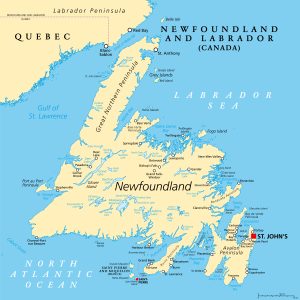
From our earliest days  in Newfoundland a number of Sisters of Mercy visited inmates of the various prisons in the town of St John’s and at the Salmonier prison farm.

Sisters are involved in the prison system as advocates, teachers, and pastoral care-givers. They provide spiritual and social activities to enhance the quality of the lives of the inmates by leading worship and prayer, by teaching sessions on self esteem, self-awareness and personal growth. They advocate for the basic needs of life, food, shelter, clothing for those who are leaving the prison and those who are trying to make a new life for themselves.

At the present time sisters go regularly to the men’s prison in Stephenville. Occasionally sisters visit the minimum security prison in St. John’s. Sometimes sisters accompany persons to the courts and serve as support, advocate and as witness.

Desde nuestros primeros días en Terranova, varias Hermanas de la Misericordia visitaron a los reclusos de las diversas prisiones de la ciudad de St John’s y de la granja de la prisión de Salmonier.

Las Hermanas participan en el sistema penitenciario como defensoras, maestras y cuidadoras pastorales. Proporcionan actividades espirituales y sociales para mejorar la calidad de vida de los reclusos dirigiendo el culto y la oración, impartiendo sesiones sobre autoestima, autoconciencia y crecimiento personal. Abogan por las necesidades básicas de la vida, la alimentación, el cobijo y la ropa de los que salen de la cárcel y de los que intentan forjarse una nueva vida.

Actualmente, las hermanas van regularmente a la prisión masculina de Stephenville. Ocasionalmente, las hermanas visitan la prisión de mínima seguridad de St. A veces las hermanas acompañan a las personas a los tribunales y les sirven de apoyo, de defensoras y de testigos.


Celebrating Laudato Si’ Week, 21-28 May

Laudato Si’ Week 2023 is being celebrated 21- 28 May marking the eighth anniversary of Pope Francis’ landmark encyclical on care for creation. The theme this year is ‘Hope for the Earth. Hope for Humanity’.

Pope Francis inaugurated Laudato Si’ Week at the Sunday, 20 May Angelus prayer held at midday (Rome time) from St Peter’s Square in Vatican City.

The program for Laudato si’ Week can be found on the website here

A highlight of the program is the film “The Letter” which tells the story of a journey to Rome of frontline leaders to discuss the encyclical letter Laudato Si’ with Pope Francis. Watch it here

La Semana Laudato Si’ 2023 se celebra del 21 al 28 de mayo, coincidiendo con el octavo aniversario de la histórica encíclica del Papa Francisco sobre el cuidado de la creación. El tema de este año es “Esperanza para la Tierra. Esperanza para la humanidad”.

El Papa Francisco inauguró la Semana Laudato Si’ en el rezo del Ángelus del domingo 20 de mayo, celebrado a mediodía (hora de Roma) desde la Plaza de San Pedro del Vaticano.

El programa de la Semana Laudato si’ puede consultarse en el sitio web aquí

Uno de los platos fuertes del programa es la película “La Carta”, que narra el viaje a Roma de líderes de primera línea para debatir la encíclica Laudato Si’ con el Papa Francisco. Véala aquí

Our Ministry in Peru

The Sisters of Mercy of Newfoundland arrived in Peru in November 1961 – when a group of six sisters took the long journey to participate in the mission of the Archdiocese of St. John’s in Monsefu, Chiclayo.

Sisters of Mercy from Newfoundland and Peru now minister in two areas of the country – in Puerto Eten, Reque and Eten, in the Chiclayo region and in Huarmey, Casma, Ancash.  Eight sisters of the Congregation of the Sisters of Mercy of Newfoundland (including four native Peruvians) work with the people, especially poor people, in towns and small villages in these two regions of Peru.

The sisters in Peru work closely with the people in catechetics, adult education, and in the various aspects of parish and liturgical life. They serve as teachers, social workers, advocates and champions of social justice.

In 2017 devasting floods and rains destroyed large areas of Peru.  Damage in Huarmey was caused by overflowing rivers of water and mud that filled the streets and homes of the pueblos.  In Puerto Eten and area peoples’ homes did not have adequate roofing to keep out the rains.  Households were flooded and meager beds and furniture were destroyed.   The Sisters of Mercy and the Presentation Sisters in Newfoundland, along with some of the religious orders in Peru provided financial resources to obtain furniture and roofing for the people.  Other aid came from the Peruvian government and other international agencies.

Supporting the Ministry – Misericordia Mission Fund

Donations to the Misericordia Mission Fund, a registered charity established by the Sisters of Mercy of Newfoundland, are used in Peru to provide basic needs for poor families – food, clothing, fuel, medicine, education and shelter. Many children receive basic education and sometimes post secondary education through donations to the fund.

Educational programs and materials, e.g. reading materials,  computers, student supplies are made available when resources allow. Emphasis is placed on working with women in areas of family care, health, nutrition, sewing, gardening, etc.  Opportunities are provided for men and women to develop skills in carpentry and farming of family gardens – a cooperative venture to help people help themselves. Medical needs in the form of prescription drugs, diagnostic tests, x-rays, and special procedures or treatments are also provided through the fund.

Educational programs and materials, e.g. reading materials,  computers, student supplies are made available when resources allow. Emphasis is placed on working with women in areas of family care, health, nutrition, sewing, gardening, etc.  Opportunities are provided for men and women to develop skills in carpentry and farming of family gardens – a cooperative venture to help people help themselves. Medical needs in the form of prescription drugs, diagnostic tests, x-rays, and special procedures or treatments are also provided through the fund.

All donations to the Misericordia Mission Fund are used in their entirety for the needs of poor people. Donations are received by the Misericordia Mission Fund in Newfoundland and are distributed by the Sisters who are ministering in Peru. Income tax receipts are issued for all donations to the fund.

Misericordia Mission Fund
P.O. Box 1757
St. John’s, Newfoundland, Canada, A1C 5P5
Telephone: 709-726-7320
Fax: 709-726-4414
E-mail: mercygeneralate@sistersofmercynf.org


Our Ministry in Peru

The Sisters of Mercy of Newfoundland arrived in Peru in November 1961 when a group of six sisters took the long journey to participate in the mission of the Archdiocese of St. John’s in Monsefu, Chiclayo.

Our Sisters of Mercy now minister in two areas of the country – in Puerto Eten, Reque and Eten, in the Chiclayo region and in Huarmey, Ancash.  Six sisters of the Congregation of the Sisters of Mercy of Newfoundland (including four native Peruvians) work with the people, especially those made poor, in towns and small villages in these two regions of Peru.

The sisters in Peru work closely with the people in catechetics, adult education, and in various aspects of parish and liturgical life. They serve as teachers, social workers, advocates and champions of social justice.

During the years of Covid 19 the Sisters were challenged to look for ways to respond to the numerous needs that arose at that time. Peru was affected enormously by the onslaught of Covid and its health system collapsed totally. Together with our co-workers, the Conference of Religious of Lima, and The Conference of Religious of Chimbote, plans were made to look for and purchase an Oxygen Plant for the city of Chimbote.

In the Diocese of Chiclayo the Sisters had much support from Caritas organization, along with many individuals and NGOs, especially for their outdoor neighborhood kitchens .  These kitchens are the main way people receive a hot meal each day.

An additional threat to the Peruvian people is the advent of Dengue Fever spread by mosquitos.  This is undoubtedly due to the recent rains and floods.  Climate change is certainly obvious.

It´s important to add that during these years as well much effort has been dedicated to help individuals and families to begin small jobs or businesses. Thus they become more independent and able to provide for their families. This includes raising small animals, beginning a store, providing a kiosk so that a person can sell food, selling products on the street, helping seamstresses by providing sewing machines, etc.

In the Diocese of Chiclayo the Sisters had much support from Caritas organization, along with many individuals and NGOs, especially for their outdoor neighborhood kitchens .  These kitchens are the main way people receive a hot meal each day.

An additional threat to the Peruvian people is the advent of Dengue Fever spread by mosquitos.  This is undoubtedly due to the recent rains and floods.  Climate change is certainly obvious.

It´s important to add that during these years as well much effort has been dedicated to help individuals and families to begin small jobs or businesses. Thus they become more independent and able to provide for their families. This includes raising small animals, beginning a store, providing a kiosk so that a person can sell food, selling products on the street, helping seamstresses by providing sewing machines, etc.

The Sisters of Mercy and the Presentation Sisters in Newfoundland, along with some of the religious orders in Peru, provided financial resources to obtain medical supplies and food for the people.  Other aid came from the Peruvian government and other international agencies.

The Sisters were lead to recognize what they have lived through and are living through: the climatic disasters, the political instability, the insecurity, the corruption and terrific rise in violence.  All of these factors affect them and their ministry.  On the other hand they recognize the incredible resistance, resilience, courage and faith of the people shown and lived this past year.  The gestures of solidarity at all levels has been quite visible.

Like all Sisters of Mercy, who live out the charism of Catherine McAuley, the Sisters in Peru continue reflections on questions, concerns and themes.  They strive to “relieve misery, address its causes, and support all persons who struggle for full dignity” (Morning and Evening Prayer of the Sisters of Mercy, page 393)

Supporting the Ministry – Misericordia Mission Fund

Donations to the Misericordia Mission Fund, a registered charity established by the Sisters of Mercy of Newfoundland, are used in Peru to provide basic needs for poor families – food, clothing, fuel, medicine, education and shelter. Many children receive basic education and sometimes post secondary education through donations to the fund.

These last couple of years the Mission Fund has been able to respond to many needs caused by anti-government protests in the country when people could not work as usual; then the very heavy rains and floods have taken away not only peoples place of work, but many have lost homes and possessions. The fund has been used to form comedores and ollas communes (dining areas and common pots) and was able to lessen hunger and disease in many pueblos. Migrants, older people, and children are a special concern for our communities and the Mission fund works constantly with our lay people and coordinators to identify their needs and respond.

All donations to the Misericordia Mission Fund are used in their entirety for the needs of poor people. Donations received by the Misericordia Mission Fund in Newfoundland are distributed by the Sisters who are ministering in Peru. Income tax receipts are issued for all donations to the fund.

Misericordia Mission Fund
P.O. Box 1757
St. John’s, Newfoundland, Canada  A1C 5P5

International Day of Families, 15 May

Today is International Day of Families. Let us remember especially in our prayers today each of the members of our own families and all who are ‘like family’ to us. May our relationships be strengthened. May any conflicts be resolved. May love bind us together.

Let us remember, too, all new families— the struggling not just the celebrated— and all those mourning the absence of family members dear to them, including the widowed, refugees, prisoners, the homeless, runaways, trafficked persons, separated parents…

Hoy es el Día Internacional de la Familia. Recordemos hoy especialmente en nuestras oraciones a cada uno de los miembros de nuestras propias familias y a todos los que son “como familia” para nosotros. Que nuestras relaciones se fortalezcan. Que se resuelvan los conflictos. Que el amor nos una.

Recordemos también a todas las nuevas familias -las que luchan y no sólo las célebres- y a todas las que lloran la ausencia de familiares queridos, como las viudas, los refugiados, los presos, las personas sin hogar, los fugitivos, las víctimas de la trata, los padres separados…

World Bee Day, 20 May

World Bee Day, designated as such by the United Nations in 2018, is celebrated annually on May 20.Its purpose is to draw attention to the essential role  bees and other pollinators play in keeping people and the planet healthy.

Because the bee population is under threat, this day is a call to protect them and other pollinators which are critical to the heath of our ecosystem. May was chosen for World Bee Day because in the northern hemisphere the need for pollination is greatest at that time, while in the southern hemisphere it is a time for harvestinghoney and other bee products.

The Newfoundland Beekeeping Association have just announced a NO MOW MAY Campaign, asking residents of the province not to mow their lawns for the whole month of May. This will help to provide essential food for bees and habitat for pollinators and other wildlife.

For further information about this day and how you can observe it, click here

El Día Mundial de la Abeja, designado como tal por las Naciones Unidas en 2018, se celebra anualmente el 20 de mayo.Su propósito es llamar la atención sobre el papel esencial que desempeñan las abejas y otros polinizadores para mantener la salud de las personas y del planeta.

Dado que la población de abejas está amenazada, este día es un llamamiento para protegerlas, así como a otros polinizadores fundamentales para la salud de nuestro ecosistema. Se eligió el mes de mayo para celebrar el Día Mundial de la Abeja porque en el hemisferio norte la necesidad de polinización es mayor en esa época, mientras que en el hemisferio sur es el momento de cosechar miel y otros productos apícolas.

La Asociación de Apicultura de Terranova acaba de anunciar la campaña NO MOW MAY, en la que pide a los residentes de la provincia que no corten el césped durante todo el mes de mayo. Esta medida contribuirá a proporcionar alimento esencial a las abejas y hábitat a los polinizadores y otros animales silvestres.

Para más información sobre este día y cómo celebrarlo, pulse aquí.

Prayer for Mothers’ Day, 14 May

The second Sunday in May is celebrated as Mothers’ Day  This prayer honours motherhood and all those whose influence and care for us is as a mother. 

The response to each petition is: ‘Mother God we pray to you

For our own mothers, living and deceased …
For our grandmothers, sisters, aunts and all who have nurtured us over the years …
For mothers who continue to make sacrifices for the sake of their children…
For mothers who are taken for granted, forgotten or abandoned …
For mothers who are incarcerated, drug-addicted or prostituted …
For mothers of the disappeared …
For mothers who have lost children through sickness, suicide, violence and war …
For mothers in nursing homes …
For single mothers and divorced mothers …
For mothers who are homeless, battered or abused …
For mothers who are refugees and without a home or homeland …
For mothers of disabled and bullied children …
For mothers who are struggling with financial problems …
For mothers who are unable to care for or protect their children …
For our Mother Earth calling us to protect, cherish and heal her …
In gratitude for Mary, Mother of God whose life was centered on Jesus…
In gratitude for all who have given us love and support, security and hope …

Mother God, for all of these and for all we carry in our hearts, we ask your love and your blessing.
Amen

Download the entire Mothers’ Day Prayer – May 2023 (PDF)

El segundo domingo de mayo se celebra el Día de la Madre Esta oración honra la maternidad y a todas aquellas cuya influencia y cuidado para con nosotras es el de una madre.

La respuesta a cada petición es: ‘Madre Dios, te rogamos

Por nuestras propias madres, vivas y difuntas …
Por nuestras abuelas, hermanas, tías y todas las que nos han criado a lo largo de los años …
Por las madres que siguen haciendo sacrificios por el bien de sus hijos …
Por las madres a las que se da por sentadas, se olvida o se abandona …
Por las madres encarceladas, drogadictas o prostituidas …
Por las madres de los desaparecidos …
Para las madres que han perdido a sus hijos por enfermedad, suicidio, violencia o guerra …
Para las madres en residencias de ancianos …
Para madres solteras y divorciadas …
Para madres sin hogar, maltratadas o que sufren abusos …
Para madres refugiadas sin hogar ni patria …
Para madres de niños discapacitados o acosados …
Para madres con problemas económicos …
Por las madres que no pueden cuidar o proteger a sus hijos …
Por nuestra Madre Tierra, que nos llama a protegerla, cuidarla y curarla …
En gratitud por María, Madre de Dios, cuya vida se centró en Jesús …
En gratitud por todos los que nos han dado amor y apoyo, seguridad y esperanza …

Madre Dios, por todos ellos y por todos los que llevamos en nuestros corazones, te pedimos tu amor y tu bendición.
Amén

Descargar toda Reflexión para el Día de la Madre (PDF)

Join us in Prayer for Sudan

Let us remember in prayer the people of Sudan who are in the midst of a huge humanitarian crisis. Even before the recent clashes, Sudan was experiencing great social upheaval, and the uprisings have exacerbated the crisis.

Khartoum, Sudan, ca. February 8., 2019: Street scene in downtown Khartoum, capital of Sudan

O God, we lift up Sudan and pray for stability in the region.
May those who covet power and those who seek to fight choose to walk the
path of peace.
Bring justice and healing to this divided land, we pray.
Out of this darkness, we pray that light will come.
We pray for a government that respects equality and religious freedom.
May Your church in this land reflect Your humility, forgiveness and love,
And so act as a signpost to the possibility of a different way of life.
Bring hope for those who feel helpless,
Healing for those who have been wounded,
And safety for all those who feel afraid.
Amen.

(Source: Open Doors UK)

Post your prayer in our sacred space here

Recordemos en la oración al pueblo de Sudán, sumido en una enorme crisis humanitaria. Incluso antes de los recientes enfrentamientos, Sudán experimentaba una gran agitación social, y las revueltas han exacerbado la crisis.

Oh Dios, elevamos a Sudán y oramos por la estabilidad de la región.
Que los que codician el poder y los que buscan combatir opten por caminar por el
camino de la paz.
Te rogamos que traigas justicia y sanación a esta tierra dividida.
Rezamos para que de esta oscuridad surja la luz.
Oramos por un gobierno que respete la igualdad y la libertad religiosa.
Que Tu Iglesia en esta tierra refleje Tu humildad, perdón y amor,
y así actúe como un poste indicador de la posibilidad de una forma de vida diferente.
Trae esperanza para los que se sienten desamparados,
Cura a los que han sido heridos,
Y seguridad para todos los que sienten miedo.
Amén.

(Fuente: Open Doors UK)

Publica tu oración en nuestro espacio sagrado aquí

Elizabeth Davis rsm: ‘Re-imagining a Healthcare System Good Enough for All of Us’

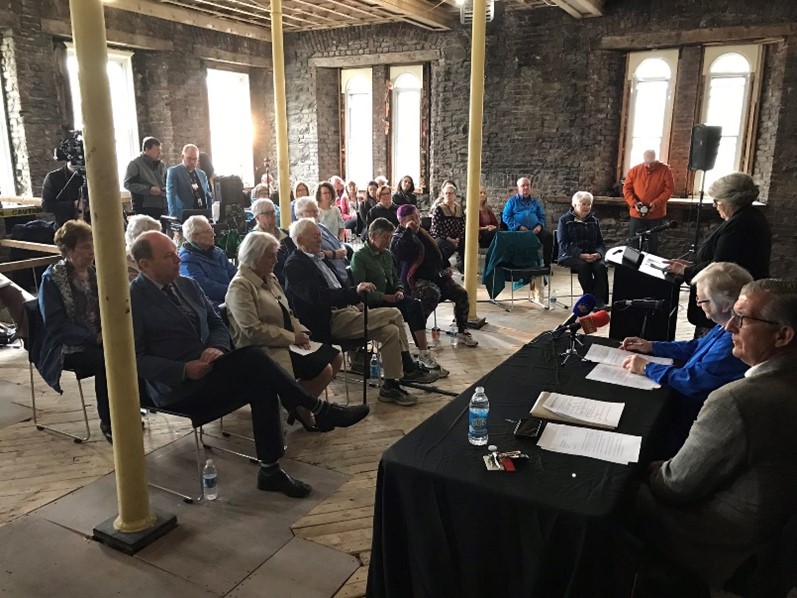
Elizabeth Davis rsm, in her capacity as a Director of the Gathering Place, was one of the speakers at the event entitled: ‘Forum on health outcomes and healthcare costs: What Can We Afford?’ held 7 March, 2018 to consider the challenges facing health and the healthcare system in Newfoundland & Labrador.

In her passionate address, ‘Re-imagining a Healthcare System Good Enough for All of Us’, Sr Elizabeth, while acknowledging the strengths of the current system, argues for a completely new system that responds to the health needs of the poorest, oldest and most vulnerable persons in Newfoundland society. In her presentation she addresses ecology and human health: ‘a healthy human population is dependant upon a healthy natural environment’.

Elizabeth Davis rsm, en su calidad de directora de Gathering Place, fue una de las ponentes del acto titulado: “Foro sobre resultados sanitarios y costes de la atención sanitaria: ¿Qué podemos permitirnos?”, celebrado el 7 de marzo de 2018 para analizar los retos a los que se enfrentan la salud y el sistema sanitario en Terranova y Labrador.

En su apasionado discurso, “Reimaginar un sistema sanitario lo suficientemente bueno para todos nosotros”, la hermana Elizabeth, aunque reconoce los puntos fuertes del sistema actual, aboga por un sistema completamente nuevo que responda a las necesidades sanitarias de las personas más pobres, mayores y vulnerables de la sociedad de Terranova. En su presentación aborda la ecología y la salud humana: “una población humana sana depende de un entorno natural sano”.

World Day of the Poor: Hearing the Cries in St John’s, Newfoundland

 Sunday, 18 November, will be the Second World Day of the Poor. Diane Smyth rsm  was invited to help the Mercy world reflect on the underlying meaning of this day. Sr Diane writes:

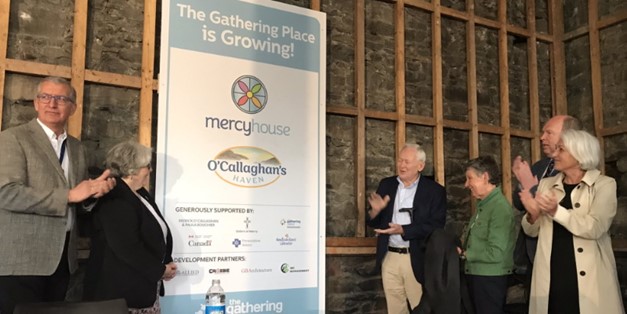
The Gathering Place

is a large centre located in a former school building in the heart of St. John’s, Newfoundland, operated by two religious orders of women, the Presentation and the Mercy Sisters.  It is a place where those who are made poor for many different reasons and in many ways may receive food, clothing, personal and medical care, dental care, and counselling;  where individuals can have a shower, do their laundry, have their feet cared for by trained personnel. Most of all, the members enjoy the companionship of other men and women who may be in need themselves or volunteers who provide friendship, support and encouragement and who can take a beating in a card game!  There is time and space for art, music and computer. 

On Hallowe’en this year something interesting happened!  Many people, young and old, dress   d in costume to bring a Hallowe’en spirit to their school or workplace.  A woman who worked near the Gathering Place dressed in costume as a hippy with long hair wig, dark glasses and sloppy dress.  She had laid a few bags near the fence as she prepared to go to her job in a convent nearby.  When she noticed a colleague of hers approach her she bent down a little so she would not be recognized  and begged for cigarettes.  The colleague hardly spoke to her, turned her back on her and walked away, saying “No, no cigarettes.”   She did not realize who the “begger” was!

Might that encounter have been different had she known the true identity of the “hippy”?   Does this story sound a little like the Gospel story of the Good Samaritan?  It presents us with a sobering reflection: how do we treat and relate to the ”other”, especially the ones who are almost invisible and nameless in our society, the ones who look shabby, dirty or disheveled?  The ones who beg at the entrance to the shop or on the sidewalk?

‘A hand rules compassion as a hand rules heaven.’ Artist: Gerald Squires, Ceramic Artwork at the Gathering place

 Many of those who go to the Gathering Place have so very little in every aspect of their lives.  They are those on the     edges of society and have hardly an identity card!   For most of their lives they have grown up in need, disorder and   displacement and have had no family, little education or skills, no stable dwelling place, don’t know where and how   they will get food, clothing or shelter.  Many suffer from psychological, mental and physical ailments, personality   disorder, addiction, criminal record, interpersonal conflict or antisocial behaviours.  As members of the Gathering   Place (annual fee $3.00), they find care and response to many of their needs, all that I mentioned earlier.  The   majority of the members find in the Gathering Place “their place”.  Some have learned how to send emails, surf the   web, obtain good quality and clean clothing, have substantial meals with bread to take home, have space to play games, read, watch television, develop literacy skills, develop any artistic, creative or musical skills that they might have.  Some have said that the Gathering Place has saved their lives, giving them a sense of belonging, of self-esteem, of dignity.  Some even earn a few dollars from the occasional sale of their created products, like jewelry or art.

With the faithful leadership of a small number of dedicated staff and over 1,100 volunteers, the Gathering Place reaches out to each member and guest to provide for most of the needs of each person.  At the Gathering Place the members find dignity, respect and love; at the same time the staff and volunteers are blessed in their commitment and generous love.  Occasionally there may be eruptions of conflict and outbursts of anger among members but these are minimal in the total scheme of things.  The members hold a certain loyalty and are protective of “their place”.  For the most part each person is proud to be a member and enjoys the freedom , the space and the interpersonal encounters with other members, staff and volunteers.  Most of these men and women are the ‘displaced’ persons of St. John’s and surrounding area but at the Gathering Place they have a place of love and care, a place where they are welcome, a place that becomes home for the few hours each day that they are there.  As the harsh and isolating winter of the north Atlantic sets in, the Gathering Place will be even more important in their daily lives. 

The Gathering Place has wonderful credibility and visibility in the local community and is well supported by many individuals, groups and organizations who represent the important outer circle of the caring and wider community.  The whole circle of care, including every person or group involved, ensures that the Gathering Place is a beacon of light and hope at the centre of the St. John’s community and a model that challenges others to reach out to those men, women and children who live on the fringes and in need of the basics of life.
Kindness is wanted and needed so that no person is left outside a circle of care and compassion.

Messages to: Diane Smyth rsm – Leadership Team