The season of Creation (1 September – 4 October) 2026 Celebration Guide is now available. The document explores the meaning of this year’s theme, Living Water—a guide to connecting faith with action and responding to the call of our Common Home.
The theme comes from the vision of the prophet Ezekiel (47:1–12): a river flowing from the temple of God, which grows without stopping and brings life where everything seems barren.
Water heals, restores, and makes creation flourish. But it also challenges us: to recognize ecological damage, to embrace our interconnectedness, and to immerse ourselves in the responsibility of caring for and restoring our Common Home.
May this Season of Creation be a path for the healing of the Earth and human well-being to flourish together.
Ya está disponible la Guía para la celebración del Tiempo de la Creación (del 1 de septiembre al 4 de octubre) de 2026. El documento profundiza en el significado del tema de este año, «Agua viva»: una guía para vincular la fe con la acción y responder a la llamada de nuestra Casa Común.
El tema proviene de la visión del profeta Ezequiel (47, 1-12): un río que brota del templo de Dios, que crece sin cesar y lleva vida donde todo parece árido.
El agua sana, restaura y hace florecer la creación. Pero también nos plantea un reto: reconocer el daño ecológico, aceptar nuestra interconexión y asumir la responsabilidad de cuidar y restaurar nuestra Casa Común.
Que este Tiempo de la Creación sea un camino para que la sanación de la Tierra y el bienestar humano florezcan juntos.
Marking the 135th anniversary of Rerum novarum, Pope Leo XIV releases his first encyclical, entitled ‘Magnifica humanitas: On Safeguarding the Human Person in the Time of Artificial Intelligence.’ He appeals for the safeguarding of humanity, promotion of truth, dignity of work, social justice, and peace.
By Isabella Piro
“Humanity, created by God in all its grandeur, is today facing a pivotal choice: either to construct a new Tower of Babel or to build the city in which God and humanity dwell together.”
Published on Monday, May 25, the Pope signed the encyclical on May 15, the 135th anniversary of the promulgation of Pope Leo XIII’s Rerum novarum.
Watch Pope Leo’s presentation (10:30):
Pope Leo XIV has taken up the legacy of his predecessor, writing a social encyclical which addresses one of the principal challenges of the contemporary age: artificial intelligence.
Divided into five chapters, Magnifica humanitas has an underlying premise: technology is not “a force antagonistic to humanity” (4), nor is it “inherently evil” (9). However, “technology is never neutral, because it takes on the characteristics of those who devise, finance, regulate, and use it.
Therefore, Pope Leo XIV appeals for people to build “for the common good” and to “remain human,” following a courageous mentality of shared responsibility and communion, so that the world “will come to recognize the human heart as the place where God desires to dwell” (16).
The Dicastery for Poromoting Integral Human Developmenthas made available a pastoral proposal with resources aimed at facilitating the understanding and in-depth analysis of the Encyclical.
Con motivo del 135.º aniversario de *Rerum novarum*, el papa León XIV publica su primera encíclica, titulada «*Magnifica humanitas: Sobre la protección de la persona humana en la era de la inteligencia artificial*». En ella, hace un llamamiento a la protección de la humanidad, la promoción de la verdad, la dignidad del trabajo, la justicia social y la paz.
Por Isabella Piro
«La humanidad, creada por Dios en toda su grandeza, se enfrenta hoy a una elección crucial: o bien construir una nueva Torre de Babel, o bien edificar la ciudad en la que Dios y la humanidad convivan juntos».
Las palabras iniciales de la primera encíclica del papa León XIV, Magnifica humanitas: Sobre la salvaguardia de la persona humana en la era de la inteligencia artificial, resumen sus razones y su propósito fundamentales.
Publicada el lunes 25 de mayo, el Papa firmó la encíclica el 15 de mayo, en el 135.º aniversario de la promulgación de la Rerum novarum del papa León XIII.
El papa León XIV ha recogido el legado de su predecesor al redactar una encíclica social que aborda uno de los principales retos de la era contemporánea: la inteligencia artificial.
Dividida en cinco capítulos, *Magnifica humanitas* parte de una premisa fundamental: la tecnología no es «una fuerza antagónica a la humanidad» (4), ni es «intrínsecamente mala» (9). Sin embargo, «la tecnología nunca es neutral, porque adquiere las características de quienes la conciben, la financian, la regulan y la utilizan».
Por lo tanto, el papa León XIV hace un llamamiento a que las personas construyan «por el bien común» y «sigan siendo humanas», siguiendo una mentalidad valiente de responsabilidad compartida y comunión, para que el mundo «llegue a reconocer el corazón humano como el lugar donde Dios desea morar» (16).
Lee aquí un resumen de cada uno de los 5 capítulos
Pope Leo XIV’s first Apostolic Exhortation, Dilexi te (‘I have loved you’), sees the love of Christ incarnated in love for the poor, in caring for the sick, opposing slavery, defending women who experience exclusion and violence, making education available to all, accompanying migrants, charitable giving, working for equality and more…
Following in the footsteps of his predecessors
With this document, signed on 4 October, the feast of Saint Francis of Assis, Pope Leo situates himself firmly on the path laid out by his predecessors, including Saint John XXIII, with his appeal, in Mater et Magistra, to wealthier countries not to remain indifferent to nations oppressed by hunger and extreme poverty (83)…
The ‘faces’ of poverty
Pope Leo’s Exhortation offers numerous points for reflection and calls for action in its analysis of the many “faces of the poor and of poverty”, including “the poverty of those who lack material means of subsistence” or “who are socially marginalized and lack the means to give voice to their dignity and abilities” (9).
Pope Leo also notes the existence of moral, spiritual, and cultural poverty; the poverty of “those who have no rights, no space, no freedom” (9).
Inequality and new forms of poverty
Confronted with this reality, Pope Leo says that although “the commitment to the poor and to removing the social and structural causes of poverty has gained importance in recent decades… it remains insufficient” (10).
He warns of the emergence of new, sometimes “more subtle and dangerous” forms of poverty, and decries economic “rules” that increase wealth for a few but also increase inequality (10, 13).
“I can only state once more that inequality ‘is the root of social ills’” (94)
Se ha publicado la primera exhortación apostólica de Robert Francis Prevost, un trabajo iniciado por Francisco sobre el tema del servicio a los pobres, en cuyo rostro encontramos “el sufrimiento de los inocentes”. El Papa denuncia la economía que mata, la falta de equidad, la violencia contra las mujeres, la desnutrición y la emergencia educativa.
Siguiendo los pasos de sus predecesores
Con este documento firmado el 4 de octubre, festividad de San Francisco de Asís, el Pontífice agustino sigue los pasos de sus predecesores: Juan XXIII, con su llamamiento a los países ricos en Mater et Magistra para que no permanecieran indiferentes ante los países oprimidos por el hambre y la miseria (83)…
Los “rostros” de la pobreza
Son numerosos los motivos de reflexión y los impulsos a la acción en la exhortación de Robert Francis Prevost, en la que se analizan los “rostros” de la pobreza. La pobreza de “los que no tienen medios de sustento material”, “del que está marginado socialmente y no tiene instrumentos para dar voz a su dignidad y a sus capacidades”, la pobreza “moral”, “espiritual”, “cultural”; la pobreza “del que no tiene derechos, ni espacio, ni libertad” (9).
Nuevas formas de pobreza y falta de equidad
Ante este panorama, el Santo Padre considera “insuficiente” el compromiso para eliminar las causas estructurales de la pobreza en sociedades marcadas “por numerosas desigualdades”, por la aparición de nuevas formas de pobreza “más sutiles y peligrosas” (10), por normas económicas que han aumentado la riqueza, “pero sin equidad”.
“La falta de equidad es raíz de los males sociales” (94)
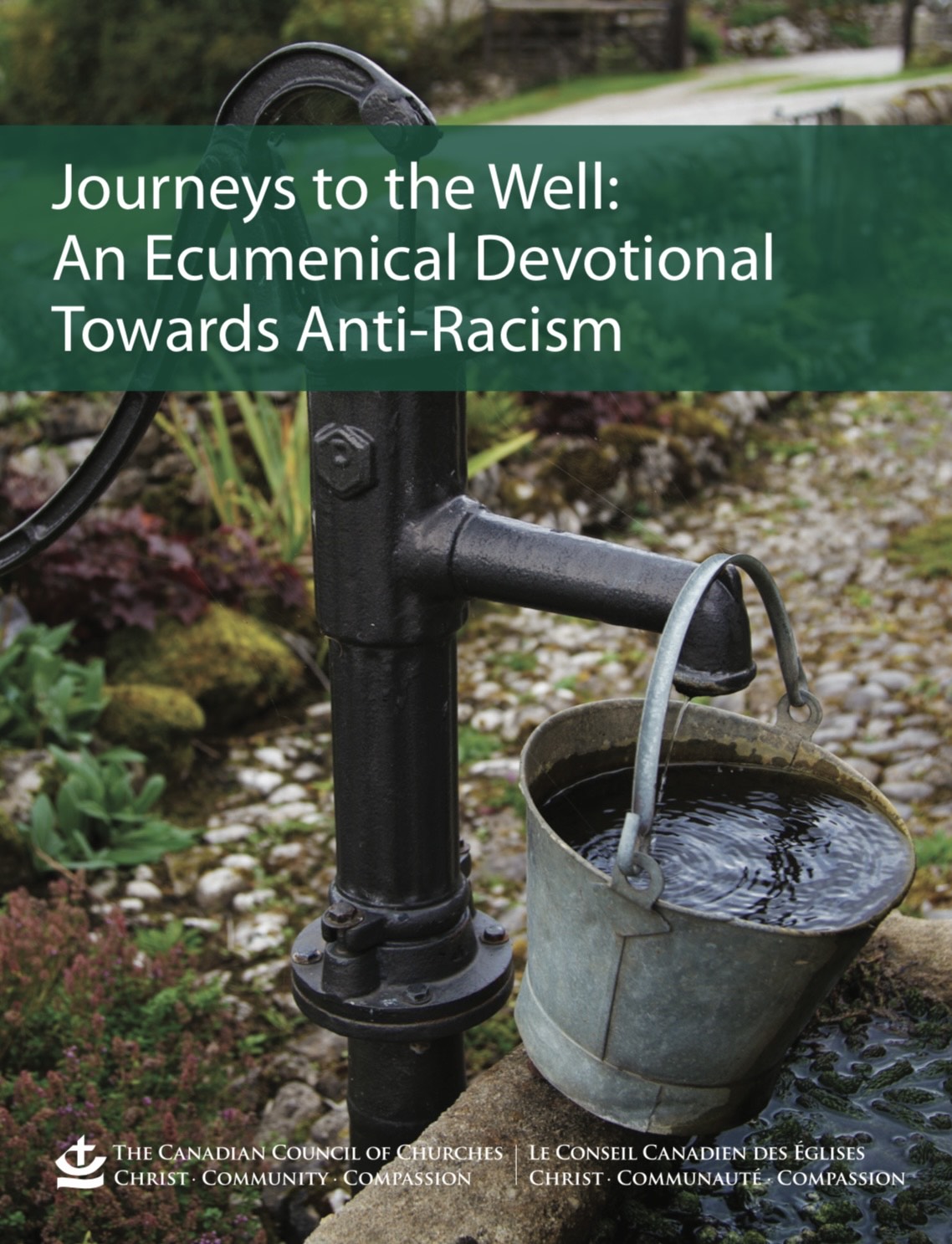
The Commission on Justice and Peace of The Canadian Council of Churches (CCC) has released an ecumenical devotional resource entitled Journeys to the Well – An Ecumenical Devotional Towards Anti-Racism.
This ecumenical devotional, created by the Commission on Justice and Peace, addresses racism as a central issue for the church. The contributors, most of whom are Black, Indigenous, and People of Colour, and from diverse denominations, ages, and locations across Canada, were invited to reflect on self-selected scriptures and their personal experiences. A minimal editing approach was taken to centre the authors’ authentic voices.
The devotional aims to connect faith with anti-racism action, encouraging readers to engage with scripture and prayer as a foundation for working towards racial justice. It is intended for flexible use, allowing readers to engage with the reflections whatever way resonates with them.
The Commission on Justice and Peace, an ecumenical body within the CCC, facilitates dialogue on justice and peace issues, bridging denominational differences through shared Christian faith.


 Following in the footsteps of his predecessors
 This ecumenical devotional, created by the