
Synodality
Women’s Participation in Church
The General Secretariat of the Synod published the Final Report of Study Group No. 5 on Women’s participation in the life and leadership of the Church, 10 March 2026
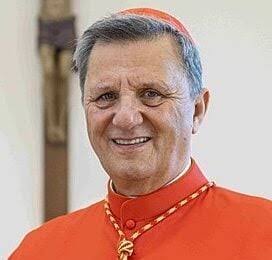
“When speaking about the role of women in the life of the Church, we must be aware that it is first and foremost a matter of cultural order,” states Cardinal Mario Grech, Secretary General of the Synod. He continues: “In many parts of the world, there are in fact deep cultural challenges that must be acknowledged and addressed. Too often, the way faith is lived is determined by certain cultural aspects rather than by Gospel values. Our renewed mission is to make the Church a force that embodies the Gospel within cultures, promoting respect for the rights of all and co-responsibility according to each person’s vocation. This requires courage, accompaniment, and patience in introducing gradual changes in order to preserve ecclesial communion, eliminate discrimination, and build communities in which the gifts and charisms of every person, men and women alike, are valued.”
Spirituality for Synodality
The poor and those on the margins are certainly found within the world, but they are also found within the Church itself. Here, we meet another dimension of ‘the poor’. The scriptures know them as ‘the anawim’ and Jesus extolls them in the Beatitudes: ‘blessed are the poor in spirit for theirs is the Kingdom of Heaven’ (Matt 5:3). These are the ones who are completely dependent upon God. They have no one else to turn to or to defend them. They can be found in every parish, at every Mass and in every parish activity. These are the ones who may never speak at a meeting but, without whose witness and presence, the Church itself would be impoverished. . . .
‘The Church cannot let the poor down…’ (Pope Benedict, Verbum Domini §107). A synodal Church will be concerned to give all a place and a voice; it will be creative in reaching those who are often unseen, unheard or seldom thought of. This would include other Christian Churches and traditions. It is also possible that, on the margins of our societies and our churches, we may discover today’s saints and martyrs, persecuted communities, along with those who strive to build bonds of communion and peace among peoples and religions.
Ref: Towards a Spirituality for Synodality, document of Commission on spirituality, subgroup p.40-41
Below is the link to a video (6 mins.) by Cardinal Jean-Claude Hollerich, sj: Unlocking the power of the Spirit: a new path for the Catholic Church’s mission.
In this video, Cardinal Jean-Claude Hollerich invites us to explore the profound meaning of synodality, or “walking together,” for the future of the Church. Discover why this concept is vital today and how every person, regardless of their role, is called to participate in this important journey of faith and mutual listening.
Formation of the People of God
One of the requests that emerged most strongly and from all contexts during the synodal process is that the formation provided by the Christian community be integral and continuing. Such formation must aim not only at acquiring theoretical knowledge but also at promoting the capacity for openness and encounter, sharing and collaboration, reflection and discernment in common.
Formation must consequently engage all the dimensions of the human person (intellectual, affective, relational and spiritual) and include concrete experiences that are appropriately accompanied. There was also a marked insistence throughout the synodal process upon the need for a common and shared formation, in which men and women, laity, consecrated persons, ordained ministers and candidates for ordained ministry participate together, thus enabling them to grow together in knowledge and mutual esteem and in the ability to collaborate. This requires the presence of suitable and competent educators, capable of demonstrating with their lives what they transmit with their words.