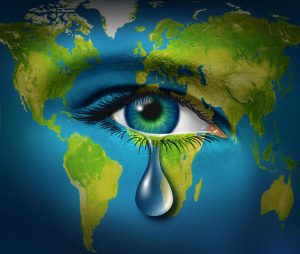
We are all aware of the ways in which extreme weather patterns are impacting our world – devastating wildfires in Maui, widespread flooding in many parts of Asia, severe droughts in the southern US, hundreds of wildfires raging in Canada, extreme “off the charts” heat in many countries around the globe.
Used under licence
What happens in one part of the world affects us all in this new awareness of our interconnectedness as one global family.
Let us hold in prayer all our sisters and brothers whose lives, properties and livelihoods have been forever changed by these climate disasters.
Todos somos conscientes de los efectos de los fenómenos meteorológicos extremos en nuestro mundo: incendios devastadores en Maui, inundaciones generalizadas en muchas partes de Asia, graves sequías en el sur de EE.UU., cientos de incendios forestales en Canadá y un calor extremo en muchos países del mundo.
Lo que ocurre en una parte del mundo nos afecta a todos en esta nueva conciencia de nuestra interconexión como una familia global.
Oremos por todos nuestros hermanos y hermanas cuyas vidas, propiedades y medios de subsistencia han cambiado para siempre a causa de estos desastres climáticos.
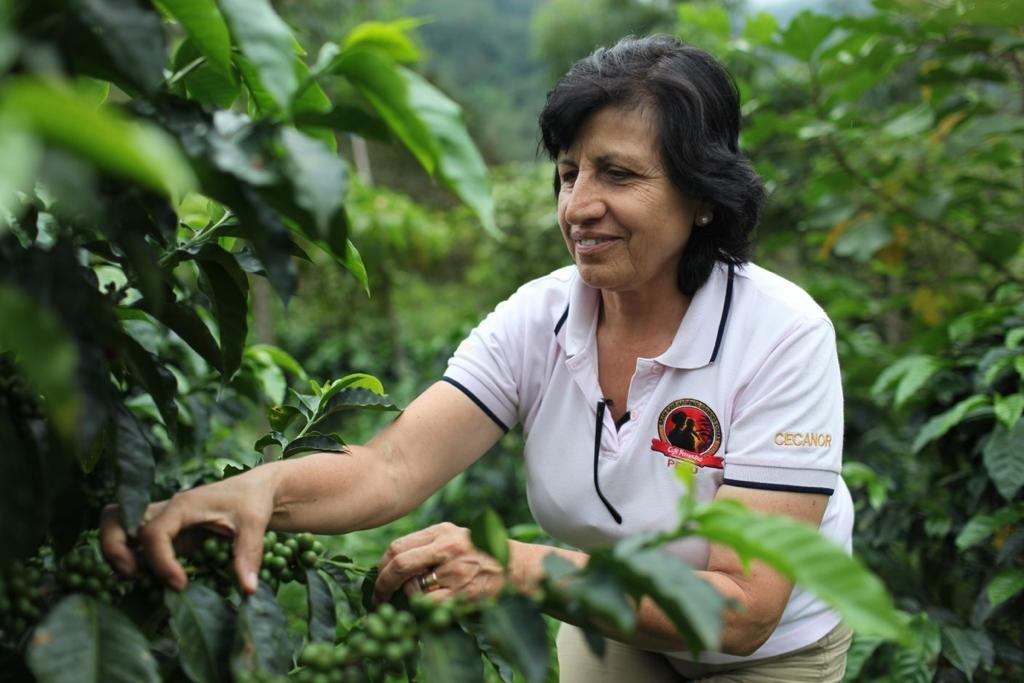
Peruvian sociologist Isabel Uriarte Latorre ignited the Café Femenino movement, which has helped liberate women landowners by paying them directly for their work
Isabel Uriarte Latorre. Source: Cafe Femenino Foundation
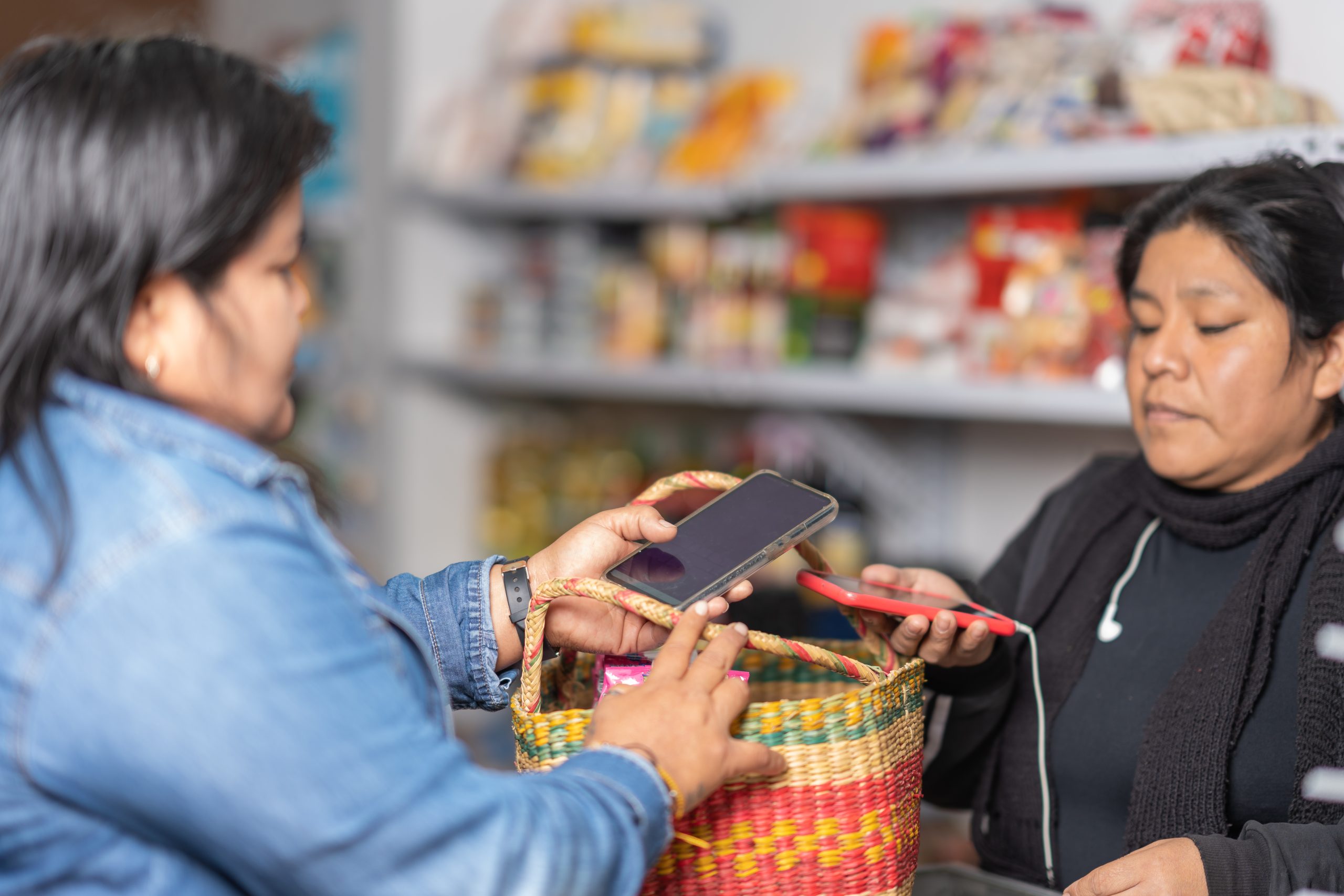
“From little coffee beans, a co-operative movement has grown that now supports the sisterhood by ensuring its 6,000 strong female farmers across nine countries get paid into their own hands
The movement, called Café Femenino, gives coffee lovers a fresh reason to enjoy a cup of their favourite brew, for the brand you choose can empower the people who grow it too.
It’s a fact that has preoccupied social entrepreneur Isabel Uriarte Latorre since her earliest days as a sociology student in the 1970s in Lambayeque, a coastal city in northern Peru.
As the daughter of farmers who had migrated to the city in search of a better life, she developed an interest in the lives of women in the South American country’s rural communities. Much of what she learned upset her: While women in these agrarian regions were responsible for picking the beans, they existed at the foothills of what is a mountainous global industry…”
Cafe Fermino coffee is available for purchase in Canada (Alberta, British Columbia, Ontario, Quebec), USA, UK and Australia. Locations are listed online here
La socióloga peruana Isabel Uriarte Latorre impulsó el movimiento Café Femenino, que ha contribuido a liberar a las mujeres propietarias de tierras pagándoles directamente por su trabajo.
Stock photo
“A partir de pequeños granos de café, ha crecido un movimiento cooperativo que ahora apoya a la hermandad garantizando que sus 6.000 fuertes agricultoras de nueve países reciban el pago en sus propias manos”.
El movimiento, llamado Café Femenino, ofrece a los amantes del café una nueva razón para disfrutar de su infusión favorita, ya que la marca que elijas puede empoderar también a las personas que lo cultivan.
Es un hecho que ha preocupado a la empresaria social Isabel Uriarte Latorre desde sus primeros días como estudiante de sociología en los años setenta en Lambayeque, una ciudad costera del norte de Perú.
Hija de campesinos que habían emigrado a la ciudad en busca de una vida mejor, se interesó por la vida de las mujeres en las comunidades rurales del país sudamericano. Gran parte de lo que aprendió le disgustó: Aunque las mujeres de estas regiones agrarias eran las encargadas de recoger las judías, existían en las estribaciones de lo que es una industria global montañosa…”
Lea la historia completa aquí. Fuente: Irish Times
El café de Cafe Fermino está a la venta en Canadá (Alberta, Columbia Británica, Ontario, Quebec), Estados Unidos, Reino Unido y Australia. Las ubicaciones figuran en línea aquí
The Sisters of Mercy have provided ministry in Conception Harbour for over 150 years.
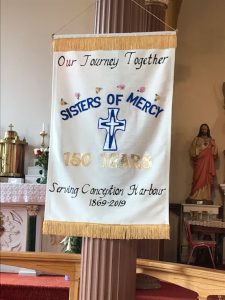
On Tuesday May 21 about thirty of us attended a grand celebration in the parish of Eucharist followed by a hot roast beef dinner. Sister Roisin Gannon represented the Presentation Sisters. Bishop Anthony Daniels surrounded by seven priests of the Grand Falls Diocese celebrated Eucharist in St. Anne’s Church with participation of the sisters and parishioners in readings, music and other moments in the liturgy. The church was sparkling and beautifully decorated with roses. A large banner hung in the church acknowledging the 150 years’ anniversary – Our Journey Together! At the end of Mass, a plaque was presented to the Congregation which will be placed in the church to commemorate the anniversary. In his homily Bishop Daniels connected the call and ministry of the sisters to that of the early disciples of Jesus and gratefully commended their life and ministry among the people of Conception Harbour and surrounding area.
Almost 180 friends and parishioners were seated at the banquet tables in St. Anne’s Hall and were served a delicious meal catered by Tiny’s Restaurant. Mrs. Agnes (O’Driscoll) Richard recounted her memories of going to school to the sisters and told wonderful and humorous stories of her experiences in the various grade levels. Sister Elizabeth Davis responded with a little of the history of the foundation and proud commendation of the support and collaboration of the people during all those years and up to the present. She included a remembrance of the five sisters who are buried in the convent garden and in the receptive soil of Conception Harbour. The Mayor presented Sister Geraldine with a plaque to commemorate the anniversary. A huge cake baked and decorated by the niece of Sister M. Damien Morrissey was served to the crowd at the end of the dinner. (The small statue of Mary on the cake was salvaged from St. Anne’s School when it closed! The baker told me she couldn’t find a ’nun’ statue!)
Congratulations to the Sisters who currently live and minister in Conception Harbour, Sisters Geraldine Mason, Ruth Beresford and Ellen Marie Sullivan!
Congratulations to the Sisters of Mercy especially those who ministered there, and to the generous, faithful and loving people and church of Conception Harbour! Congratulations and thanks to all who prepared the details of the celebration! Congratulations on this 150th anniversary celebration!
Las Hermanas de la Misericordia llevan más de 150 años ejerciendo su ministerio en Conception Harbour.
El martes 21 de mayo una treintena de nosotras asistimos a una gran celebración en la parroquia de la Eucaristía seguida de una cena caliente de carne asada. La Hermana Roisin Gannon representó a las Hermanas de la Presentación. El obispo Anthony Daniels rodeado de siete sacerdotes de la diócesis de Grand Falls celebró la Eucaristía en la iglesia de Santa Ana con la participación de las hermanas y los feligreses en las lecturas, la música y otros momentos de la liturgia. La iglesia estaba resplandeciente y bellamente decorada con rosas. En la iglesia colgaba una gran pancarta en reconocimiento del 150 aniversario: ¡Nuestro viaje juntos! Al final de la misa, se entregó a la Congregación una placa que se colocará en la iglesia para conmemorar el aniversario. En su homilía, el obispo Daniels relacionó la llamada y el ministerio de las hermanas con el de los primeros discípulos de Jesús y elogió con gratitud su vida y su ministerio entre la gente de Conception Harbour y alrededores.
Casi 180 amigos y feligreses se sentaron a las mesas del banquete en la Sala de Santa Ana y se les sirvió una deliciosa comida servida por el Restaurante Tiny’s. La Sra. Agnes (O’Driscoll) Richard relató a las hermanas sus recuerdos de cuando iba a la escuela y contó historias maravillosas y llenas de humor de sus experiencias en los distintos grados. La hermana Elizabeth Davis respondió con un poco de la historia de la fundación y elogió con orgullo el apoyo y la colaboración de la gente durante todos esos años y hasta el presente. Incluyó un recuerdo de las cinco hermanas que están enterradas en el jardín del convento y en el suelo receptivo de Conception Harbour. El alcalde entregó a la hermana Geraldine una placa conmemorativa del aniversario. Al final de la cena se sirvió a los asistentes una enorme tarta horneada y decorada por la sobrina de la hermana M. Damien Morrissey. (¡La pequeña estatua de María de la tarta fue rescatada del colegio Santa Ana cuando cerró! La pastelera me dijo que no pudo encontrar una estatua de “monja”).
Felicidades a las Hermanas que actualmente viven y ejercen su ministerio en Conception Harbour, las Hermanas Geraldine Mason, Ruth Beresford y Ellen Marie Sullivan.
Felicidades a las Hermanas de la Misericordia, especialmente a las que ejercen su ministerio allí, y a la generosa, fiel y cariñosa gente e iglesia de Conception Harbour. ¡Felicidades y gracias a todos los que prepararon los detalles de la celebración! ¡Felicidades por esta celebración del 150 aniversario!
La Giornata mondiale della salute, il 7 aprile, è un promemoria e un’opportunità per pregare per le persone malate.
Unisciti a noi nella preghiera oggi per tutti i malati, in particolare per le nostre sorelle, i nostri familiari, i nostri amici e chi si prende cura di loro.
Che Dio li tocchi con conforto, guarigione e forza.
Palm and Passion, trust in what is false or trust in an ever-faithful God, the gift of words and story, eco-memory – so many threads are woven through the tapestry that is the Liturgy of the Word for our Holy Week now unfolding. This Sunday is the transition moment to the final steps to transformation which will emerge next Sunday – Easter Sunday.
We begin our liturgy today with Jesus’ entry into Jerusalem, as the people shout, “Hosanna to the Son of David! Blessed is the one who comes in the name of the Lord! Hosanna in the highest heaven!” (Matt 21:9). The people were rejoicing in the coming of the Messiah, but they were placing all their hopes in a Messiah who was a king, a mighty and powerful leader, certainly not a Messiah who was a suffering servant, who would die by the lowest form of death possible – crucifixion. They were right to trust in this Prophet Jesus from Nazareth in Galilee. They were mistaken in understanding how this Prophet, this Son of David, this one who was coming in the name of the Lord, would lead them into new life. These same people, when their hopes seem lost, mock Jesus and choose the man Barabbas over him…
Ramos y Pasión, confianza en lo falso o confianza en un Dios siempre fiel, el don de la palabra y de la historia, la ecomemoria… son muchos los hilos que se entretejen a través del tapiz que es la Liturgia de la Palabra para nuestra Semana Santa que ahora se desarrolla. Este domingo es el momento de transición hacia los pasos finales de la transformación que se producirá el próximo domingo: el Domingo de Resurrección.
Comenzamos nuestra liturgia de hoy con la entrada de Jesús en Jerusalén, mientras el pueblo grita: “¡Hosanna al Hijo de David! ¡Bendito el que viene en nombre del Señor! Hosanna en las alturas”. (Mt 21,9). El pueblo se regocijaba por la venida del Mesías, pero ponía todas sus esperanzas en un Mesías que era un rey, un líder poderoso, y no en un Mesías que era un siervo sufriente, que moriría con la forma más baja de muerte posible: la crucifixión. Tenían razón al confiar en este Profeta Jesús de Nazaret de Galilea. Se equivocaron al comprender cómo este Profeta, este Hijo de David, este que venía en nombre del Señor, les conduciría a una vida nueva. Estas mismas personas, cuando sus esperanzas parecen perdidas, se burlan de Jesús y eligen al hombre Barrabás en vez de a él…
A zero-waste approach entails responsible production, consumption and disposal of products in a closed, circular system. This means that resources are reused or recovered as much as possible and that we minimize the pollution to air, land or water.
Achieving zero waste requires action from individuals, communities, organisations and governments.
We can all have an impact in enabling zero waste by changing habits and reusing and repairing products as much as possible before properly disposing of them.
What contribution can you make?
El Día Internacional de Residuo Cero tiene como objetivo promover modelos de consumo y producción sostenibles.
Un planteamiento de residuo cero implica una producción, consumo y eliminación responsables de los productos en un sistema cerrado y circular. Esto significa que los recursos se reutilizan o recuperan en la medida de lo posible y que reducimos al mínimo la contaminación del aire, la tierra o el agua.
Conseguir cero residuos requiere la acción de individuos, comunidades, organizaciones y gobiernos.
Todos podemos influir en la consecución de cero residuos cambiando hábitos y reutilizando y reparando los productos en la medida de lo posible antes de desecharlos correctamente.
Each week on our website Elizabeth Davis rsm provides a written reflection on the Sunday readings. These reflections contain insights and images, poetry and prose.
Sister Elizabeth’s reflections are published online in the Spirituality section under the appropriate liturgical season. They can be read online or downloaded.
As you journey through Lent to Easter, you might find these reflections a source of inspiration and nourishment and “a light for your path” (Ps 119).
Hope is being able to see that there is a light despite all the darkness (Desmond Tutu)
We all face challenges- as individuals and as communities. We all experience hardship at one point or another. It’s part of being human.
How can we weather the storms and emerge into sunlight? How do we distinguish between Hope and optimism? What tools are available to us to assist us in becoming resilient?
Research has shown that people who are hopeful often cope more effectively with obstacles and challenges.
On Saturday, March 4 from 10:00 am to noon join Tony Bidgood, CSsR and Anne Walsh as, together, we explore what hope is, and ways that we can become practitioners of hope in daily life. To register, please contact Marilyn Stack at marilynstack@gmail.com
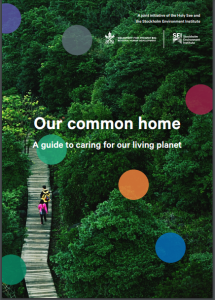
“Our common home: A guide to caring for our living planet,” is the product of the collaboration between the Dicastery for Promoting Integral Human Development and the Stockholm Environment Institute (SEI).
It connects the science of climate change, biodiversity and sustainable resource use with the messages of Pope Francis’s Encyclical Laudato Si’
The booklet, available in five languages, launched on 14 February 2023, distils the science on urgent environmental issues and explains how individuals and communities can take action to build a more sustainable and socially just future..
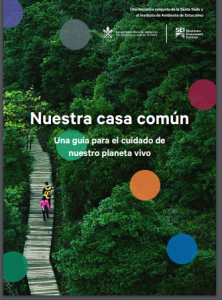
“Nuestra casa común: Una guía para cuidar nuestro planeta vivo”, es fruto de la colaboración entre el Dicasterio para la Promoción del Desarrollo Humano Integral y el Instituto de Medio Ambiente de Estocolmo (SEI).
Conecta la ciencia del cambio climático, la biodiversidad y el uso sostenible de los recursos con los mensajes de la Encíclica Laudato Si’ del Papa Francisco.
El folleto, disponible en cinco idiomas, lanzado el 14 de febrero de 2023, destila la ciencia sobre cuestiones medioambientales urgentes y explica cómo los individuos y las comunidades pueden actuar para construir un futuro más sostenible y socialmente justo…
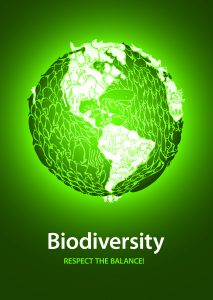
A historic deal was reached at the UN Biodiversity Summit (COP15) on Monday, December 19 when 195 countries adopted the Kunming-Montreal Global Biodiversity Framework.
The aim of this global pact is to halt and reverse the rapid loss of biodiversity by 2030, setting aside at least 30% of the world’s lands, oceans and inland waters for conservation and respecting the rights, roles and contributions of indigenous peoples toward this goal. The Framework designed at COP15 charts a new way forward, a path away from the damaging patterns that led to the destructionof ecosystems and diminishment of species over many decades. Attached is a segment of an article by Brian Roewe, an environmental correspondent with the National Catholic Reporter, on the presence and influence of faith groups at COP15.
El lunes 19 de diciembre se alcanzó un acuerdo histórico en la Cumbre de las Naciones Unidas sobre Biodiversidad (COP15), cuando 195 países adoptaron el Marco Mundial para la Biodiversidad de Kunming-Montreal.
El objetivo de este pacto mundial es detener e invertir la rápida pérdida de biodiversidad para 2030, reservando al menos el 30% de las tierras, océanos y aguas continentales del mundo para su conservación y respetando los derechos, funciones y contribuciones de los pueblos indígenas hacia este objetivo. El Marco diseñado en la COP15 traza un nuevo camino a seguir, un camino que se aleja de los patrones perjudiciales que condujeron a la destrucción de los ecosistemas y a la disminución de las especies durante muchas décadas. Se adjunta un fragmento de un artículo de Brian Roewe, corresponsal medioambiental del National Catholic Reporter, sobre la presencia y la influencia de los grupos religiosos en la COP15.


 On Tuesday May 21 about thirty of us attended a grand celebration in the parish of Eucharist followed by a hot roast beef dinner. Sister Roisin Gannon represented the Presentation Sisters. Bishop Anthony Daniels surrounded by seven priests of the Grand Falls Diocese celebrated Eucharist in St. Anne’s Church with participation of the sisters and parishioners in readings, music and other moments in the liturgy. The church was sparkling and beautifully decorated with roses. A large banner hung in the church acknowledging the 150 years’ anniversary – Our Journey Together! At the end of Mass, a plaque was presented to the Congregation which will be placed in the church to commemorate the anniversary. In his homily Bishop Daniels connected the call and ministry of the sisters to that of the early disciples of Jesus and gratefully commended their life and ministry among the people of Conception Harbour and surrounding area.
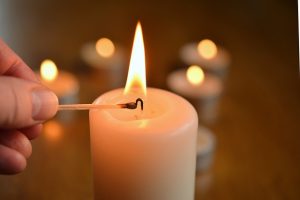 Join us in prayer today for all who are sick, especially our sisters, family members, friends and caregivers.
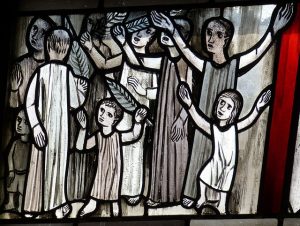 We begin our liturgy today with Jesus’ entry into Jerusalem, as the people shout, “Hosanna to the Son of David! Blessed is the one who comes in the name of the Lord! Hosanna in the highest heaven!” (Matt 21:9). The people were rejoicing in the coming of the Messiah, but they were placing all their hopes in a Messiah who was a king, a mighty and powerful leader, certainly not a Messiah who was a suffering servant, who would die by the lowest form of death possible – crucifixion. They were right to trust in this Prophet Jesus from Nazareth in Galilee. They were mistaken in understanding how this Prophet, this Son of David, this one who was coming in the name of the Lord, would lead them into new life. These same people, when their hopes seem lost, mock Jesus and choose the man Barabbas over him…
 Sister Elizabeth’s reflections are published online in
  We all face challenges- as individuals and as communities. We all experience hardship at one point or another. It’s part of being human.
 It connects the science of climate change, biodiversity and sustainable resource use with the messages of Pope Francis’s Encyclical
  Conecta la ciencia del cambio climático, la biodiversidad y el uso sostenible de los recursos con los mensajes de la Encíclica Laudato Si’ del Papa Francisco.
 The aim of this global pact is to halt and reverse the rapid loss of biodiversity by 2030, setting aside at least 30% of the world’s lands, oceans and inland waters for conservation and respecting the rights, roles and contributions of indigenous peoples toward this goal. The Framework designed at COP15 charts a new way forward, a path away from the damaging patterns that led to the destructionof ecosystems and diminishment of species over many decades.