Sister Elizabeth Davis has been selected to participate in the General Assembly of the Synod of Bishops to be held in Rome in October. Delegates representing bishops, priests, religious and laypeople from around the world will be present at the October session.
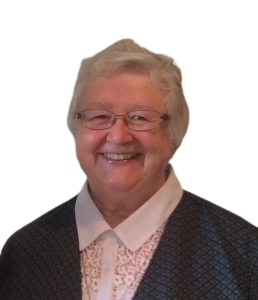
Sister Elizabeth was nominated through the Union of Superiors Generals (UISG). When the call for nominees from North America came forth the different congregational leaders in Canada were invited to submit a name. The ten chosen – five women and five men –represent religious orders from countries around the world. Elizabeth is in section A and will be a voting member of the Synod.
The Synod in Rome follows diocesan, national, and continental phases of the Synod that began in October 2021. The Synod has as its theme “For a synodal church: communion, participation, and mission.”
More about the October 2023 Session can be found on our websitehere
La Hermana Elizabeth Davis ha sido seleccionada para participar en la Asamblea General del Sínodo de los Obispos que se celebrará en Roma en octubre. En la sesión de octubre estarán presentes delegados que representan a obispos, sacerdotes, religiosos y laicos de todo el mundo.
La Hermana Elizabeth fue nominada a través de la Unión de Superioras Generales (UISG). Cuando se hizo la convocatoria de candidaturas de América del Norte, se invitó a los distintos líderes congregacionales de Canadá a presentar un nombre. Los diez elegidos -cinco mujeres y cinco hombres- representan a órdenes religiosas de países de todo el mundo. Elizabeth pertenece a la sección A y será miembro con derecho a voto del Sínodo.
El Sínodo de Roma sigue a las fases diocesana, nacional y continental del Sínodo que comenzó en octubre de 2021. El Sínodo tiene como lema “Por una Iglesia sinodal: comunión, participación y misión”.
Puede encontrar más información sobre la Sesión de octubre 2023 en nuestro sitio web aquí
The Family Life Bureau, established in the Archdiocese of St. John’s in 1976, offers counseling in a whole range of areas including individual, marriage, and family counseling. Clients of the staff of the Bureau are either self-referred, referred from the courts, from physicians, various community agencies, and from priests throughout the Archdiocese.
Discovering and using your strengths to deal with personal and family life issues . . . Support to see you through . . .
Pastoral counseling is healing the mind, spirit, and relationships through the wisdom of behavioural sciences and spiritual values.
The goal of the Family Life Bureau is to foster positive changes in the lives of persons. Every person has within him/her the energy for growth. Troubled people seek out help when external circumstances lead to distressing separation from others, internal conflicts that cause pain and inner division, and when the life force within them is blocked from healing and growth.
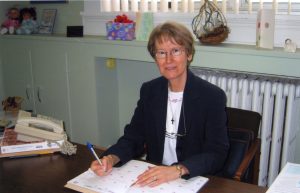
Sister Loretta Walsh, rsm, Executive Director of the Family Life Bureau, is a facilitator and counselor. She and two other certified counselors provide individual, couple, group and family counseling. They also organize and facilitate workshops and marriage preparation seminars. The workshops deal with issues related to family life, parenting, interpersonal relationships, separation and divorce, personal growth, youth, dealing with drugs, assertiveness and self-esteem.
One interesting program brings married couples together for a candlelight dessert and facilitated conversation about their relationship. This marriage enrichment component is facilitated collaboration with the West End Baptist Church and some Anglican parishes in St. John’s.
SoulWindsis a small piece of land – about three acres – located on the Little Kennisis River in the Algonquin Highlands of Haliburton County in Ontario’s near north in Canada.
SoulWinds is the home of Brenda Peddigrew, RSM, Ph.D. and Joan Weir, N.D., who tend the land in all its seasons and offer consultations, teaching and guidance in their respective fields and in many ways to be in nature’s presence.
Joint courses are offered on the SoulWinds property, though other accomodations are used for personal guided retreats with Brenda, and other consultations.
Visit their website to learn more about this Mercy ministry
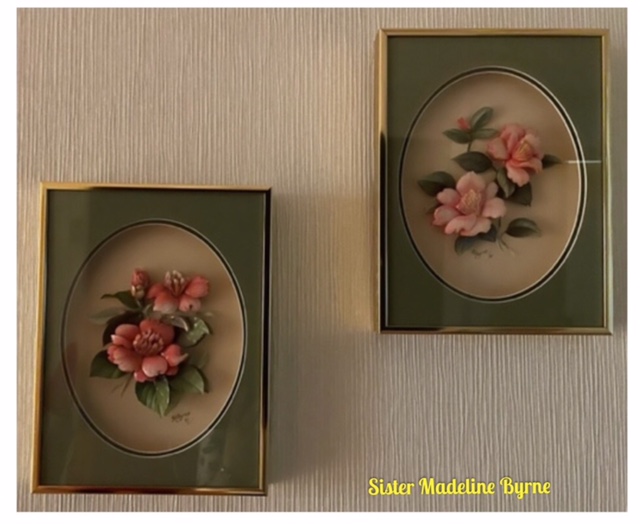
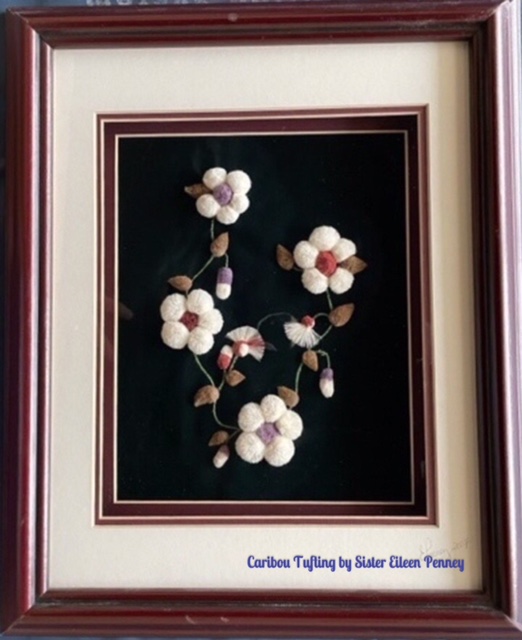
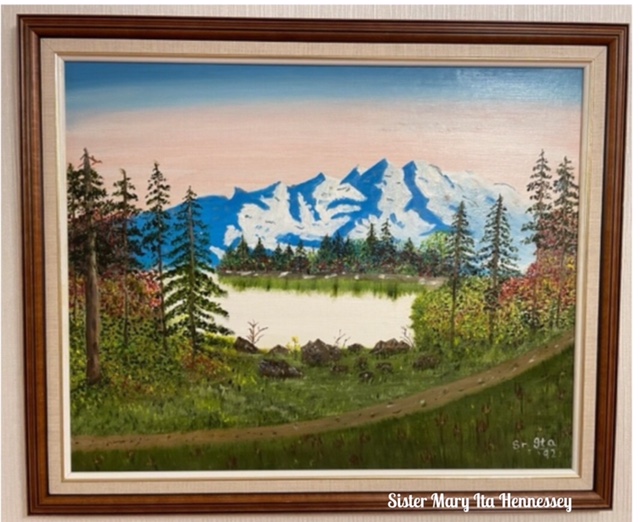
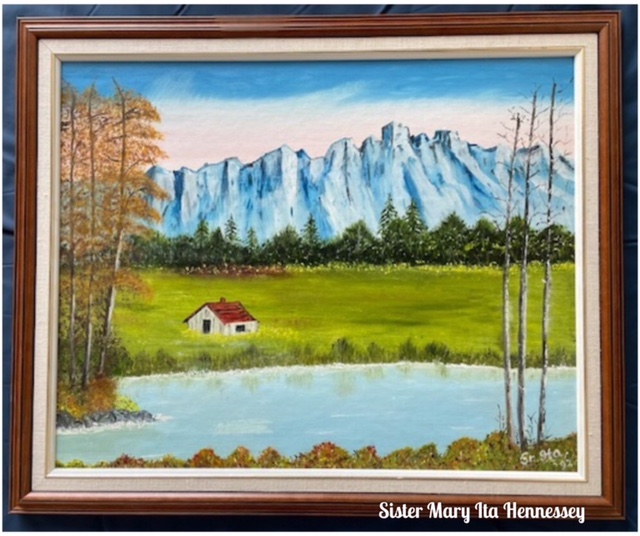
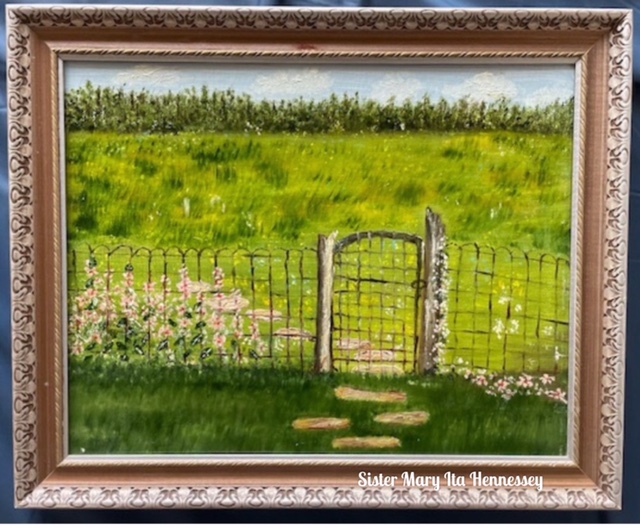
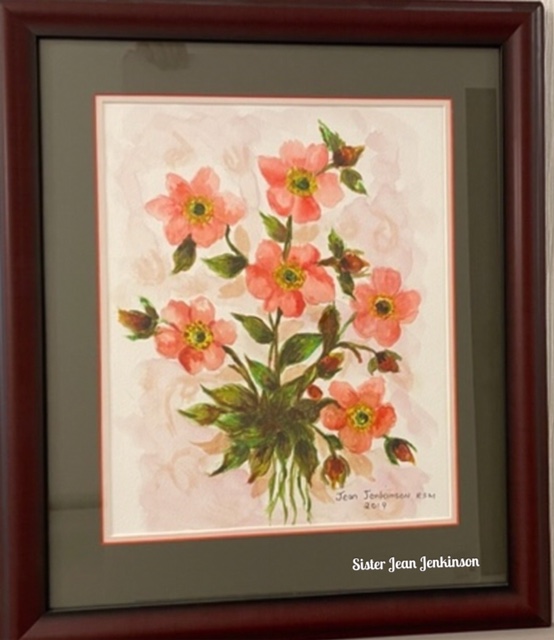
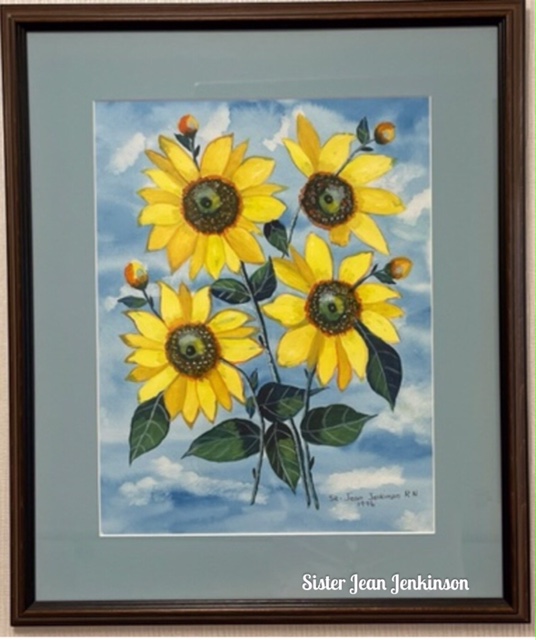
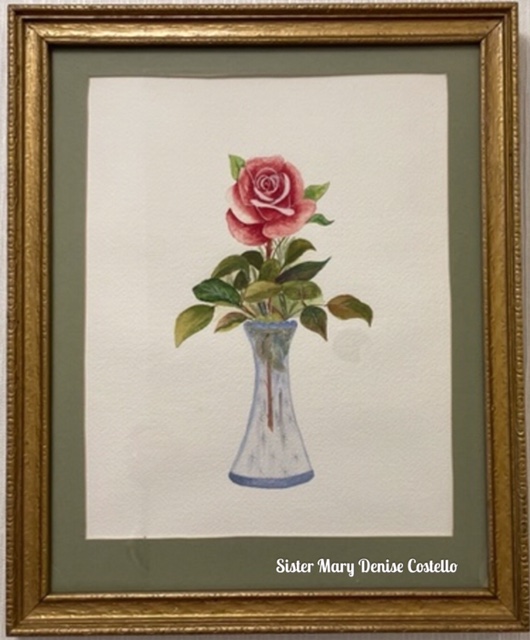
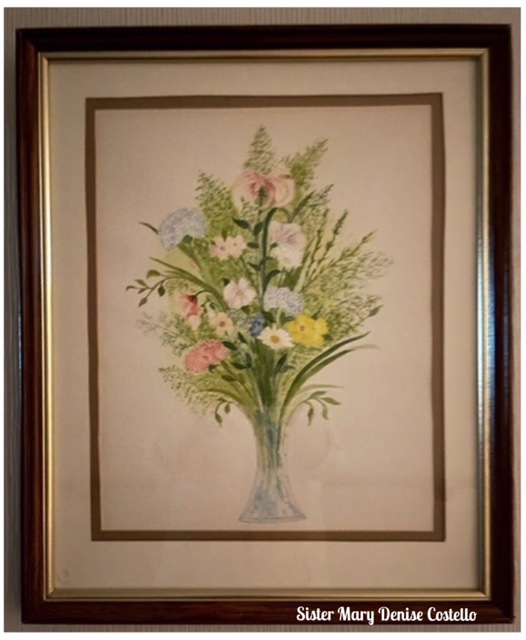
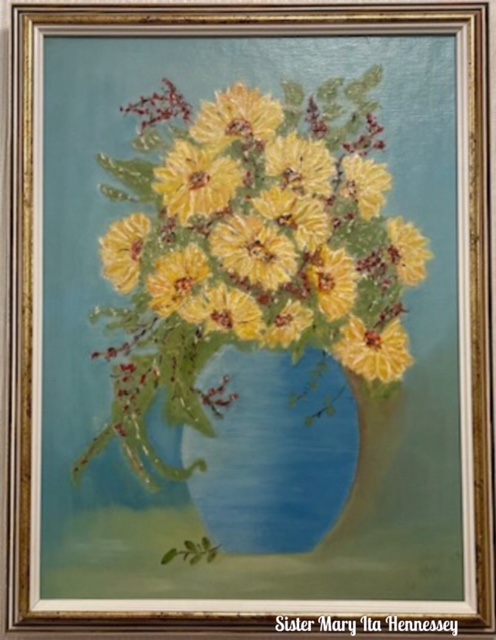
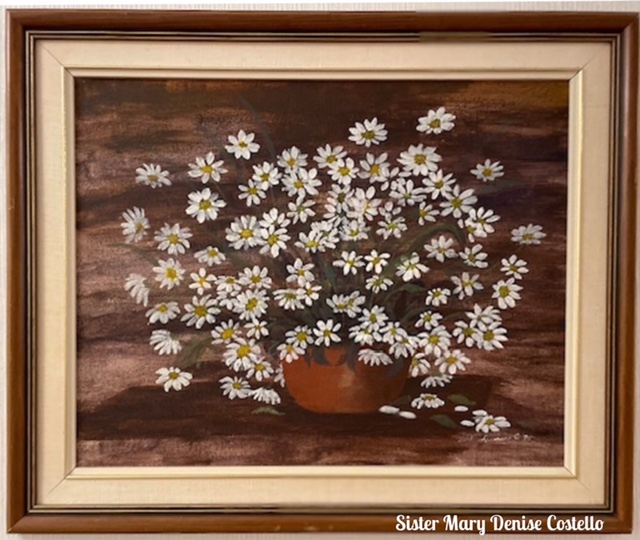
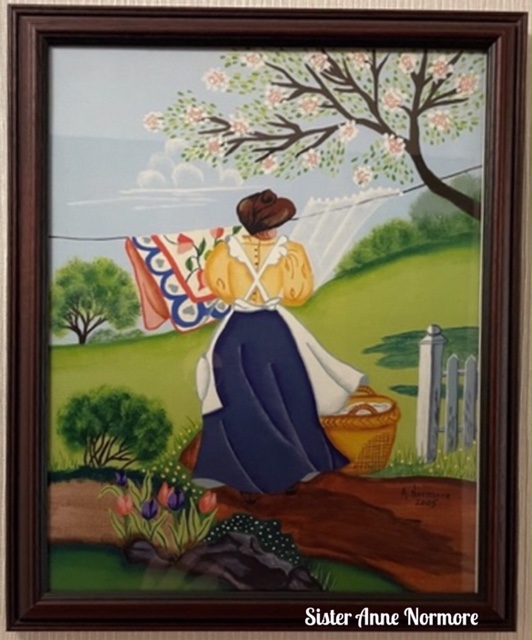
These artworks by the Sisters can be found hanging on the corridors of the Residence at Littledale. Enjoy browsing this online gallery and spending time with your favourite landscape, floral arrangement, or scene.
Estas obras de arte de las Hermanas se encuentran colgadas en los pasillos de la Residencia de Littledale. Disfrute navegando por esta galería en línea y pase un rato con su paisaje, arreglo floral o escena favoritos.
Sister Madeline Byrne has been contributing to the artistic atmosphere at McAuley Convent for the past few years. Every Thursday afternoon she guides and encourages some of the senior sisters to produce painting, cards and other creative works.
Madeline describes herself as “a budding Artist”, despite the fact that many of her beautiful paintings may be found in our convents and residences or on the walls in people’s homes!
Some of the Sisters at McAuley expressed an interest in painting. So, every week they take out their brushes and get to work. While there are no “Monets or Picassos” they all enjoy the time together. When a piece is finished they marvel at what they are able to produce. All are delighted to have their work published by displaying it on a special wall in the Convent. There have even been in-house sales of their cards!
Sor Madeline Byrne ha contribuido al ambiente artístico del convento de McAuley durante los últimos años. Todos los jueves por la tarde guía y anima a algunas de las hermanas mayores a realizar pinturas, tarjetas y otros trabajos creativos.
Madeline se describe a sí misma como “una artista en ciernes”, a pesar de que muchos de sus hermosos cuadros se pueden encontrar en nuestros conventos y residencias o en las paredes de las casas de la gente.
Algunas de las Hermanas de McAuley expresaron su interés por la pintura. Así que cada semana sacan sus pinceles y se ponen manos a la obra. Aunque no hay “Monets o Picassos”, todas disfrutan del tiempo que pasan juntas. Cuando terminan una obra, se maravillan de lo que son capaces de hacer. Todos están encantados de que se publiquen sus obras, que exponen en una pared especial del convento. Incluso se han vendido internamente sus tarjetas.
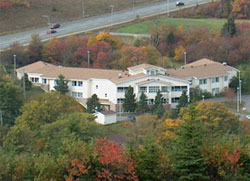
McAuley Convent was opened in 1991 to provide a residence and center of care of the sick and infirm members of our congregation.
This modern and tastefully decorated building is built into the hillside of the Littledale property in the Waterford River valley in the west end of St. John’s. Every floor of the three-storey building has a ground level entrance. The center courtyard, which can be viewed from every room on the back of the building and which can be entered from the community room, is lavishly landscaped with flowers, shrubs and trees. Sisters can safely walk around the garden or sit in the swing chairs or other chairs that are provided. A statue of Mary stands at the centre of the garden and the Stations of the Cross are located on one side of the garden.
There are three other smaller community rooms for different groups of sisters, including one for the sisters who are part of the staff at McAuley Convent. In addition to this there are two large dining rooms, individual bedrooms, a physio-therapy room and a few multi-use rooms for arts and crafts, games, meetings or solitude. A very large kitchen, storage and laundry take up the lowest floor of the building. The crown of the building is the beautiful chapel with a wall of windows that look out to the Southside Hills of the Waterford Valley. The Sisters are blessed to have mass celebrated every morning and those who cannot go to the chapel may hear the celebration in their bedrooms.
Besides being the residence for sisters who need care in their old age, McAuley is a place of recuperation for sisters who have surgery or injury that requires more care than is available in their own convent. Our sisters are given the best of care and receive wonderful attentiveness from the many lay staff and sisters. Some have lived to see 100 years or more. When a sister is dying the sisters who are able, keep day and night vigil. Sisters are prayed into God’s kingdom at the end of their lives.
McAuley Convent is a place of care, safety and nurturing; it is a place of faith, joy, freedom and celebration. It is a powerhouse of prayer for the many needs of individuals and for our world.
McAuley Convent closed in October, 2020 when the sisters needing care moved to the Residence at Littledale, a new facility owed and operated by a local businessman Fred Cahill, on the Littledale Property where we are renting the entire third floor.
El Convento McAuley se inauguró en 1991 para proporcionar una residencia y un centro de atención a los miembros enfermos y desvalidos de nuestra congregación.
Este edificio moderno y decorado con gusto está construido en la ladera de la propiedad de Littledale, en el valle del río Waterford, en el extremo oeste de St. Cada planta del edificio de tres pisos tiene una entrada a nivel del suelo. El patio central, que puede verse desde todas las habitaciones de la parte trasera del edificio y al que se accede desde la sala comunitaria, está profusamente ajardinado con flores, arbustos y árboles. Las hermanas pueden pasear sin peligro por el jardín o sentarse en los columpios u otras sillas que se proporcionan. Una estatua de María se alza en el centro del jardín y el Vía Crucis está situado en uno de sus lados.
Hay otras tres salas comunitarias más pequeñas para diferentes grupos de hermanas, incluida una para las hermanas que forman parte del personal del convento de McAuley. Además, hay dos grandes comedores, dormitorios individuales, una sala de fisioterapia y algunas salas multiusos para manualidades, juegos, reuniones o soledad. Una cocina muy grande, el almacén y la lavandería ocupan la planta más baja del edificio. La corona del edificio es la hermosa capilla con una pared de ventanas que dan a las colinas del sur del valle de Waterford. Las hermanas tienen la suerte de que se celebre misa todas las mañanas y las que no pueden ir a la capilla pueden oír la celebración en sus habitaciones.
Además de ser la residencia de las hermanas que necesitan cuidados en su vejez, McAuley es un lugar de recuperación para las hermanas que han sufrido una intervención quirúrgica o una lesión que requiere más cuidados de los que pueden recibir en su propio convento. Nuestras hermanas reciben los mejores cuidados y una atención maravillosa por parte del numeroso personal laico y de las hermanas. Algunas han vivido 100 años o más. Cuando una hermana se está muriendo, las hermanas que pueden velan día y noche. Al final de sus vidas, se reza por las hermanas para que entren en el reino de Dios.
El convento de McAuley es un lugar de cuidado, seguridad y crianza; es un lugar de fe, alegría, libertad y celebración. Es un centro de oración por las muchas necesidades de las personas y de nuestro mundo.
El Convento McAuley cerró en octubre de 2020, cuando las hermanas que necesitaban cuidados se trasladaron a la Residencia de Littledale, una nueva instalación propiedad de Fred Cahill, un empresario local, que la gestiona, en la propiedad Littledale donde estamos alquilando todo el tercer piso.
Each week on our website Elizabeth Davis rsm provides a written reflection on the Sunday readings. These reflections contain insights and images, poetry and prose, wisdom and scholarship.
Sister Elizabeth’s reflections are published online in the Spirituality section under the appropriate liturgical season. They can be read online or downloaded.
As we journey through Ordinary Time, Sr Elizabeth will open up for us these scripture readings in a fresh way using modern biblical scholarship.
Cada semana, Elizabeth Davis rsm ofrece en nuestro sitio web una reflexión escrita sobre las lecturas del domingo. Estas reflexiones contienen ideas e imágenes, poesía y prosa, sabiduría y erudición.
Las reflexiones de la Hermana Elizabeth se publican en línea en la sección de Espiritualidad bajo el tiempo litúrgico correspondiente. Pueden leerse en línea o descargarse.
A medida que avanzamos en el Tiempo Ordinario, la Hermana Elizabeth nos abrirá estas lecturas de las Escrituras de una manera nueva, utilizando la erudición bíblica moderna.
Le invitamos a unirse a nosotros en esta exploración aquí
Maria Nugent had the unique distinction of being the first Presentation postulant and the first Mercy postulant in Newfoundland and consequently in North America.
compassion
Known to us as Sister Mary Joseph, Maria died on this day in 1847, just five years after the founding of the Mercy mission in Newfoundland. Maria lived with her brother, Valentine Nugent and his family who had come to St. John’s from Ireland in 1833 at the invitation of Bishop Fleming.
Marianne Creedon, whose sister was Nugent’s wife, lived in the same household until she left for Ireland in 1839. For a number of years Maria and Marianne taught together at a school for young ladies on Water Street.
In 1834 Maria was admitted to the novitiate of the Presentation Sisters at Cathedral Square but later returned home because of ill health. Shortly after Marianne, now Sister Mary Francis, and her two companions came to St. John’s to begin their mission, Maria asked to join them. Bishop Fleming deemed her Presentation novitiate as fulfilling the requirements for entrance to the Mercy Order and she was professed as Sister Mary Joseph on March 25, 1843 in a ceremony held at the Presentation Convent.
Sister M. Joseph taught in the first Mercy school and was Sister M. Francis’ only companion when Sisters Ursula and Rose returned home in November of 1843. The two women, connected by bonds of family and love for the mission, faithfully carried out the responsibilities of school and visitation day after day in all kinds of weathers. An article in The Newfoundlander on June 24, 1847 gives a sense of their devotion and commitment:
Ever and anon might these two pious Sisters have been seen, before or after the toils of the day at school, treading through our snows and pelted by our sleet to smooth the pillow of the death-bed of the afflicted, and pouring into the ear of the infected words of promise and hope, either in the wretched hovels of the poor or in the hospital.
In June of 1847 when a typhus epidemic broke out in St. John’s, Sisters M. Francis and M. Joseph closed school and devoted themselves totally to those afflicted with the dreaded disease, visiting and caring for them in their homes and at St. John’s Hospital, located in present-day Victoria Park area. It was while Sister M. Joseph was caring for a young seaman who was dying from typhus that she herself became infected. After two weeks of intense suffering, she died on June 17 at the age of 48. She is buried with other victims of the disease on land which is now occupied by the Kirk.
We are the proud and grateful inheritors of this wonderful tradition of trust in God’s Providence, compassionate care and faithful service.
Maria Nugent tuvo la distinción única de ser la primera postulante de la Presentación y la primera postulante de la Misericordia en Terranova y, por consiguiente, en América del Norte.
The word “Mercy” written in isolated vintage wooden letterpress type on a white background.
Conocida por nosotros como la Hermana Mary Joseph, María murió un día como hoy en 1847, sólo cinco años después de la fundación de la misión de la Misericordia en Terranova. María vivía con su hermano, Valentine Nugent y su familia, que habían llegado a San Juan desde Irlanda en 1833 invitados por el obispo Fleming.
Marianne Creedon, cuya hermana era la esposa de Nugent, vivió en la misma casa hasta que se marchó a Irlanda en 1839. Durante varios años Maria y Marianne enseñaron juntas en una escuela para señoritas en Water Street.
En 1834, María ingresó en el noviciado de las Hermanas de la Presentación en Cathedral Square, pero más tarde regresó a casa por motivos de salud. Poco después de que Marianne, ahora hermana Mary Francis, y sus dos compañeras llegaran a St. John’s para comenzar su misión, María pidió unirse a ellas. El Obispo Fleming consideró que su noviciado en la Presentación cumplía los requisitos para entrar en la Orden de la Merced y profesó como Hermana Mary Joseph el 25 de marzo de 1843 en una ceremonia celebrada en el Convento de la Presentación.
La Hermana M. Joseph enseñó en la primera escuela de la Misericordia y fue la única compañera de la Hermana M. Francis cuando las Hermanas Ursula y Rose regresaron a casa en noviembre de 1843. Las dos mujeres, unidas por lazos de familia y amor a la misión, cumplieron fielmente con las responsabilidades de la escuela y la visitación día tras día en todo tipo de climas. Un artículo publicado en The Newfoundlander el 24 de junio de 1847 da una idea de su devoción y compromiso:
Estas dos piadosas hermanas han sido vistas una y otra vez, antes o después de los trabajos del día en la escuela, atravesando nuestras nieves y aguanieve para alisar la almohada del lecho de muerte de los afligidos. lecho de muerte de los afligidos, y vertiendo en el oído de los infectados palabras de promesa y esperanza, ya sea en las míseras de los pobres o en el hospital.
En junio de 1847, cuando estalló una epidemia de tifus en St. John’s, las hermanas M. Francis y M. Joseph cerraron la escuela y se dedicaron por completo a los afectados por la temida enfermedad, visitándolos y cuidándolos en sus casas y en el hospital de St. John’s, situado en la actual zona de Victoria Park. Fue mientras la hermana M. Joseph cuidaba a un joven marinero que se estaba muriendo de tifus cuando ella misma se infectó. Tras dos semanas de intenso sufrimiento, murió el 17 de junio a la edad de 48 años. Está enterrada, junto con otras víctimas de la enfermedad, en el terreno que hoy ocupa el Kirk.
Somos los orgullosos y agradecidos herederos de esta maravillosa tradición de confianza en la Providencia de Dios, cuidado compasivo y servicio fiel.
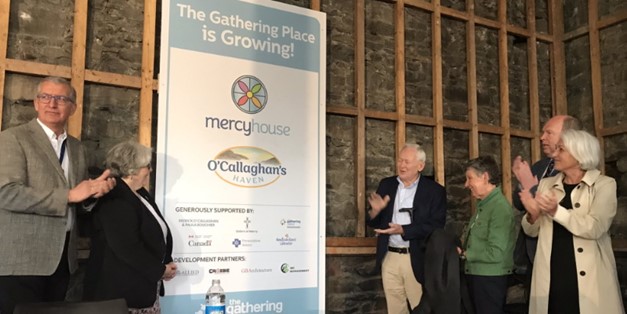
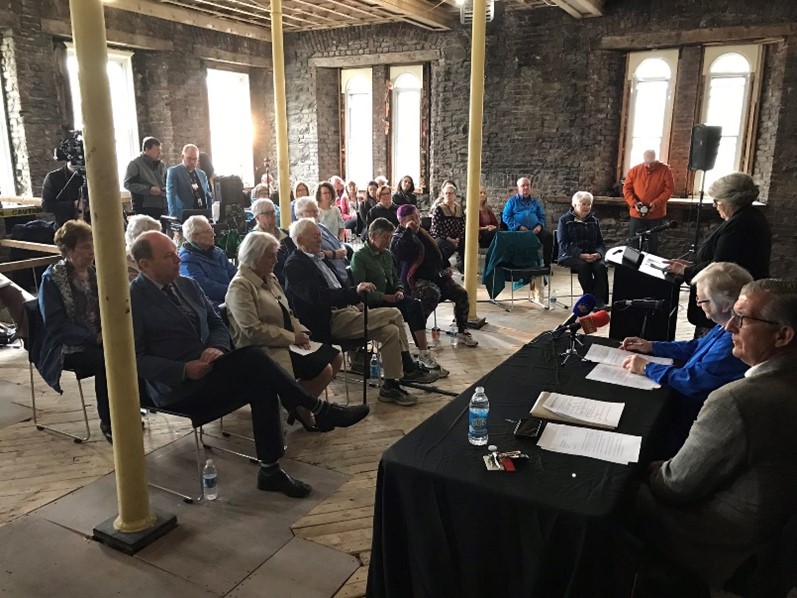
Ceremony to announce the transformation of Mercy Convent
On May 31, 2023 a simple, yet profound event took place in the bare-bone space of the former Mercy Convent in St. John’s, NL. The Institute of the Sisters of Mercy, a Roman Catholic order of women religious, was founded in Dublin in 1831 by Catherine McAuley. Three sisters of Mercy travelled from Dublin in 1842 to found a convent in St. John’s. For about 15 years the sisters lived in a wooden structure built as a convent by Bishop Fleming who invited sisters to come to Newfoundland.
L-r: Paul Davis, Executive Director, The Gathering Place; Sr. Diane Smyth, Congregational Leader Sisters of Mercy; Patrick O’Callaghan and Paula Boucher, Donors; John Abbott, MHA and Joanne Thompson, MP
The Mercy Convent structure today was constructed in 1857 and served as a convent up to 2021. Over the past months the building has been stripped to its foundational structure. Olympic Construction has begun the renovation to the building to transform it into a shelter and supportive housing structure that will accommodate 90 persons in need of temporary and transitional housing. It is hope that the project will be completed by June 2024. Day to day support services will be offered by The Gathering Place.
The Sisters of Mercy and the Presentation Sisters, as well as church parishes in the area, Roman Catholic, Anglican, United Church of Canada, and Presbyterian as well as other groups concerned about hunger, health, housing and social isolation of a large population in the central area of St. John’s joined forces in the early 1990s to envision a centre to serve the population in need of care and services. The Gathering Place opened in 1994 with basic food provision and social centre located in a vacant school building that had been refreshed for this new purpose. Since that time space and services and those seeking help increased exponentially and continue to do so. Now permanent supportive housing in this renovation project has been added to the services of The Gathering Place.
See below Mercy Convent Before and After Renovation as Shelter and transitional Housing (17:29)
Ceremonia para anunciar la transformación del Convento de la Misericordia
El 31 de mayo de 2023 tuvo lugar un acontecimiento sencillo, pero profundo, en el espacio desnudo del antiguo Convento de la Misericordia de St. El Instituto de las Hermanas de la Misericordia, una orden católica romana de religiosas, fue fundado en Dublín en 1831 por Catalina McAuley. Tres hermanas de la Misericordia viajaron desde Dublín en 1842 para fundar un convento en San Juan. Durante unos 15 años, las hermanas vivieron en una estructura de madera construida como convento por el obispo Fleming, que invitó a las hermanas a venir a Terranova.
La Hermana Diane Smyth ofrece saludos y una oración de bendición en la ceremonia celebrada en parte del espacio desnudo del antiguo convento.
La estructura actual del Convento de la Misericordia se construyó en 1857 y sirvió como convento hasta 2021. En los últimos meses, el edificio ha sido despojado de su estructura fundacional. Olympic Construction ha comenzado la renovación del edificio para transformarlo en una estructura de refugio y vivienda de apoyo que acogerá a 90 personas necesitadas de alojamiento temporal y transitorio. Se espera que el proyecto esté terminado en junio de 2024. Los servicios de apoyo diario serán ofrecidos por The Gathering Place.
Las Hermanas de la Misericordia y las Hermanas de la Presentación, así como las parroquias de la zona, católica romana, anglicana, de la Iglesia Unida de Canadá y presbiteriana, además de otros grupos preocupados por el hambre, la salud, la vivienda y el aislamiento social de una amplia población de la zona central de St. John’s, unieron sus fuerzas a principios de los años noventa para idear un centro que atendiera a la población necesitada de cuidados y servicios. El Gathering Place abrió sus puertas en 1994 con un servicio de alimentación básica y un centro social ubicado en un edificio escolar vacío que había sido acondicionado para este nuevo fin. Desde entonces, el espacio y los servicios y las personas que buscan ayuda han aumentado exponencialmente y siguen haciéndolo. Ahora, a los servicios de The Gathering Place se han añadido viviendas permanentes de apoyo en este proyecto de renovación.


 Sister Elizabeth was nominated through the Union of Superiors Generals (UISG). When the call for nominees from North America came forth the different congregational leaders in Canada were invited to submit a name. The ten chosen – five women and five men –represent religious orders from countries around the world. Elizabeth is in section A and will be a voting member of the Synod.
 Discovering and using your strengths to deal with personal and family life issues . . . Support to see you through . . .
 Sister Loretta Walsh, rsm, Executive Director of the Family Life Bureau, is a facilitator and counselor. She and two other certified counselors provide individual, couple, group and family counseling. They also organize and facilitate workshops and marriage preparation seminars. The workshops deal with issues related to family life, parenting, interpersonal relationships, separation and divorce, personal growth, youth, dealing with drugs, assertiveness and self-esteem.
 SoulWinds is the home of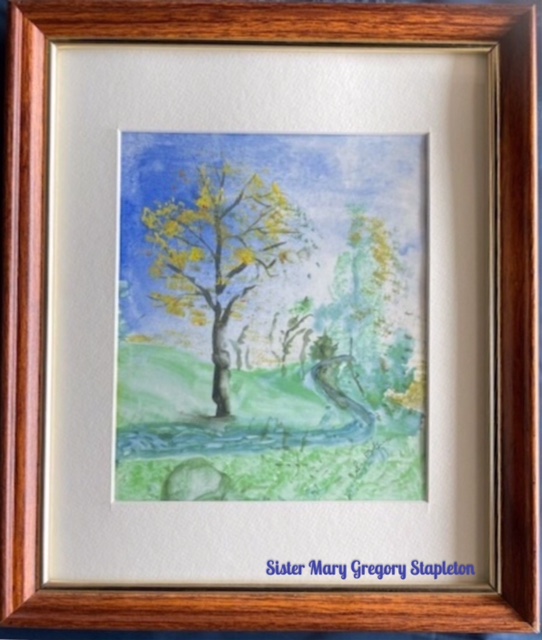

 Las reflexiones de la Hermana Elizabeth se publican en línea en la sección de Espiritualidad bajo el tiempo litúrgico correspondiente. Pueden leerse en línea o descargarse.