Remembering Our Newfoundland Mercy Story 6: Arrival Day!

(Marianne Creedon, born in 1811 in Coolowen, Co. Cork, went to Newfoundland with her sister’s family when she was 22 years old.  Bishop Fleming, an Irish Franciscan, negotiated with Catherine McAuley to send Marianne back to Dublin to prepare to establish a convent of the Sisters of Mercy in Newfoundland.  Marianne entered in 1839, was received in 1840 and professed in August 1841 with the religious name, Mary Francis.

On June 3, 1842, Sisters Francis Creedon, Ursula Frayne and Rose Lynch arrived in St. John’s, Newfoundland from the port of Kingstown, Ireland, on the ship the Sir Walter Scott to establish the Sisters of Mercy, the first foundation outside of Ireland and England.

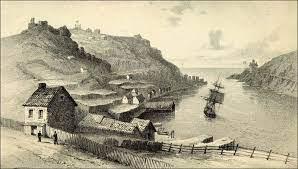
What must have been their thoughts as they looked upon the forbidding landscape with its towering rocky c liffs and craggy head lands ? Although they had seen poverty in Ireland, t he abject poverty of this place with its rude shacks and derelict fishing stages perched on the side of the hills, would have seared their hearts and minds. Sister Francis had lived in the colony for six years, but for Sisters Ursula and Rose the scene before them must have caused some dismay and distress.
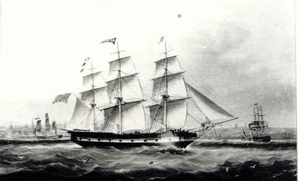
After a harrowing climb from the ship’s deck down to the small boat bobbing on the heaving sea, they made their way through the Narrows to St. John’s wharf. There they found a throng of people waiting to welcome them. Undoubtedly, the family of Sister Francis was among them, eager to see her after an absence of th ree years. Bishop Fleming transported them in his own carriage to his house on Henry Street, where they were to reside until thei r convent was built. What a momentous day this was! They were literally and figuratively transported to a new world, a world f ull of
promise and full of challenge. What relief they must have fel t to sleep in a bed after a month of rolling and tossing on the Atlantic How they must have prayed , thanking God f or a safe journey and begging for the courage and strength to carry out t he mission entrusted to them.

We are grateful for the spirit of Mercy that impelled them and for the legacy of compassion, courage, creativity, and commitment that we have inherited as Sisters of Mercy of Newfoundland.
We celebrate this day with great joy and gratitude.
Join us in prayer of gratitude today: Reflection Foundation 3 June 2023

  • Read more Sisters stories documenting our Newfoundland Mercy Story


(Marianne Creedon, nacida en 1811 en Coolowen, Co. Cork, fue a Terranova con la familia de su hermana cuando tenía 22 años. El obispo Fleming, un franciscano irlandés, negoció con Catherine McAuley el envío de Marianne de vuelta a Dublín para preparar la fundación de un convento de las Hermanas de la Misericordia en Terranova. Marianne ingresó en 1839, fue recibida en 1840 y profesó en agosto de 1841 con el nombre religioso de Mary Francis).

El 3 de junio de 1842, las Hermanas Francis Creedon, Ursula Frayne y Rose Lynch llegaron a St. John’s, Terranova, procedentes del puerto de Kingstown, Irlanda, en el barco Sir Walter Scott para fundar las Hermanas de la Misericordia, la primera fundación fuera de Irlanda e Inglaterra.

¿Qué debieron de pensar al contemplar el imponente paisaje de acantilados rocosos y escarpados promontorios? Aunque habían visto la pobreza en Irlanda, la abyecta pobreza de este lugar, con sus rudimentarias chozas y sus abandonadas etapas de pesca encaramadas en las laderas de las colinas, les habría abrasado el corazón y la mente. La hermana Francis había vivido en la colonia
seis años, pero a las hermanas Úrsula y Rosa la escena que tenían ante ellas debió causarles consternación y angustia.

Tras una angustiosa subida desde la cubierta del barco hasta el pequeño bote que se balanceaba en el mar agitado, se dirigieron a través de los Estrechos hasta el muelle de San Juan. Allí se encontraron con una multitud de gente que les esperaba para darles la bienvenida. Sin duda, entre ellos estaba la familia de la hermana Francis, ansiosa por verla después de tres años de ausencia. El obispo Fleming los trasladó en su propio carruaje a su casa de la calle Henry, donde residirían hasta que se construyera su convento. Fue un día memorable. Fueron literal y figuradamente transportadas a un nuevo mundo, un mundo lleno de
prometedor y lleno de desafíos. Cómo debieron de rezar, dando gracias a Dios por un viaje seguro y pidiendo valor y fuerza para llevar a cabo la misión que se les había encomendado.

Estamos agradecidas por el espíritu de Misericordia que las impulsó y por el legado de compasión, valentía, creatividad y compromiso que hemos heredado como Hermanas de la Misericordia de Terranova.
Celebramos este día con gran alegría y gratitud.
Únete hoy a nosotros en oración de gratitud: Celebrando 181 Años de la Misericordia NL


Care for Incarcerated Women

Sister Margie Taylor is proud to collaborate with the Stella Burry Community Services Association over the past couple of years. She feels that the vision and charism of Stella Burry, the namesake of this association, have so much in common with the vision and charism of Catherine McAuley. They were two pioneer women who were passionate in their goal to assist the poor and did not stop even when they faced considerable obstacles. Both were women who sought to “walk with the people.”

From 2001 Margie worked for six years with women in the correctional centre in Clarenville, Newfoundland. In her presence and ministry there she presided at ecumenical prayer services, facilitated the Twelve Step Program and other personal development and social programs meant to enhance the quality of the life of these women. Through her ministry at the correctional centre she was first introduced to the Stella Burry Association and learned of their support system, especially in the area of education and housing.  Margie was impressed with the mission of this group: Stella Burry Community Services provides support and opportunities for renewal and self-discovery through programs that affirm every individual’s strength and abilities, restoring their sense of self-worth and capacity for change.”
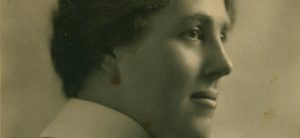

Stella Burry

Stella Burry
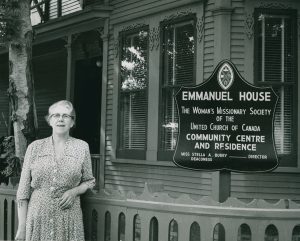
Portraits Collection, “Miss Stella Burry, Emmanuel House, St. John’s, Nfld.” 76.001P781, United Church of Canada Archives.

Stella Burry was born on August 11, 1897, in Greenspond, Bonavista Bay, Newfoundland and is remembered in the history of the United Church of Newfoundland as “one who has made an outstanding contribution to church and community.”  Stella Burry began teaching at the age of 17, but the overwhelming poverty she encountered in rural Newfoundland led her to reconsider her career and in 1922, she moved to Toronto to pursue studies in social work.  After graduating in 1924, she stayed in Toronto for the next decade.  She returned to Newfoundland in 1938 and began a life of work that characterized her as a “pioneer social worker” in her native province.

She believed people needed a “hand up” and not a “hand out” so she secured the funds necessary to create Emmanuel House as a safe haven and community centre for young women coming to St. John’s.    She lobbied for changes in policy that would help women find suitable employment.
The vision of Stella Burry is “to provide supportive affordable housing in an inclusive community that provides opportunities for real work and citizen participation.”   Stella Burry initiated many programs and her achievements during her lifetime were numerous.  She died in 1991 at the age of 93 but her legacy of outstanding advocacy and concern for people lives on in the organization that bears her name today, The Stella Burry Community Services.
The Stella Burry Community Services, established in 1995, is an incorporated body of the United Church of Canada.  It is governed by a volunteer community-based Board of Directors and an Executive Director.  SBCS oversees the programs and services offered through Emmanuel House, Naomi Centre, Carew Lodge, New Beginnings, a Community Support Project, a long-Term Housing Project and an Employment /Education Program.  SBCS is recognized as a leader in this province for the development of supportive housing for people with complex mental health needs and for employment programs that offer real work experience.

Ministry with Women

The Stella Burry Association is very supportive of women and men who have been incarcerated.  Sister Margie is presently volunteering in a support group which meets every Tuesday evening at the Hungry Heart Cafe (another enterprise of Stella Burry Community Services).  The goal of this group is to assist women in re-entering society after their time in prison.  The group is presently working on a DVD that will depict how women become involved in the prison system, a description of the supports or lack of supports and programs offered by the system, and the assistance which is available once they are no longer incarcerated.  Sister Margie says, “The ministry with these women and the staff of Stella Burry is a real blessing in my life.  Many times there is much hurt and pain when one of the women goes back on drugs/alcohol, returns to an abusive relationship or tries to commit suicide. But that is when the supports and encouragement are most needed. The Stella Burry Community Services is there to help women help themselves and to re-gain their life.”
For more information about Stella Burry check website: Stella’s Circle

La Hermana Margie Taylor está orgullosa de haber colaborado con la Asociación de Servicios Comunitarios Stella Burry durante los dos últimos años. Siente que la visión y el carisma de Stella Burry, la homónima de esta asociación, tienen mucho en común con la visión y el carisma de Catherine McAuley. Fueron dos mujeres pioneras que se apasionaron en su objetivo de ayudar a los pobres y no se detuvieron ni siquiera cuando se enfrentaron a obstáculos considerables. Ambas eran mujeres que buscaban “caminar con la gente”.

Desde 2001 Margie trabajó durante seis años con mujeres en el centro correccional de Clarenville, Terranova. En su presencia y ministerio allí presidió servicios ecuménicos de oración, facilitó el Programa de Doce Pasos y otros programas sociales y de desarrollo personal destinados a mejorar la calidad de vida de estas mujeres. A través de su ministerio en el centro correccional, conoció la Asociación Stella Burry y su sistema de apoyo, especialmente en el ámbito de la educación y la vivienda. Margie quedó impresionada con la misión de este grupo: Stella Burry Community Services proporciona apoyo y oportunidades de renovación y autodescubrimiento a través de programas que afirman la fuerza y las capacidades de cada individuo, restaurando su sentido de autoestima y su capacidad de cambio”.

Stella Burry

Portraits Collection, “Stella Burry” 1976.001P/780, United Church of Canada Archives.

Stella Burry nació el 11 de agosto de 1897 en Greenspond, Bonavista Bay, Terranova, y es recordada en la historia de la Iglesia Unida de Terranova como “una persona que ha hecho una contribución excepcional a la iglesia y a la comunidad”. Stella Burry empezó a enseñar a los 17 años, pero la abrumadora pobreza que encontró en la Terranova rural la llevó a reconsiderar su carrera y, en 1922, se trasladó a Toronto para cursar estudios de trabajo social. Tras licenciarse en 1924, permaneció en Toronto durante la década siguiente. Regresó a Terranova en 1938 y comenzó una vida de trabajo que la caracterizó como “trabajadora social pionera” en su provincia natal.

Creía que la gente necesitaba que le “echaran una mano” y no que se la “dieran”, así que consiguió los fondos necesarios para crear Emmanuel House como refugio y centro comunitario para las jóvenes que llegaban a St. Abogó por cambios en la política que ayudaran a las mujeres a encontrar un empleo adecuado.

La visión de Stella Burry es “proporcionar viviendas de apoyo asequibles en una comunidad integradora que ofrezca oportunidades de trabajo real y participación ciudadana”. Stella Burry puso en marcha muchos programas y sus logros en vida fueron numerosos. Murió en 1991 a la edad de 93 años, pero su legado de extraordinaria defensa y preocupación por las personas sigue vivo en la organización que hoy lleva su nombre, The Stella Burry Community Services.

Los Servicios Comunitarios Stella Burry, creados en 1995, son un organismo incorporado a la Iglesia Unida de Canadá. Se rige por un Consejo de Administración voluntario de base comunitaria y un Director Ejecutivo. SBCS supervisa los programas y servicios ofrecidos a través de Emmanuel House, Naomi Centre, Carew Lodge, New Beginnings, un proyecto de apoyo comunitario, un proyecto de vivienda a largo plazo y un programa de empleo/educación. SBCS es reconocido como líder en esta provincia por el desarrollo de viviendas de apoyo para personas con necesidades complejas de salud mental y por los programas de empleo que ofrecen experiencia laboral real.

Ministerio con mujeres
La Asociación Stella Burry es muy solidaria con las mujeres y los hombres que han sido encarcelados. La hermana Margie es actualmente voluntaria en un grupo de apoyo que se reúne todos los martes por la tarde en el Hungry Heart Cafe (otra empresa de los Servicios Comunitarios de Stella Burry). El objetivo de este grupo es ayudar a las mujeres a reinsertarse en la sociedad tras su paso por la cárcel. El grupo está trabajando actualmente en un DVD que mostrará cómo las mujeres se ven envueltas en el sistema penitenciario, una descripción de los apoyos o falta de apoyos y programas ofrecidos por el sistema, y la asistencia que está disponible una vez que ya no están encarceladas. La hermana Margie dice: “El ministerio con estas mujeres y el personal de Stella Burry es una verdadera bendición en mi vida. Muchas veces hay mucho dolor y sufrimiento cuando una de las mujeres vuelve a las drogas/alcohol, vuelve a una relación abusiva o intenta suicidarse. Pero es entonces cuando el apoyo y el ánimo son más necesarios. Los Servicios Comunitarios Stella Burry están ahí para ayudar a las mujeres a ayudarse a sí mismas y a recuperar su vida”.

Más información sobre Stella Burry en la web: Círculo de Stella

Prison Ministry

From our earliest days  in Newfoundland a number of Sisters of Mercy visited inmates of the various prisons in the town of St John’s and at the Salmonier prison farm.

Sisters are involved in the prison system as advocates, teachers, and pastoral care-givers. They provide spiritual and social activities to enhance the quality of the lives of the inmates by leading worship and prayer, by teaching sessions on self esteem, self-awareness and personal growth. They advocate for the basic needs of life, food, shelter, clothing for those who are leaving the prison and those who are trying to make a new life for themselves.
At the present time sisters go regularly to the men’s prison in Stephenville. Occasionally sisters visit the minimum security prison in St. John’s. Sometimes sisters accompany persons to the courts and serve as support, advocate and as witness.

Desde nuestros primeros días en Terranova, varias Hermanas de la Misericordia visitaron a los reclusos de las diversas prisiones de la ciudad de St John’s y de la granja de la prisión de Salmonier.

Las Hermanas participan en el sistema penitenciario como defensoras, maestras y cuidadoras pastorales. Proporcionan actividades espirituales y sociales para mejorar la calidad de vida de los reclusos dirigiendo el culto y la oración, impartiendo sesiones sobre autoestima, autoconciencia y crecimiento personal. Abogan por las necesidades básicas de la vida, la alimentación, el cobijo y la ropa de los que salen de la cárcel y de los que intentan forjarse una nueva vida.

Actualmente, las hermanas van regularmente a la prisión masculina de Stephenville. Ocasionalmente, las hermanas visitan la prisión de mínima seguridad de St. A veces las hermanas acompañan a las personas a los tribunales y les sirven de apoyo, de defensoras y de testigos.


Our Ministry in Peru

The Sisters of Mercy of Newfoundland arrived in Peru in November 1961 – when a group of six sisters took the long journey to participate in the mission of the Archdiocese of St. John’s in Monsefu, Chiclayo.

Sisters of Mercy from Newfoundland and Peru now minister in two areas of the country – in Puerto Eten, Reque and Eten, in the Chiclayo region and in Huarmey, Casma, Ancash.  Eight sisters of the Congregation of the Sisters of Mercy of Newfoundland (including four native Peruvians) work with the people, especially poor people, in towns and small villages in these two regions of Peru.
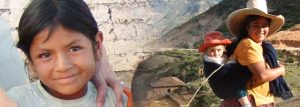
The sisters in Peru work closely with the people in catechetics, adult education, and in the various aspects of parish and liturgical life. They serve as teachers, social workers, advocates and champions of social justice.

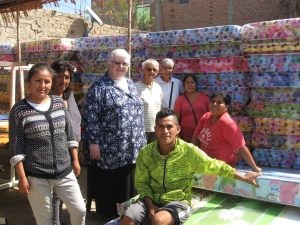
In 2017 devasting floods and rains destroyed large areas of Peru.  Damage in Huarmey was caused by overflowing rivers of water and mud that filled the streets and homes of the pueblos.  In Puerto Eten and area peoples’ homes did not have adequate roofing to keep out the rains.  Households were flooded and meager beds and furniture were destroyed.   The Sisters of Mercy and the Presentation Sisters in Newfoundland, along with some of the religious orders in Peru provided financial resources to obtain furniture and roofing for the people.  Other aid came from the Peruvian government and other international agencies.

Supporting the Ministry – Misericordia Mission Fund

Donations to the Misericordia Mission Fund, a registered charity established by the Sisters of Mercy of Newfoundland, are used in Peru to provide basic needs for poor families – food, clothing, fuel, medicine, education and shelter. Many children receive basic education and sometimes post secondary education through donations to the fund.

Educational programs and materials, e.g. reading materials,  computers, student supplies are made available when resources allow. Emphasis is placed on working with women in areas of family care, health, nutrition, sewing, gardening, etc.  Opportunities are provided for men and women to develop skills in carpentry and farming of family gardens – a cooperative venture to help people help themselves. Medical needs in the form of prescription drugs, diagnostic tests, x-rays, and special procedures or treatments are also provided through the fund.
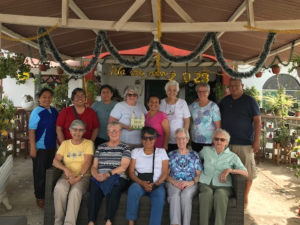
Educational programs and materials, e.g. reading materials,  computers, student supplies are made available when resources allow. Emphasis is placed on working with women in areas of family care, health, nutrition, sewing, gardening, etc.  Opportunities are provided for men and women to develop skills in carpentry and farming of family gardens – a cooperative venture to help people help themselves. Medical needs in the form of prescription drugs, diagnostic tests, x-rays, and special procedures or treatments are also provided through the fund.

All donations to the Misericordia Mission Fund are used in their entirety for the needs of poor people. Donations are received by the Misericordia Mission Fund in Newfoundland and are distributed by the Sisters who are ministering in Peru. Income tax receipts are issued for all donations to the fund.

Misericordia Mission Fund
P.O. Box 1757
St. John’s, Newfoundland, Canada, A1C 5P5
Telephone: 709-726-7320
Fax: 709-726-4414
E-mail: mercygeneralate@sistersofmercynf.org


Our Ministry in Peru

The Sisters of Mercy of Newfoundland arrived in Peru in November 1961 when a group of six sisters took the long journey to participate in the mission of the Archdiocese of St. John’s in Monsefu, Chiclayo.

Our Sisters of Mercy now minister in two areas of the country – in Puerto Eten, Reque and Eten, in the Chiclayo region and in Huarmey, Ancash.  Six sisters of the Congregation of the Sisters of Mercy of Newfoundland (including four native Peruvians) work with the people, especially those made poor, in towns and small villages in these two regions of Peru.
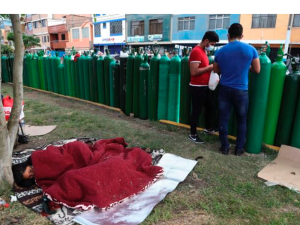
The sisters in Peru work closely with the people in catechetics, adult education, and in various aspects of parish and liturgical life. They serve as teachers, social workers, advocates and champions of social justice.

During the years of Covid 19 the Sisters were challenged to look for ways to respond to the numerous needs that arose at that time. Peru was affected enormously by the onslaught of Covid and its health system collapsed totally. Together with our co-workers, the Conference of Religious of Lima, and The Conference of Religious of Chimbote, plans were made to look for and purchase an Oxygen Plant for the city of Chimbote.
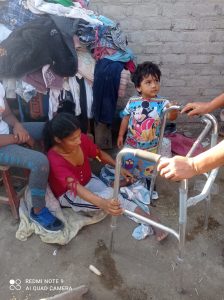
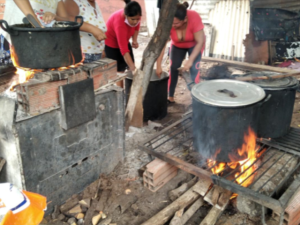
In the Diocese of Chiclayo the Sisters had much support from Caritas organization, along with many individuals and NGOs, especially for their outdoor neighborhood kitchens .  These kitchens are the main way people receive a hot meal each day.
An additional threat to the Peruvian people is the advent of Dengue Fever spread by mosquitos.  This is undoubtedly due to the recent rains and floods.  Climate change is certainly obvious.

It´s important to add that during these years as well much effort has been dedicated to help individuals and families to begin small jobs or businesses. Thus they become more independent and able to provide for their families. This includes raising small animals, beginning a store, providing a kiosk so that a person can sell food, selling products on the street, helping seamstresses by providing sewing machines, etc.

In the Diocese of Chiclayo the Sisters had much support from Caritas organization, along with many individuals and NGOs, especially for their outdoor neighborhood kitchens .  These kitchens are the main way people receive a hot meal each day.

An additional threat to the Peruvian people is the advent of Dengue Fever spread by mosquitos.  This is undoubtedly due to the recent rains and floods.  Climate change is certainly obvious.

It´s important to add that during these years as well much effort has been dedicated to help individuals and families to begin small jobs or businesses. Thus they become more independent and able to provide for their families. This includes raising small animals, beginning a store, providing a kiosk so that a person can sell food, selling products on the street, helping seamstresses by providing sewing machines, etc.

The Sisters of Mercy and the Presentation Sisters in Newfoundland, along with some of the religious orders in Peru, provided financial resources to obtain medical supplies and food for the people.  Other aid came from the Peruvian government and other international agencies.
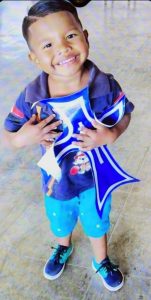
The Sisters were lead to recognize what they have lived through and are living through: the climatic disasters, the political instability, the insecurity, the corruption and terrific rise in violence.  All of these factors affect them and their ministry.  On the other hand they recognize the incredible resistance, resilience, courage and faith of the people shown and lived this past year.  The gestures of solidarity at all levels has been quite visible.

Like all Sisters of Mercy, who live out the charism of Catherine McAuley, the Sisters in Peru continue reflections on questions, concerns and themes.  They strive to “relieve misery, address its causes, and support all persons who struggle for full dignity” (Morning and Evening Prayer of the Sisters of Mercy, page 393)

Supporting the Ministry – Misericordia Mission Fund

Donations to the Misericordia Mission Fund, a registered charity established by the Sisters of Mercy of Newfoundland, are used in Peru to provide basic needs for poor families – food, clothing, fuel, medicine, education and shelter. Many children receive basic education and sometimes post secondary education through donations to the fund.

These last couple of years the Mission Fund has been able to respond to many needs caused by anti-government protests in the country when people could not work as usual; then the very heavy rains and floods have taken away not only peoples place of work, but many have lost homes and possessions. The fund has been used to form comedores and ollas communes (dining areas and common pots) and was able to lessen hunger and disease in many pueblos. Migrants, older people, and children are a special concern for our communities and the Mission fund works constantly with our lay people and coordinators to identify their needs and respond.
All donations to the Misericordia Mission Fund are used in their entirety for the needs of poor people. Donations received by the Misericordia Mission Fund in Newfoundland are distributed by the Sisters who are ministering in Peru. Income tax receipts are issued for all donations to the fund.

Misericordia Mission Fund
P.O. Box 1757
St. John’s, Newfoundland, Canada  A1C 5P5

Elizabeth Davis rsm: ‘Re-imagining a Healthcare System Good Enough for All of Us’

Elizabeth Davis rsm, in her capacity as a Director of the Gathering Place, was one of the speakers at the event entitled: ‘Forum on health outcomes and healthcare costs: What Can We Afford?’ held 7 March, 2018 to consider the challenges facing health and the healthcare system in Newfoundland & Labrador.

In her passionate address, ‘Re-imagining a Healthcare System Good Enough for All of Us’, Sr Elizabeth, while acknowledging the strengths of the current system, argues for a completely new system that responds to the health needs of the poorest, oldest and most vulnerable persons in Newfoundland society. In her presentation she addresses ecology and human health: ‘a healthy human population is dependant upon a healthy natural environment’.

Elizabeth Davis rsm, en su calidad de directora de Gathering Place, fue una de las ponentes del acto titulado: “Foro sobre resultados sanitarios y costes de la atención sanitaria: ¿Qué podemos permitirnos?”, celebrado el 7 de marzo de 2018 para analizar los retos a los que se enfrentan la salud y el sistema sanitario en Terranova y Labrador.

En su apasionado discurso, “Reimaginar un sistema sanitario lo suficientemente bueno para todos nosotros”, la hermana Elizabeth, aunque reconoce los puntos fuertes del sistema actual, aboga por un sistema completamente nuevo que responda a las necesidades sanitarias de las personas más pobres, mayores y vulnerables de la sociedad de Terranova. En su presentación aborda la ecología y la salud humana: “una población humana sana depende de un entorno natural sano”.

Remembering Our Newfoundland Mercy Story 5:

Sister M. Cecelia Sears

The anniversary of Sister M. Cecelia Sears occurs on May 9. Brigid Sears was the first  to enter the new Mercy community at Sandy Point in Bay St. George, which had been founded from Rhode Island in 1893.

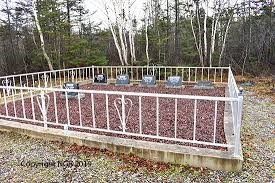
Sisters’ cemetery in
St. George’s where
Sister Cecelia is
buried.

Brigid had come to Newfoundland to visit her brother, Father Andrew Sears, who was parish priest in Bay of Islands. She had two other brothers serving as missionaries in Newfoundland and her uncle, Monsignor Thomas Sears was the first Prefect Apostolic of Newfoundland’s west coast. A native

of Kerry, Brigid was a refined and highly educated woman, a skilled artist and musician. She entered the Mercy community in Sandy Point in 1896 and was received into the novitiate as Sister Mary Cecelia in 1897. Her profession on May 9,1899 was a source of great hope for the fledgling community and the school.

By this time, as a result of the coming of the railway, the convent and school had moved from Sandy Point to St. George’s, and for a few short years Sister Mary Cecelia lived a full life as a Sister of Mercy, sharing her many gifts with her sisters and her students. She died on the fifth anniversary of her profession at the young age of thirty-two years.


El aniversario de la Hermana M. Cecelia Sears se celebra el 9 de mayo. Brigid Sears fue la primera en entrar en la nueva comunidad de la Misericordia en Sandy Point, en Bay St. George, fundada desde Rhode Island en 1893.

Brigid había llegado a Terranova para visitar a su hermano, el padre Andrew Sears, que era párroco en Bay of Islands. Tenía otros dos hermanos misioneros en Terranova y su tío, monseñor Thomas Sears, fue el primer Prefecto Apostólico de la costa oeste de Terranova. Natural de

nativa de Kerry, Brigid era una mujer refinada y muy culta, artista y música. Entró en la comunidad de la Misericordia en Sandy Point en 1896 y fue recibida en el noviciado como Hermana Mary Cecelia en 1897. Su profesión el 9 de mayo de 1899 fue una fuente de gran esperanza para la incipiente comunidad y la escuela.

Para entonces, como consecuencia de la llegada del ferrocarril, el convento y el colegio se habían trasladado de Sandy Point a St. George’s, y durante unos pocos años la Hermana Mary Cecelia vivió una vida plena como Hermana de la Misericordia, compartiendo sus muchos dones con sus hermanas y sus alumnas. Murió en el quinto aniversario de su profesión, a la temprana edad de treinta y dos años.

Remembering Our Newfoundland Mercy Story 4:

Our Lady of Mercy School

On May 1, 1843 Our Lady of Mercy School opened in St. John’s with four teachers – Sisters Francis Creedon, Ursula Frayne, Rose Lynch and Joseph Nugent, the latter having made profession of vows as a Sister of Mercy on March 25 of that year.

By this time, the Sisters had been in Newfoundland for almost a year, a year in which they devoted themselves to the visitation and care of the poor and the sick of the town, traversing the narrow streets and visiting the rude shacks in which many of the Irish Catholics lived. Forty-two pupils were enrolled when the school opened, and in the following year fifty-five students were in attendance.

Newspapers of the day tell us that course selections included Geography, Use of the Globes, History, Latin and Italian, plain and ornamental needlework as well as the regular subjects of Reading, Writing and Arithmetic. In addition, Sisters Francis and Joseph gave private lessons in music to a number of students. Every weekend the sisters continued visitation of the sick in their homes and at St. John’s Hospital, located in the Victoria Park area.  What amazing women they were, those women upon whose shoulders we are privileged to stand!

El 1 de mayo de 1843 se abrió la Escuela de Nuestra Señora de la Merced en St. John’s con cuatro maestras – las Hermanas Francis Creedon, Ursula Frayne, Rose Lynch y Joseph Nugent, esta última había hecho la profesión de votos como Hermana de la Merced el 25 de marzo de ese año.

Para entonces, las Hermanas llevaban casi un año en Terranova, un año en el que se dedicaron a visitar y cuidar a los pobres y enfermos de la ciudad, recorriendo las estrechas calles y visitando las rudimentarias chozas en las que vivían muchos de los católicos irlandeses. Cuando se inauguró la escuela había cuarenta y dos alumnos matriculados, y al año siguiente asistían cincuenta y cinco.

Los periódicos de la época cuentan que los cursos incluían geografía, uso de globos terráqueos, historia, latín e italiano, costura sencilla y ornamental, así como las asignaturas habituales de lectura, escritura y aritmética. Además, las hermanas Francis y Joseph daban clases particulares de música a varias alumnas. Cada fin de semana las hermanas continuaban visitando a los enfermos en sus casas y en el Hospital de San Juan, situado en la zona de Victoria Park. ¡Qué mujeres tan asombrosas eran, aquellas mujeres sobre cuyos hombros tenemos el privilegio de estar!


Sr Betty Morrissey: Chaplain to the Rogues Basketball Team

On Thursday, 20 April, CBC radio Morning show featured an interview with Sister Betty Morrissey about her role as Chaplain to the Rogues basketball team.  Chrissy Holmes named her “the incredible Sister Betty Morrissey”! 

This interview was recorded with Jeremy Eaton of CBC last week at the Rogues game:

“The roar of the fans in a stadium may provide motivation and fuel for some basketball players, but Sister Betty Morrissey believes that true power lies in silence.

“I go in the dressing room, I say a prayer before and I say a prayer after,” Morrissey says. “And when I go in … they’re very quiet and you know their souls are being listened to.”

Morrissey is the chaplain for the Newfoundland Rogues basketball team, which was established in 2021 and in its current season competes in the TBL, or The Basketball League.

Morrissey is at every home game at the Mary Brown’s Centre in St. John’s, in a seat behind the visitors’ section. She proudly wears a yellow Rogues jersey with the number 21 on the back. Draped around her neck, hanging down her front, is a necklace with a crucifix.

Her all-access pass simply says “Sister Betty…”

Read the rest of the interview here

Watch a video clip from the interview. It was aired on CBC television Here and Now .

El jueves 20 de abril, el programa matinal de la radio CBC ofreció una entrevista con la hermana Betty Morrissey sobre su papel como capellán del equipo de baloncesto Rogues. Chrissy Holmes la llamó “la increíble Hermana Betty Morrissey”.

Esta entrevista fue grabada con Jeremy Eaton de CBC la semana pasada en el partido de los Rogues:

“El rugido de los aficionados en un estadio puede proporcionar motivación y combustible para algunos jugadores de baloncesto, pero la Hermana Betty Morrissey cree que el verdadero poder reside en el silencio.

“Entro en el vestuario, rezo una oración antes y otra después”, dice Morrissey. “Y cuando entro… están muy callados y sabes que sus almas están siendo escuchadas”.

Morrissey es el capellán del equipo de baloncesto Newfoundland Rogues, fundado en 2021 y que en la temporada actual compite en la TBL, o The Basketball League.

Morrissey asiste a todos los partidos en casa en el Mary Brown’s Centre de St. John’s, en un asiento detrás de la sección de visitantes. Lleva con orgullo una camiseta amarilla de las Rogues con el número 21 a la espalda. Alrededor del cuello, colgando por delante, lleva un collar con un crucifijo.

Su pase de acceso simplemente dice “Hermana Betty…”.

Lea el resto de la entrevista en inglés aquí


Newfoundland Sister of Mercy Honored

Recently Sister Kathrine Bellamy was honored for her dedicated and outstanding service to the Basilica-Cathedral of St. John the Baptist, St. John’s, Newfoundland and Labrador.

Sister Kathrine was one of two recipients of the Papal Honour of the Cross, Pro Ecclesia et Pontifice, during the parish celebration of the Liturgy of the Eucharist on Sunday, September 10, 2006.

Before the presentation of the medal and the certificate by Archbishop O’Brien, it was noted that Sister Kathrine had been central to the music ministry of the Basilica-Cathedral, having served as music coordinator, choir director and organist for parish functions and parish liturgies for twenty-four years. Presently she continues to be organist for one of the weekend liturgies in the parish and uses her gifts and talents in the service of the Archdiocese and the parish by composing sacred music for liturgies. One of her recent compositions was that of music for the Proclamation of the 150th anniversary of the Cathedral celebrated in 2005.

Of particular mention, was her concern, care and ministry to the poor. In 1980 Sister Kathrine became director of Outreach to the Poor of the Basilica Parish, of which one division was the Family Care Centre. In 1994 she initiated an ecumenical endeavour, whereby two Roman Catholic and three Anglican parishes united in their efforts to form Emmaus House, an interdenominational Centre serving the poor of the area.

Following the Liturgy, a Reception was held in the Episcopal Library where the Hospitality Committee of the Basilica Parish served refreshments and many parishioners and Sisters of Mercy came to express gratitude and congratulations.

Recientemente, la Hermana Kathrine Bellamy fue honrada por su dedicado y destacado servicio a la Basílica-Catedral de San Juan Bautista, St. John’s, Terranova y Labrador.

Sister Kathrine fue una de las dos galardonadas con la condecoración papal de la Cruz, Pro Ecclesia et Pontifice, durante la celebración parroquial de la Liturgia de la Eucaristía el domingo 10 de septiembre de 2006.

Antes de la entrega de la medalla y del certificado por parte del Arzobispo O’Brien, se señaló que la Hermana Kathrine había sido fundamental en el ministerio musical de la Basílica-Catedral, habiendo ejercido como coordinadora musical, directora del coro y organista de las funciones parroquiales y de las liturgias parroquiales durante veinticuatro años. Actualmente sigue siendo organista de una de las liturgias de fin de semana de la parroquia y utiliza sus dones y talentos al servicio de la Archidiócesis y de la parroquia componiendo música sacra para las liturgias. Una de sus composiciones más recientes fue la música para el Pregón del 150 aniversario de la Catedral, celebrado en 2005.

Mención especial merece su preocupación, cuidado y ministerio con los pobres. En 1980, la Hermana Kathrine se convirtió en directora de la Ayuda a los Pobres de la Parroquia de la Basílica, una de cuyas divisiones era el Centro de Atención Familiar. En 1994 inició un esfuerzo ecuménico, por el que dos parroquias católicas romanas y tres anglicanas unieron sus esfuerzos para formar Emmaus House, un centro interconfesional al servicio de los pobres de la zona.

Tras la Liturgia, se celebró una Recepción en la Biblioteca Episcopal donde el Comité de Hospitalidad de la Parroquia Basílica sirvió refrescos y muchos feligreses y Hermanas de la Misericordia acudieron a expresar su gratitud y felicitaciones.