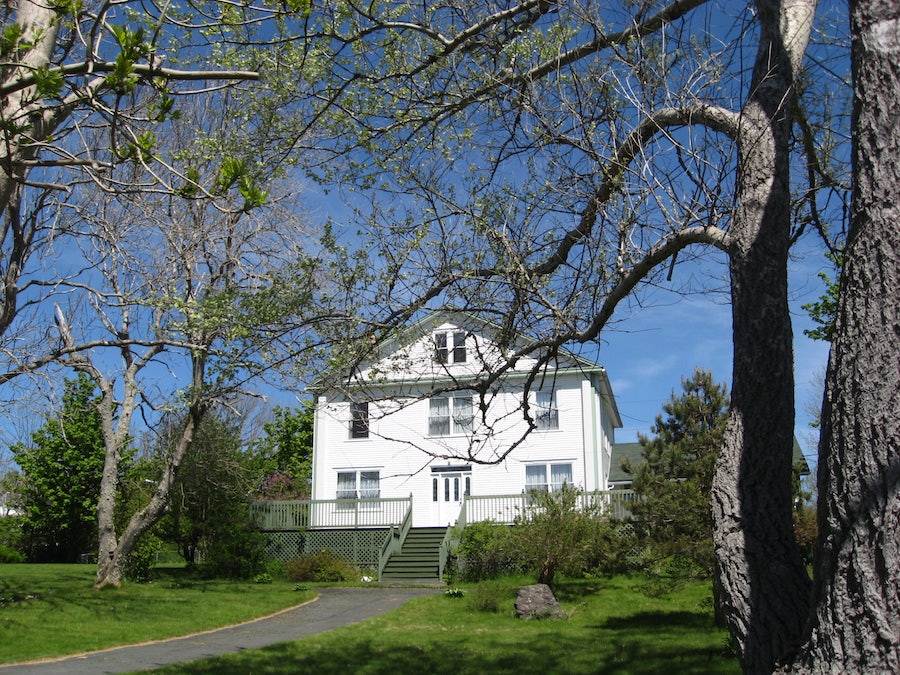
On Saturday, 15 July Perchance Theatre opened in its new home in Conception Harbour, the former Immaculate Conception Mercy Convent.
Immaculate Conception Convent (built in 1930s), now Perchance Theatre
An interview with Danielle Irvine, artistic director, and Sr Diane Smyth with Heather Barrett on CBC news marked the occasion.
The interview can be heard here. As you listen to the interview you are taken on a tour of the building, what it has been used for and what it will be.
The first show in the new home is a musical, High Steel, a story of those men from Conception Bay and other communities who left the bays to help build the skyscrapers in New York and Boston USA.
“For all the years here the Sisters taught the arts. That’s why we’re so excited Perchance Theatre is now here. It is right in keeping with our spirit,”said Sr Diane.
“It’s a match made in heaven!” added Danielle Irvine.
The story of how Mercy Convent Conception Harbour became the new home for Perchance Theatre can be read on our website here
El sábado 15 de julio se inauguró el Perchance Theatre en su nueva sede de Conception Harbour, el antiguo Convento de la Misericordia de la Inmaculada Concepción.
Una entrevista a Danielle Irvine, directora artística, y a la Hna. Diane Smyth con Heather Barrett en las noticias de la CBC marcó la ocasión.
La entrevista puede escucharse aquí. Mientras se escucha la entrevista, se hace un recorrido por el edificio, para qué se ha utilizado y qué será.
El primer espectáculo en la nueva casa es un musical, High Steel, una historia de aquellos hombres de Conception Bay y otras comunidades que dejaron las bahías para ayudar a construir los rascacielos de Nueva York y Boston USA.
“Durante todos los años aquí las Hermanas enseñaron las artes. Por eso estamos tan contentas de que Perchance Theatre esté ahora aquí. Está en consonancia con nuestro espíritu”, afirma la Hermana Diane.
Y Danielle Irvine añadió: “Es un matrimonio hecho en el cielo”.
La historia de cómo el Mercy Convent Conception Harbour se convirtió en la nueva sede del Perchance Theatre puede leerse en nuestro sitio web aquí
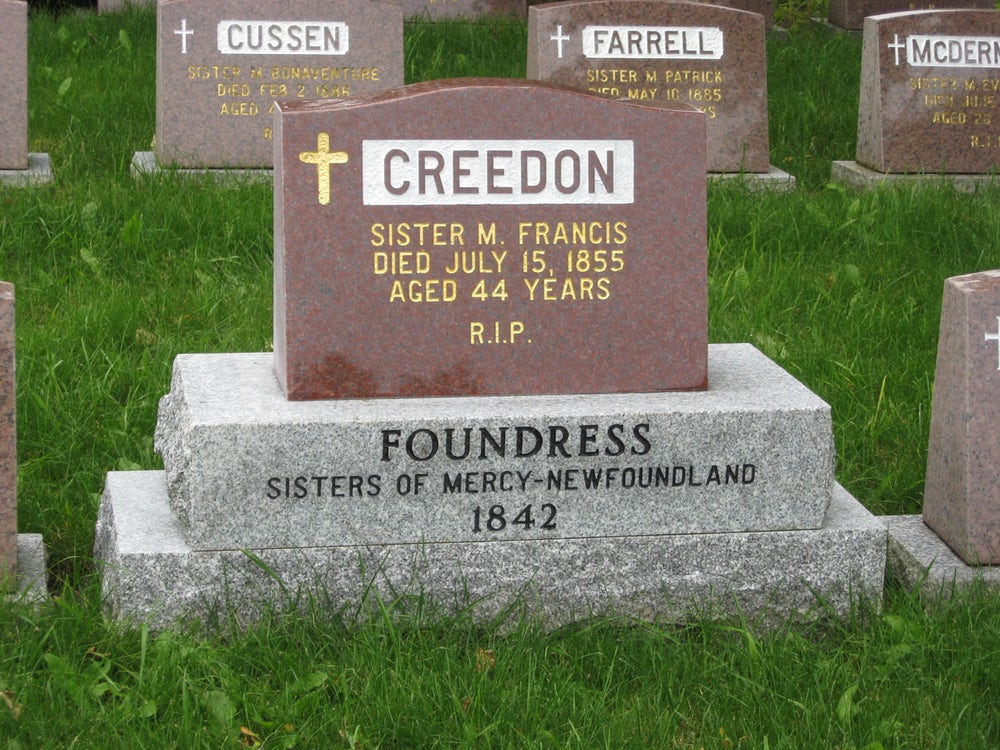
On July 15 we remember with gratitude our Newfoundland Mercy foundress, Sister Mary Francis Creedon, who died on this day in 1855 at the age of 44 years.
Francis was, in the words of Sister Kathrine Bellamy “The Steadfast Woman,” a woman who trusted, loved and lived in the midst of seemingly insurmountable difficulties, setbacks, conflict, loss and suffering, as well as in the joys of loving companionship, shared hopes and dedicated service.
Francis was a newly professed sister living at Baggot Street when Catherine McAuley died in November of 1841. She was among the sisters named in the codicil of Catherine’s will, charged with the preservation of the charism of Mercy. This awesome trust Francis took to heart, as was evident in her whole-hearted embrace of the mission of Mercy to the people of St. John’s. In the late 1840s and early 1850s she and her sisters became familiar figures in the lanes and alleyways of St. John’s, bringing food, comfort and hope to people, many of whom lived in deplorable poverty and wretchedness.
By the Spring of 1855 the struggles and hardships of the early days of the mission, school responsibilities, regular visitation of the sick even in times of epidemics, instruction of young women who were entering the Order, opening an orphanage and an infirmary to care for sick orphans at Mercy Convent all began to take a toll on Francis’ health. However, on July 2, less than two weeks before her death, she presided at a ceremony for the reception of Anastasia Tarrahan, the first Newfoundland-born woman to enter the community.
When Francis died on July 15, only four young sisters, one of them a novice, were left to carry on the mission. Undoubtedly inspired by her spirit and example, they created a legacy of compassion, commitment and courage that has characterized our congregation to this day. For this, we are grateful to Francis Creedon and to all our foremothers in Mercy. Having received Mercy, Francis did indeed become Mercy. This is our call, our challenge, our gift…
Read more Sisters stories documenting our Newfoundland Mercy Story
El 15 de julio recordamos con gratitud a nuestra fundadora de la Misericordia de Terranova, la Hermana Mary Francis Creedon, que murió un día como hoy en 1855 a la edad de 44 años.
Francis fue, en palabras de la Hermana Kathrine Bellamy “La Mujer Firme”, una mujer que confió, amó y vivió en medio de dificultades aparentemente insuperables, contratiempos, conflictos, pérdidas y sufrimientos, así como en las alegrías del compañerismo amoroso, las esperanzas compartidas y el servicio dedicado.
Francis era una hermana recién profesa que vivía en Baggot Street cuando Catherine McAuley murió en noviembre de 1841. Estaba entre las hermanas nombradas en el codicilo del testamento de Catalina, encargadas de preservar el carisma de la Misericordia. Francisco se tomó muy a pecho este impresionante encargo, como quedó patente en su adhesión incondicional a la misión de la Misericordia para el pueblo de San Juan. A finales de la década de 1840 y principios de la de 1850, ella y sus hermanas se convirtieron en figuras familiares en las callejuelas y callejones de St. John’s, llevando comida, consuelo y esperanza a las personas, muchas de las cuales vivían en una pobreza y miseria deplorables.
En la primavera de 1855, las luchas y penurias de los primeros días de la misión, las responsabilidades escolares, las visitas regulares a los enfermos incluso en tiempos de epidemias, la instrucción de las jóvenes que ingresaban en la Orden, la apertura de un orfanato y de una enfermería para atender a los huérfanos enfermos en el Convento de la Misericordia empezaron a hacer mella en la salud de Francis. Sin embargo, el 2 de julio, menos de dos semanas antes de su muerte, presidió una ceremonia para la recepción de Anastasia Tarrahan, la primera mujer nacida en Terranova que ingresaba en la comunidad.
A la muerte de Francisco, el 15 de julio, sólo quedaban cuatro hermanas jóvenes, una de ellas novicia, para continuar la misión. Inspiradas sin duda por su espíritu y su ejemplo, crearon un legado de compasión, compromiso y valentía que ha caracterizado a nuestra congregación hasta nuestros días. Por ello, estamos agradecidas a Francis Creedon y a todas nuestras antecesoras en la Misericordia. Habiendo recibido Misericordia, Francisco se convirtió en Misericordia. Esta es nuestra llamada, nuestro reto, nuestro regalo…
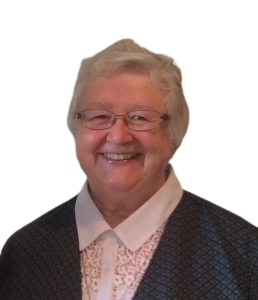
Sister Elizabeth Davis has been selected to participate in the General Assembly of the Synod of Bishops to be held in Rome in October. Delegates representing bishops, priests, religious and laypeople from around the world will be present at the October session.
Sister Elizabeth was nominated through the Union of Superiors Generals (UISG). When the call for nominees from North America came forth the different congregational leaders in Canada were invited to submit a name. The ten chosen – five women and five men –represent religious orders from countries around the world. Elizabeth is in section A and will be a voting member of the Synod.
The Synod in Rome follows diocesan, national, and continental phases of the Synod that began in October 2021. The Synod has as its theme “For a synodal church: communion, participation, and mission.”
More about the October 2023 Session can be found on our websitehere
La Hermana Elizabeth Davis ha sido seleccionada para participar en la Asamblea General del Sínodo de los Obispos que se celebrará en Roma en octubre. En la sesión de octubre estarán presentes delegados que representan a obispos, sacerdotes, religiosos y laicos de todo el mundo.
La Hermana Elizabeth fue nominada a través de la Unión de Superioras Generales (UISG). Cuando se hizo la convocatoria de candidaturas de América del Norte, se invitó a los distintos líderes congregacionales de Canadá a presentar un nombre. Los diez elegidos -cinco mujeres y cinco hombres- representan a órdenes religiosas de países de todo el mundo. Elizabeth pertenece a la sección A y será miembro con derecho a voto del Sínodo.
El Sínodo de Roma sigue a las fases diocesana, nacional y continental del Sínodo que comenzó en octubre de 2021. El Sínodo tiene como lema “Por una Iglesia sinodal: comunión, participación y misión”.
Puede encontrar más información sobre la Sesión de octubre 2023 en nuestro sitio web aquí
The Family Life Bureau, established in the Archdiocese of St. John’s in 1976, offers counseling in a whole range of areas including individual, marriage, and family counseling. Clients of the staff of the Bureau are either self-referred, referred from the courts, from physicians, various community agencies, and from priests throughout the Archdiocese.
Discovering and using your strengths to deal with personal and family life issues . . . Support to see you through . . .
Pastoral counseling is healing the mind, spirit, and relationships through the wisdom of behavioural sciences and spiritual values.
The goal of the Family Life Bureau is to foster positive changes in the lives of persons. Every person has within him/her the energy for growth. Troubled people seek out help when external circumstances lead to distressing separation from others, internal conflicts that cause pain and inner division, and when the life force within them is blocked from healing and growth.
Sister Loretta Walsh, rsm, Executive Director of the Family Life Bureau, is a facilitator and counselor. She and two other certified counselors provide individual, couple, group and family counseling. They also organize and facilitate workshops and marriage preparation seminars. The workshops deal with issues related to family life, parenting, interpersonal relationships, separation and divorce, personal growth, youth, dealing with drugs, assertiveness and self-esteem.
One interesting program brings married couples together for a candlelight dessert and facilitated conversation about their relationship. This marriage enrichment component is facilitated collaboration with the West End Baptist Church and some Anglican parishes in St. John’s.
SoulWindsis a small piece of land – about three acres – located on the Little Kennisis River in the Algonquin Highlands of Haliburton County in Ontario’s near north in Canada.
SoulWinds is the home of Brenda Peddigrew, RSM, Ph.D. and Joan Weir, N.D., who tend the land in all its seasons and offer consultations, teaching and guidance in their respective fields and in many ways to be in nature’s presence.
Joint courses are offered on the SoulWinds property, though other accomodations are used for personal guided retreats with Brenda, and other consultations.
Visit their website to learn more about this Mercy ministry
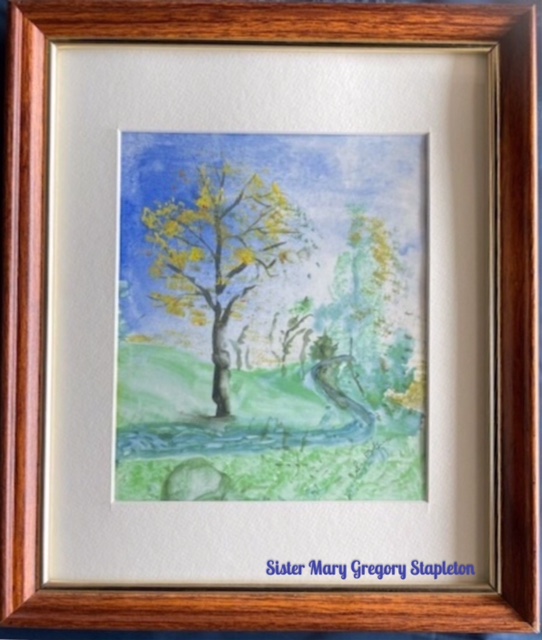
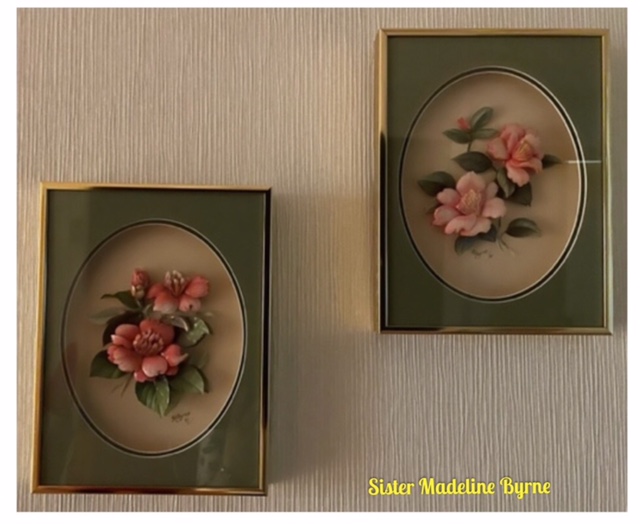
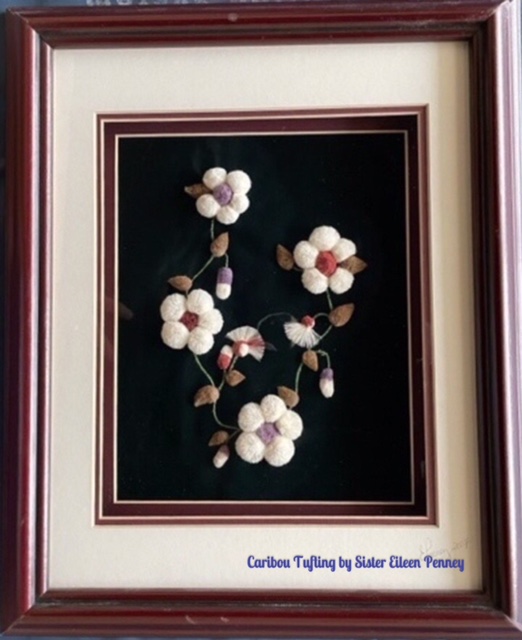
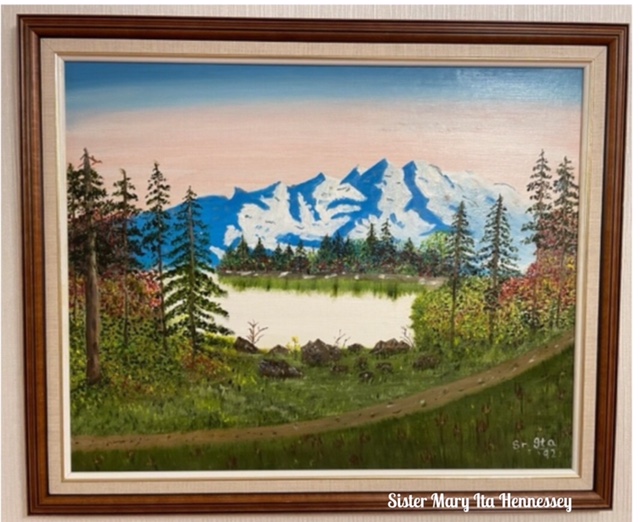
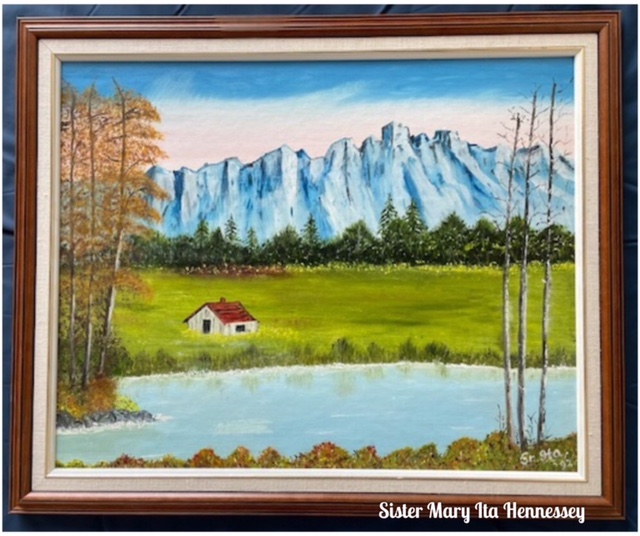
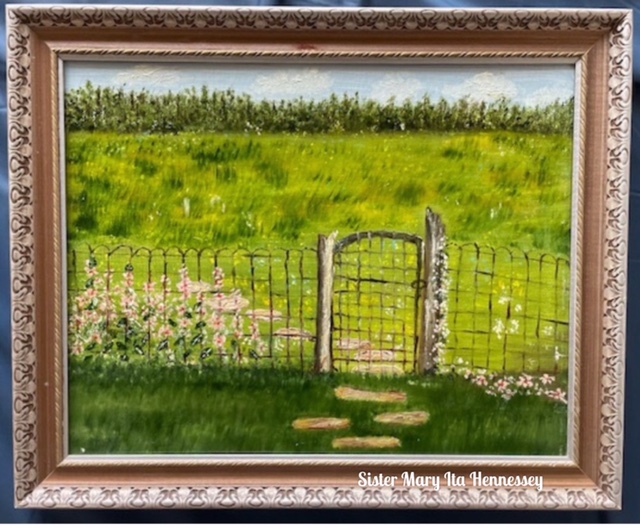
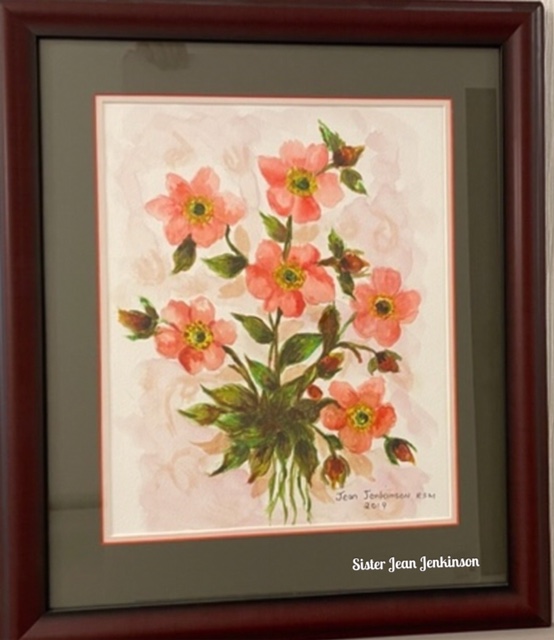
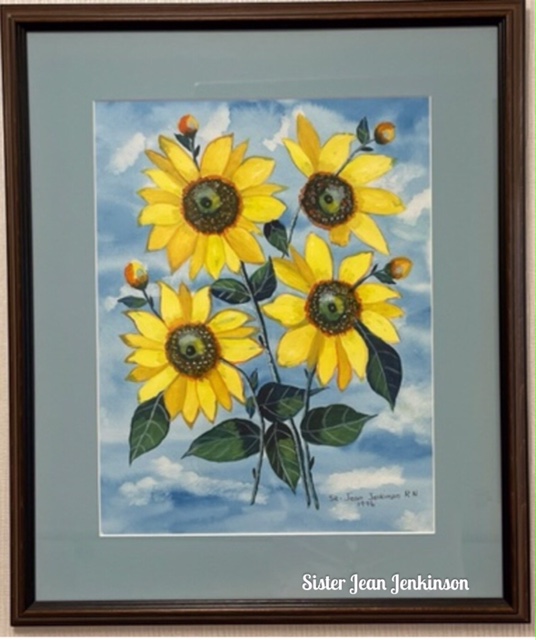
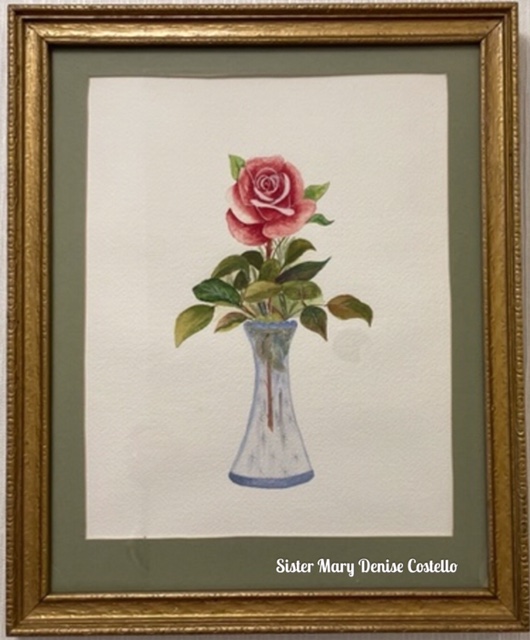
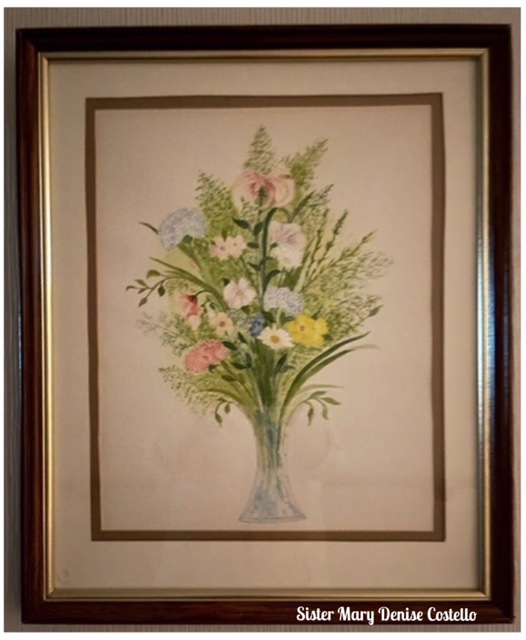
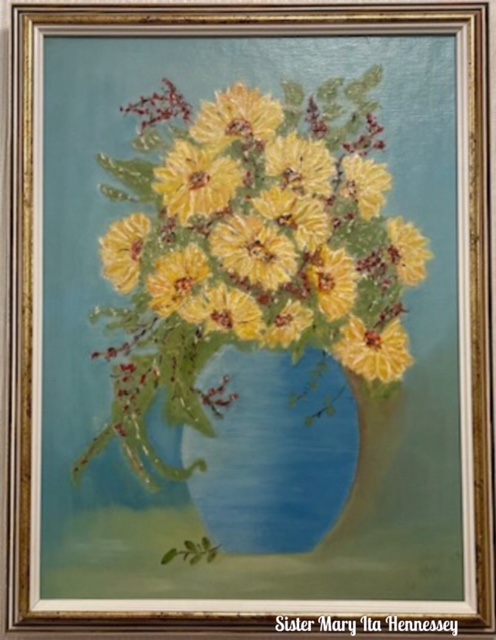
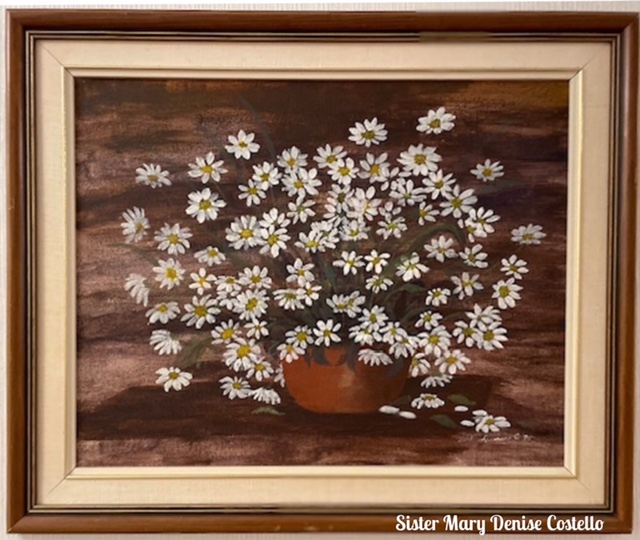
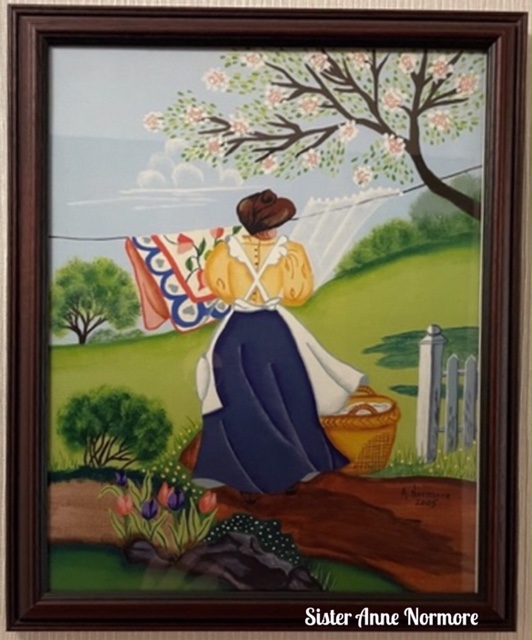
These artworks by the Sisters can be found hanging on the corridors of the Residence at Littledale. Enjoy browsing this online gallery and spending time with your favourite landscape, floral arrangement, or scene.
Estas obras de arte de las Hermanas se encuentran colgadas en los pasillos de la Residencia de Littledale. Disfrute navegando por esta galería en línea y pase un rato con su paisaje, arreglo floral o escena favoritos.
Sister Madeline Byrne has been contributing to the artistic atmosphere at McAuley Convent for the past few years. Every Thursday afternoon she guides and encourages some of the senior sisters to produce painting, cards and other creative works.
Madeline describes herself as “a budding Artist”, despite the fact that many of her beautiful paintings may be found in our convents and residences or on the walls in people’s homes!
Some of the Sisters at McAuley expressed an interest in painting. So, every week they take out their brushes and get to work. While there are no “Monets or Picassos” they all enjoy the time together. When a piece is finished they marvel at what they are able to produce. All are delighted to have their work published by displaying it on a special wall in the Convent. There have even been in-house sales of their cards!
Sor Madeline Byrne ha contribuido al ambiente artístico del convento de McAuley durante los últimos años. Todos los jueves por la tarde guía y anima a algunas de las hermanas mayores a realizar pinturas, tarjetas y otros trabajos creativos.
Madeline se describe a sí misma como “una artista en ciernes”, a pesar de que muchos de sus hermosos cuadros se pueden encontrar en nuestros conventos y residencias o en las paredes de las casas de la gente.
Algunas de las Hermanas de McAuley expresaron su interés por la pintura. Así que cada semana sacan sus pinceles y se ponen manos a la obra. Aunque no hay “Monets o Picassos”, todas disfrutan del tiempo que pasan juntas. Cuando terminan una obra, se maravillan de lo que son capaces de hacer. Todos están encantados de que se publiquen sus obras, que exponen en una pared especial del convento. Incluso se han vendido internamente sus tarjetas.
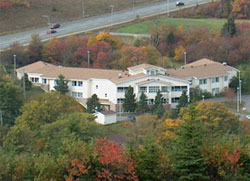
McAuley Convent was opened in 1991 to provide a residence and center of care of the sick and infirm members of our congregation.
This modern and tastefully decorated building is built into the hillside of the Littledale property in the Waterford River valley in the west end of St. John’s. Every floor of the three-storey building has a ground level entrance. The center courtyard, which can be viewed from every room on the back of the building and which can be entered from the community room, is lavishly landscaped with flowers, shrubs and trees. Sisters can safely walk around the garden or sit in the swing chairs or other chairs that are provided. A statue of Mary stands at the centre of the garden and the Stations of the Cross are located on one side of the garden.
There are three other smaller community rooms for different groups of sisters, including one for the sisters who are part of the staff at McAuley Convent. In addition to this there are two large dining rooms, individual bedrooms, a physio-therapy room and a few multi-use rooms for arts and crafts, games, meetings or solitude. A very large kitchen, storage and laundry take up the lowest floor of the building. The crown of the building is the beautiful chapel with a wall of windows that look out to the Southside Hills of the Waterford Valley. The Sisters are blessed to have mass celebrated every morning and those who cannot go to the chapel may hear the celebration in their bedrooms.
Besides being the residence for sisters who need care in their old age, McAuley is a place of recuperation for sisters who have surgery or injury that requires more care than is available in their own convent. Our sisters are given the best of care and receive wonderful attentiveness from the many lay staff and sisters. Some have lived to see 100 years or more. When a sister is dying the sisters who are able, keep day and night vigil. Sisters are prayed into God’s kingdom at the end of their lives.
McAuley Convent is a place of care, safety and nurturing; it is a place of faith, joy, freedom and celebration. It is a powerhouse of prayer for the many needs of individuals and for our world.
McAuley Convent closed in October, 2020 when the sisters needing care moved to the Residence at Littledale, a new facility owed and operated by a local businessman Fred Cahill, on the Littledale Property where we are renting the entire third floor.
El Convento McAuley se inauguró en 1991 para proporcionar una residencia y un centro de atención a los miembros enfermos y desvalidos de nuestra congregación.
Este edificio moderno y decorado con gusto está construido en la ladera de la propiedad de Littledale, en el valle del río Waterford, en el extremo oeste de St. Cada planta del edificio de tres pisos tiene una entrada a nivel del suelo. El patio central, que puede verse desde todas las habitaciones de la parte trasera del edificio y al que se accede desde la sala comunitaria, está profusamente ajardinado con flores, arbustos y árboles. Las hermanas pueden pasear sin peligro por el jardín o sentarse en los columpios u otras sillas que se proporcionan. Una estatua de María se alza en el centro del jardín y el Vía Crucis está situado en uno de sus lados.
Hay otras tres salas comunitarias más pequeñas para diferentes grupos de hermanas, incluida una para las hermanas que forman parte del personal del convento de McAuley. Además, hay dos grandes comedores, dormitorios individuales, una sala de fisioterapia y algunas salas multiusos para manualidades, juegos, reuniones o soledad. Una cocina muy grande, el almacén y la lavandería ocupan la planta más baja del edificio. La corona del edificio es la hermosa capilla con una pared de ventanas que dan a las colinas del sur del valle de Waterford. Las hermanas tienen la suerte de que se celebre misa todas las mañanas y las que no pueden ir a la capilla pueden oír la celebración en sus habitaciones.
Además de ser la residencia de las hermanas que necesitan cuidados en su vejez, McAuley es un lugar de recuperación para las hermanas que han sufrido una intervención quirúrgica o una lesión que requiere más cuidados de los que pueden recibir en su propio convento. Nuestras hermanas reciben los mejores cuidados y una atención maravillosa por parte del numeroso personal laico y de las hermanas. Algunas han vivido 100 años o más. Cuando una hermana se está muriendo, las hermanas que pueden velan día y noche. Al final de sus vidas, se reza por las hermanas para que entren en el reino de Dios.
El convento de McAuley es un lugar de cuidado, seguridad y crianza; es un lugar de fe, alegría, libertad y celebración. Es un centro de oración por las muchas necesidades de las personas y de nuestro mundo.
El Convento McAuley cerró en octubre de 2020, cuando las hermanas que necesitaban cuidados se trasladaron a la Residencia de Littledale, una nueva instalación propiedad de Fred Cahill, un empresario local, que la gestiona, en la propiedad Littledale donde estamos alquilando todo el tercer piso.
Maria Nugent had the unique distinction of being the first Presentation postulant and the first Mercy postulant in Newfoundland and consequently in North America.
compassion
Known to us as Sister Mary Joseph, Maria died on this day in 1847, just five years after the founding of the Mercy mission in Newfoundland. Maria lived with her brother, Valentine Nugent and his family who had come to St. John’s from Ireland in 1833 at the invitation of Bishop Fleming.
Marianne Creedon, whose sister was Nugent’s wife, lived in the same household until she left for Ireland in 1839. For a number of years Maria and Marianne taught together at a school for young ladies on Water Street.
In 1834 Maria was admitted to the novitiate of the Presentation Sisters at Cathedral Square but later returned home because of ill health. Shortly after Marianne, now Sister Mary Francis, and her two companions came to St. John’s to begin their mission, Maria asked to join them. Bishop Fleming deemed her Presentation novitiate as fulfilling the requirements for entrance to the Mercy Order and she was professed as Sister Mary Joseph on March 25, 1843 in a ceremony held at the Presentation Convent.
Sister M. Joseph taught in the first Mercy school and was Sister M. Francis’ only companion when Sisters Ursula and Rose returned home in November of 1843. The two women, connected by bonds of family and love for the mission, faithfully carried out the responsibilities of school and visitation day after day in all kinds of weathers. An article in The Newfoundlander on June 24, 1847 gives a sense of their devotion and commitment:
Ever and anon might these two pious Sisters have been seen, before or after the toils of the day at school, treading through our snows and pelted by our sleet to smooth the pillow of the death-bed of the afflicted, and pouring into the ear of the infected words of promise and hope, either in the wretched hovels of the poor or in the hospital.
In June of 1847 when a typhus epidemic broke out in St. John’s, Sisters M. Francis and M. Joseph closed school and devoted themselves totally to those afflicted with the dreaded disease, visiting and caring for them in their homes and at St. John’s Hospital, located in present-day Victoria Park area. It was while Sister M. Joseph was caring for a young seaman who was dying from typhus that she herself became infected. After two weeks of intense suffering, she died on June 17 at the age of 48. She is buried with other victims of the disease on land which is now occupied by the Kirk.
We are the proud and grateful inheritors of this wonderful tradition of trust in God’s Providence, compassionate care and faithful service.
Maria Nugent tuvo la distinción única de ser la primera postulante de la Presentación y la primera postulante de la Misericordia en Terranova y, por consiguiente, en América del Norte.
The word “Mercy” written in isolated vintage wooden letterpress type on a white background.
Conocida por nosotros como la Hermana Mary Joseph, María murió un día como hoy en 1847, sólo cinco años después de la fundación de la misión de la Misericordia en Terranova. María vivía con su hermano, Valentine Nugent y su familia, que habían llegado a San Juan desde Irlanda en 1833 invitados por el obispo Fleming.
Marianne Creedon, cuya hermana era la esposa de Nugent, vivió en la misma casa hasta que se marchó a Irlanda en 1839. Durante varios años Maria y Marianne enseñaron juntas en una escuela para señoritas en Water Street.
En 1834, María ingresó en el noviciado de las Hermanas de la Presentación en Cathedral Square, pero más tarde regresó a casa por motivos de salud. Poco después de que Marianne, ahora hermana Mary Francis, y sus dos compañeras llegaran a St. John’s para comenzar su misión, María pidió unirse a ellas. El Obispo Fleming consideró que su noviciado en la Presentación cumplía los requisitos para entrar en la Orden de la Merced y profesó como Hermana Mary Joseph el 25 de marzo de 1843 en una ceremonia celebrada en el Convento de la Presentación.
La Hermana M. Joseph enseñó en la primera escuela de la Misericordia y fue la única compañera de la Hermana M. Francis cuando las Hermanas Ursula y Rose regresaron a casa en noviembre de 1843. Las dos mujeres, unidas por lazos de familia y amor a la misión, cumplieron fielmente con las responsabilidades de la escuela y la visitación día tras día en todo tipo de climas. Un artículo publicado en The Newfoundlander el 24 de junio de 1847 da una idea de su devoción y compromiso:
Estas dos piadosas hermanas han sido vistas una y otra vez, antes o después de los trabajos del día en la escuela, atravesando nuestras nieves y aguanieve para alisar la almohada del lecho de muerte de los afligidos. lecho de muerte de los afligidos, y vertiendo en el oído de los infectados palabras de promesa y esperanza, ya sea en las míseras de los pobres o en el hospital.
En junio de 1847, cuando estalló una epidemia de tifus en St. John’s, las hermanas M. Francis y M. Joseph cerraron la escuela y se dedicaron por completo a los afectados por la temida enfermedad, visitándolos y cuidándolos en sus casas y en el hospital de St. John’s, situado en la actual zona de Victoria Park. Fue mientras la hermana M. Joseph cuidaba a un joven marinero que se estaba muriendo de tifus cuando ella misma se infectó. Tras dos semanas de intenso sufrimiento, murió el 17 de junio a la edad de 48 años. Está enterrada, junto con otras víctimas de la enfermedad, en el terreno que hoy ocupa el Kirk.
Somos los orgullosos y agradecidos herederos de esta maravillosa tradición de confianza en la Providencia de Dios, cuidado compasivo y servicio fiel.


 Francis was,
  Sister Elizabeth was nominated through the
 Discovering and using your strengths to deal with personal and family life issues . . . Support to see you through . . .
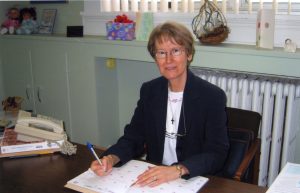 Sister Loretta Walsh, rsm, Executive Director of the Family Life Bureau, is a facilitator and counselor. She and two other certified counselors provide individual, couple, group and family counseling. They also organize and facilitate workshops and marriage preparation seminars. The workshops deal with issues related to family life, parenting, interpersonal relationships, separation and divorce, personal growth, youth, dealing with drugs, assertiveness and self-esteem.
 SoulWinds is the home of