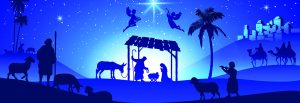
In Catholic tradition, the month of May is dedicated to Mary. In May three of her feasts are celebrated: Our Lady of Fatima on May 13th; Mary, Mother of the Church on May 29; the Visitation on May 31.
Some years ago, Elizabeth Davis rsm recorded a series of 13 video reflections for Redemptorist TV on aspects of Mary. You might like to watch one of more of these during May.
Mary as Woman of Nazareth
 Mary, the woman we know as Mother of God, was one like us, a person who lived each day and faced the joys and the challenges of each day. We meet her first in Scripture as a frightened adolescent who is being asked to do an almost impossible thing. The last time we meet her in Scripture she is an older woman, more confident perhaps, yet still being asked to do an almost impossible thing
Watch the video
Mary as Miriam of Nazareth
 In my home province of Newfoundland and Labrador, when anyone meets a stranger, the first questions are “What is your name and who are you called after?” and “Who are your parents?” The first page of our New Testament, the beginning words of the Gospel of Matthew, could well have been written by a Newfoundlander! In these words we find the answer to the same questions about Mary
Watch the video
Mary of the Annunciation and Pentecost
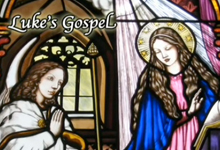 At the Annunciation, a young woman whose name is Mary is visited by an angel who tells her that she is to bear a son who will be special in many ways. When Mary challenges the possibility of this ever happening, the angel’s reply is decisive, “The Holy Spirit will come upon you” (Lk 1:35). With this assurance, the young woman replies, “Here am I, the servant of the Lord; let it be with me according to your word” (Lk 1:38)
Watch the video
Mary of the Magnificat
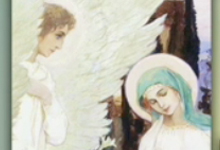 Mary’s response was immediate. She spoke the most words spoken by any woman in the New Testament. She used echoes of words spoken by the women of the Old Testament: Deborah, Miriam and Hannah. In this song, she passionately gave what the theologian Edward Schillebeeckx called “a toast to our God,” which we call the Magnificat.
Watch the video
Mary as Displaced Person
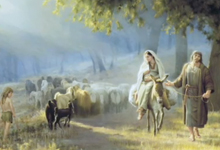 In the days before Mary was to give birth, she and Joseph were forced to go to Bethlehem to be counted for the census. They had no choice in this matter. The late stages of Mary’s pregnancy and the difficult journey from Nazareth to Bethlehem did not matter to the political leadership of the day.
Watch the video
Mary as Mother of Sorrow
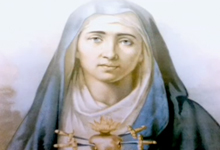 On another visit to the Temple to celebrate Passover when Jesus was twelve years old, Jesus remains behind and speaks with the teachers with authority, and then he says these mysterious words to his parents, “Did you not know that I had to be in my Father’s house?” This time the writer tells us that “His mother treasured all these things in her heart.”
Watch the video
Mary as Mother at the Wedding Feast
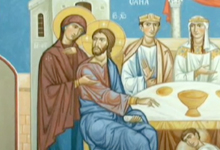 The young Jewish peasant girl has become a confident woman, a teacher, a mentor and a commanding presence. She has grown into her calling to be a partner with God in the work of Incarnation and Redemption. Having given life to her son, she now calls him into his new life of public ministry, she remains with him to support and nurture him to the end, and she will remain when he is gone to support and nurture the church which continues his presence on earth.
Watch the video
Mary and God
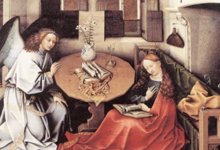 “Spirituality is that which gives us the strength to go on for it is the assurance that God is in the struggle. Spirituality spells out our connectedness to God, our human roots, the rest of nature, one another and ourselves.” In this way in 1994 the Third World Theologians redefined spirituality and began our thinking on “right relationships.”
Watch the video
Mary and the Environment
 Let us reflect on Mary in right relationship with the environment. First we must speak to our emerging understanding of ecology, a new sense of how all creation has been created by God, is good and is interconnected. In the 13th century Meister Eckhart said, “Apprehend God in all things, for God is in all things. Every single creature is full of God and is a book about God. Every creature is a word of God.”
Watch the video
Mary and Self
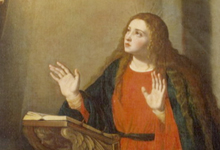 There are several beautiful passages in the Gospels in which we get an understanding of Mary’s sense of self. At the Annunciation, we see Mary’s poignant inner turmoil in the face of an awesome task being asked of her, “But she was much perplexed by his words and pondered what sort of greeting this might be” (Luke 1:29). She then asks outright the question, “How can this be, since I am a virgin?” (Luke 1:34)
Watch the video
Mary and Right Relationships: Family
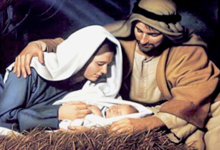 These women ancestors of Jesus suffer indignities and oppression, but live to reflect the face of God, the righteous One, the merciful One, the maternal One, the One who is found in the company of those who are marginalized, oppressed, suffering, poor and powerless. Jesus, the son of Mary, has indeed inherited the qualities of his foremothers.
Watch the video
Mary and Right Relationships: Others
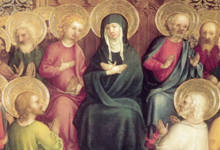 The beautiful prayer of the Magnificat which Luke ascribes to Mary is a powerful description of Mary in right relationship with other people. While the first part of her psalm focuses on Mary in relationship with her God, the second part expresses Mary’s love for people. Mary rejoices in God her Saviour because God‘s mercy is from generation to generation.
Watch the video
Mary and Right Relationships: Faith Tradition
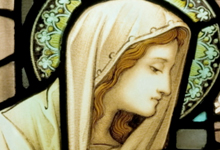 Mary was first and foremost a Jewish woman, a practicing Jew who remained faithful to Judaism. She would have been aware of the Hebrew Scriptures, the sacred books she called Torah and we Christians call the Old Testament. She bears the name of the leader Miriam about whom God said in the book of Micah (6:4), “I brought you up from the land of Egypt, and redeemed you from the house of slavery; and I sent before you Moses, Aaron, and Miriam
Watch the video
Each week on our website Elizabeth Davis rsm provides a written reflection on the Sunday readings. These reflections contain insights and images, poetry and prose, wisdom and scholarship. Access those reflections here



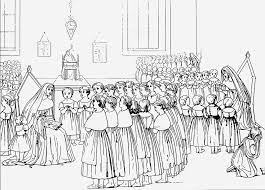 By this time, the Sisters had been in Newfoundland for almost a year, a year in which they devoted themselves to the visitation and care of the poor and the sick of the town, traversing the narrow streets and visiting the rude shacks in which many of the Irish Catholics lived. Forty-two pupils were enrolled when the school opened, and in the following year fifty-five students were in attendance.
 The Fourth Sunday of Easter, also known as Good Shepherd Sunday, has been celebrated as Vocation Sunday since 1964.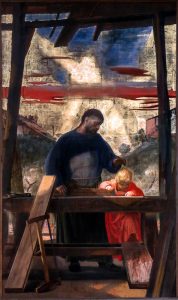
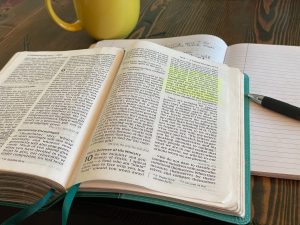 Sister Elizabeth’s reflections are published online in the Spirituality section under the appropriate liturgical season. They can be read online or downloaded.
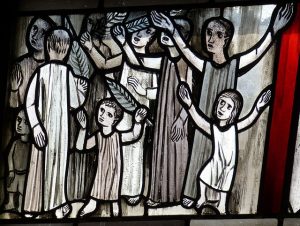 We begin our liturgy today with Jesus’ entry into Jerusalem, as the people shout, “Hosanna to the Son of David! Blessed is the one who comes in the name of the Lord! Hosanna in the highest heaven!” (Matt 21:9). The people were rejoicing in the coming of the Messiah, but they were placing all their hopes in a Messiah who was a king, a mighty and powerful leader, certainly not a Messiah who was a suffering servant, who would die by the lowest form of death possible – crucifixion. They were right to trust in this Prophet Jesus from Nazareth in Galilee. They were mistaken in understanding how this Prophet, this Son of David, this one who was coming in the name of the Lord, would lead them into new life. These same people, when their hopes seem lost, mock Jesus and choose the man Barabbas over him…
 Sister Elizabeth’s reflections are published online in
 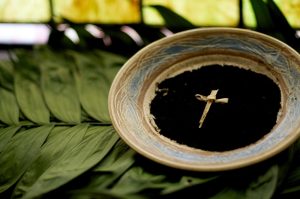 Pope Francis’ Lenten message to the world for 2023 was presented on Friday, February 17. The theme is Lenten Penance and the Synodal Journey. “We need to listen to Jesus he said, “through the Scriptures and through our brothers and sisters, especially in the faces and the stories of those who are in need…Lent is a time of grace to the extent that we listen to him as he speaks to us.”