Pope Francis has invited the entire Church to reflect on the path of synodality which he says is “decisive” for the “life and mission of the Church of the third millennium”. This global journey of communion, participation and mission includes a period of consultation with local churches around the world, with individuals and communities invited to submit responses that will form part of a listening process culminating in the Synod of Bishops in Rome in October 2023.
Occasional updates on the path of synodality are being published on this site.
Pope Francis expands participation in the Synod (5 May 2023).
 Pope Francis’ decision to expand participation in the Synod has made a significant impact on the Catholic world. Seventy non-bishop members are expected to participate in the synod being held at the Vatican in October, with half of the non-ordained beingwomen. The Pope also provided for greater gender parity among religious orders participating in the synod- five from women’s congregations and five from men’s.
Read the article from the April 27 Global Siste Report regarding this very significant decision.
Update on the North American Phase of Synod (28 April 2023).
The Canadian and American Catholics who participated in the NA continental phase of the Synod focused mainly on three areas: the need to rebuild trust in the wake of abuse scandals, the need to be inclusive and welcoming while being faithful to Church teaching, and the need for a “missionary” Church that goes out to the peripheries. Participants reflected on the Vatican working document and offered contributions based on the discussions of the Synod
at the parish and diocesan levels. From these reflections a report – North American Final Document for the Continental Phase of the 2021-2024 Synod – was compiled. At its release on April 12, the Canadian and American Bishop’s Conferences noted that the document “explores those areas where we must turn our attention as we continue cultivating a more synodal Church in Canada and the United States.”
Synod on Synodality (7 April).
The “continental stage” of the Synod on Synodality concluded on March 31, 2023. The seven continental assemblies took place over February and March,bringing together members from all levels of the Church –bishops, laity, priests, and members of orders of consecrated life, both women and men. The intent of this stage was to deepen discernment on what had emerged from the earlier local and national stage, using
Enlarge the Space of your Tent as a working docum
This continental stage was a unique process of listening and discernment on a continental level. Each assembly looked at the question that is at the heart of the synodal process – how can the “walking together” that will enable the Church to live and proclaim its Gospel message be achieved today at all levels from local to universal? The fruit of the discussions of the continental stage is contained in documents produced by each assembly that will serve as a major contribution to the first session of the Synod of Bishops in October 2023.
Continental Stage of the Synod (24 February 2023).
 The Continental stage of the Synod is intended to be a time of reflection and discernment of all the local churches on a continental basis. These continental assemblies are meeting between January and March 2023 to prepare a response to the Synod’s working Document, Enlarging the Space of your Tent. This document is the result of a group reflection on the syntheses of issues and questions raised during the listening sessions of Stage One of the Synod, a stage in which we were all involved.
There are seven continental groupings: North America, Latin America and the Caribbean, Europe, Middle East, Africa and Madagascar, Asia, Oceania. The continental assemblies were asked to carry out their consultations using the working document as a basis for reflection on three questions:
- Identification of the intuitions contained in the document that resonate most with the experience of their particular territory
- The questions or issues that need further attention in the next steps of the synodal process
- The priorities or recurring themes they would like discussed in the first session of the Synod in October 2023
In late 2022 and early 2023 the North American continental group – Canada and the United States -held ten virtual assemblies in which all 267 dioceses were represented. From February 13 -17, a group of seventeen delegates representing the United States Conference of Catholic Bishops and the Canadian Conference Bishops met in Orlando, Florida to develop a response to the working document from the North American Church, drawing on feedback from the virtual continental assemblies. Their response is to be submitted to the General Secretariat of the Synod by March 31.
El Papa Francisco ha invitado a toda la Iglesia a reflexionar sobre el camino de la sinodalidad que, según él, es “decisivo” para la “vida y misión de la Iglesia del tercer milenio”. Este camino global de comunión, participación y misión incluye un período de consulta con las iglesias locales de todo el mundo, con individuos y comunidades invitados a presentar respuestas que formarán parte de un proceso de escucha que culminará en el Sínodo de los Obispos en Roma en octubre de 2023.
En este sitio se publican actualizaciones ocasionales sobre el camino de la sinodalidad.
El Papa Francisco amplía la participación en el Sínodo (5 de mayo de 2023).
 La decisión del Papa Francisco de ampliar la participación en el Sínodo ha tenido un impacto significativo en el mundo católico. Se espera que setenta miembros no obispos participen en el Sínodo que se celebrará en el Vaticano en octubre, y que la mitad de los no ordenados sean mujeres. El Papa también dispuso una mayor paridad de género entre las órdenes religiosas participantes en el sínodo: cinco de congregaciones femeninas y cinco masculinas.
Lea el artículo del Global Siste Report del 27 de abril sobre esta decisión tan significativa.
Información actualizada sobre la fase norteamericana del Sínodo (28 de abril de 2023).
Los católicos canadienses y estadounidenses que participaron en la fase continental norteamericana del Sínodo se centraron principalmente en tres áreas: la necesidad de reconstruir la confianza tras los escándalos de abusos, la necesidad de ser inclusivos y acogedores a la vez que fieles a la doctrina de la Iglesia, y la necesidad de una Iglesia “misionera” que salga a las periferias. Los participantes reflexionaron sobre el documento de trabajo del Vaticano y ofrecieron contribuciones basadas en los debates del Sínodo
a nivel parroquial y diocesano. A partir de estas reflexiones se elaboró un informe: Documento final norteamericano para la fase continental del Sínodo 2021-2024. En su publicación el 12 de abril, las Conferencias Episcopales de Canadá y Estados Unidos señalaron que el documento “explora las áreas en las que debemos centrar nuestra atención mientras seguimos cultivando una Iglesia más sinodal en Canadá y Estados Unidos”.
Sínodo sobre la Sinodalidad (7 de abril).
La “etapa continental” del Sínodo sobre la Sinodalidad concluyó el 31 de marzo de 2023. Las siete asambleas continentales se celebraron en febrero y marzo y reunieron a miembros de todos los niveles de la Iglesia: obispos, laicos, sacerdotes y miembros de las órdenes de vida consagrada, tanto mujeres como hombres. La intención de esta etapa era profundizar el discernimiento sobre lo que había surgido en la etapa local y nacional anterior, utilizando
Ampliar el espacio de tu tienda como documento de trabajo
Esta etapa continental fue un proceso único de escucha y discernimiento a nivel continental. Cada asamblea examinó la cuestión que está en el centro del proceso sinodal: ¿cómo puede lograrse hoy, a todos los niveles, desde el local al universal, el “caminar juntos” que permitirá a la Iglesia vivir y proclamar su mensaje evangélico? El fruto de los debates de la etapa continental se recoge en los documentos elaborados por cada asamblea que servirán de importante contribución a la primera sesión del Sínodo de los Obispos en octubre de 2023.
Etapa continental del Sínodo (24 de febrero de 2023).
La Etapa Continental del Sínodo pretende ser un tiempo de reflexión y discernimiento de todas las Iglesias locales a nivel continental. Estas asambleas continentales se reúnen entre enero y marzo de 2023 para preparar una respuesta al Documento de trabajo del Sínodo, Ampliad el espacio de vuestra tienda. Este documento es el resultado de una reflexión en grupo sobre la síntesis de las cuestiones y preguntas planteadas durante las sesiones de escucha de la Primera Etapa del Sínodo, etapa en la que todos estuvimos implicados.
Las agrupaciones continentales son siete: América del Norte, América Latina y Caribe, Europa, Oriente Medio, África y Madagascar, Asia y Oceanía. Se pidió a las asambleas continentales que realizaran sus consultas utilizando el documento de trabajo como base para reflexionar sobre tres cuestiones:
 Identificación de las intuiciones contenidas en el documento que más resuenan con la experiencia de su territorio particular.
Las cuestiones o temas que requieren mayor atención en las próximas etapas del proceso sinodal
Las prioridades o temas recurrentes que les gustaría que se debatieran en la primera sesión del Sínodo en octubre de 2023.
A finales de 2022 y principios de 2023, el grupo continental norteamericano -Canadá y Estados Unidos- celebró diez asambleas virtuales en las que estuvieron representadas las 267 diócesis. Del 13 al 17 de febrero, un grupo de diecisiete delegados que representaban a la Conferencia Episcopal de Estados Unidos y a la Conferencia Episcopal Canadiense se reunieron en Orlando, Florida, para elaborar una respuesta al documento de trabajo de la Iglesia norteamericana, basándose en los comentarios de las asambleas continentales virtuales. Su respuesta deberá presentarse a la Secretaría General del Sínodo antes del 31 de marzo.

 A new cosmological narrative with “Cosmos meaning all creation, the entire universe, every dimension of time and space (spiritual and material)” is one of “a global heartbeat” in “kinship as a planetary community”. In uniqueness, we are “aligned” /”in harmony”/ “in wonder”/”delight”/”bending low…play-ful” as “one with the heartbeat of God”.
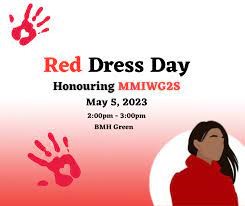 In Canada Indigenous women and girls are targeted for violence more than any other group. More than 4000 Indigenous women and girls have gone missing or been murdered in the last 30 years – an appalling statistic! Canada’s National Inquiry into this tragic history called upon all governments – national, provincial, territorial and indigenous – to work together to build an effective and accountable National Action Plan to address this crisis. Indeed, there is an urgent need for all Canadians to make efforts to raise awareness of this Canada-wide tragedy and to do whatever we can to make Canada a country for all Canadians.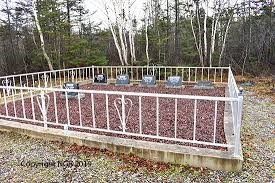
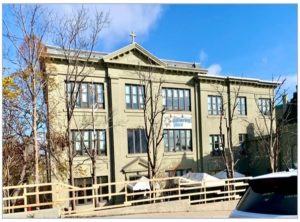
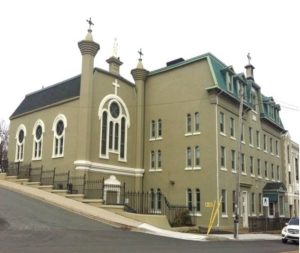
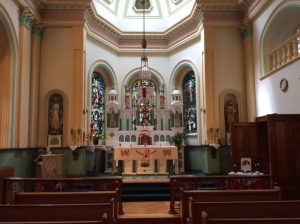
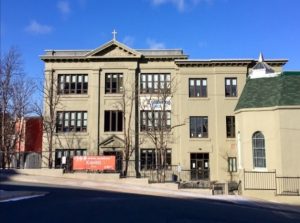
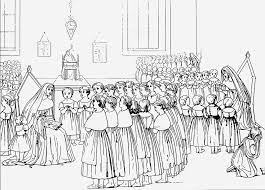 By this time, the Sisters had been in Newfoundland for almost a year, a year in which they devoted themselves to the visitation and care of the poor and the sick of the town, traversing the narrow streets and visiting the rude shacks in which many of the Irish Catholics lived. Forty-two pupils were enrolled when the school opened, and in the following year fifty-five students were in attendance.
 The Fourth Sunday of Easter, also known as Good Shepherd Sunday, has been celebrated as Vocation Sunday since 1964.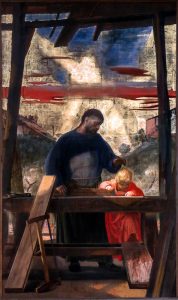
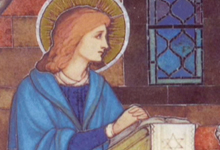 Mary, the woman we know as Mother of God, was one like us, a person who lived each day and faced the joys and the challenges of each day. We meet her first in Scripture as a frightened adolescent who is being asked to do an almost impossible thing. The last time we meet her in Scripture she is an older woman, more confident perhaps, yet still being asked to do an almost impossible thing
 In my home province of Newfoundland and Labrador, when anyone meets a stranger, the first questions are “What is your name and who are you called after?” and “Who are your parents?” The first page of our New Testament, the beginning words of the Gospel of Matthew, could well have been written by a Newfoundlander! In these words we find the answer to the same questions about Mary
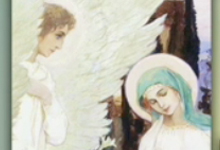
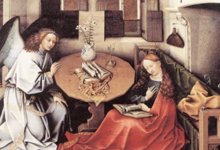
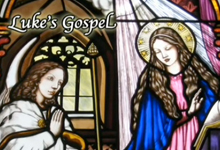 At the Annunciation, a young woman whose name is Mary is visited by an angel who tells her that she is to bear a son who will be special in many ways. When Mary challenges the possibility of this ever happening, the angel’s reply is decisive, “The Holy Spirit will come upon you” (Lk 1:35). With this assurance, the young woman replies, “Here am I, the servant of the Lord; let it be with me according to your word” (Lk 1:38)
 Mary’s response was immediate. She spoke the most words spoken by any woman in the New Testament. She used echoes of words spoken by the women of the Old Testament: Deborah, Miriam and Hannah. In this song, she passionately gave what the theologian Edward Schillebeeckx called “a toast to our God,” which we call the Magnificat.
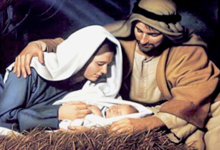
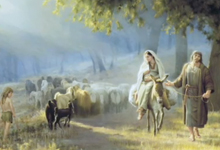 In the days before Mary was to give birth, she and Joseph were forced to go to Bethlehem to be counted for the census. They had no choice in this matter. The late stages of Mary’s pregnancy and the difficult journey from Nazareth to Bethlehem did not matter to the political leadership of the day.
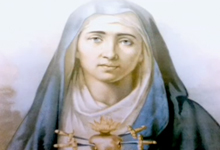 On another visit to the Temple to celebrate Passover when Jesus was twelve years old, Jesus remains behind and speaks with the teachers with authority, and then he says these mysterious words to his parents, “Did you not know that I had to be in my Father’s house?” This time the writer tells us that “His mother treasured all these things in her heart.”
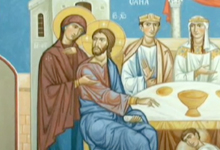 The young Jewish peasant girl has become a confident woman, a teacher, a mentor and a commanding presence. She has grown into her calling to be a partner with God in the work of Incarnation and Redemption. Having given life to her son, she now calls him into his new life of public ministry, she remains with him to support and nurture him to the end, and she will remain when he is gone to support and nurture the church which continues his presence on earth.
 “Spirituality is that which gives us the strength to go on for it is the assurance that God is in the struggle. Spirituality spells out our connectedness to God, our human roots, the rest of nature, one another and ourselves.” In this way in 1994 the Third World Theologians redefined spirituality and began our thinking on “right relationships.”
 Let us reflect on Mary in right relationship with the environment. First we must speak to our emerging understanding of ecology, a new sense of how all creation has been created by God, is good and is interconnected. In the 13th century Meister Eckhart said, “Apprehend God in all things, for God is in all things. Every single creature is full of God and is a book about God. Every creature is a word of God.”
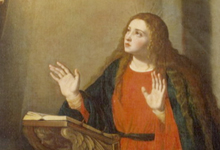 There are several beautiful passages in the Gospels in which we get an understanding of Mary’s sense of self. At the Annunciation, we see Mary’s poignant inner turmoil in the face of an awesome task being asked of her, “But she was much perplexed by his words and pondered what sort of greeting this might be” (Luke 1:29). She then asks outright the question, “How can this be, since I am a virgin?” (Luke 1:34)
 These women ancestors of Jesus suffer indignities and oppression, but live to reflect the face of God, the righteous One, the merciful One, the maternal One, the One who is found in the company of those who are marginalized, oppressed, suffering, poor and powerless. Jesus, the son of Mary, has indeed inherited the qualities of his foremothers.
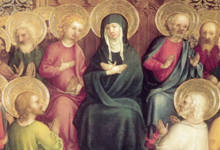 The beautiful prayer of the Magnificat which Luke ascribes to Mary is a powerful description of Mary in right relationship with other people. While the first part of her psalm focuses on Mary in relationship with her God, the second part expresses Mary’s love for people. Mary rejoices in God her Saviour because God‘s mercy is from generation to generation.
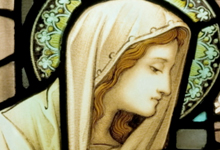 Mary was first and foremost a Jewish woman, a practicing Jew who remained faithful to Judaism. She would have been aware of the Hebrew Scriptures, the sacred books she called Torah and we Christians call the Old Testament. She bears the name of the leader Miriam about whom God said in the book of Micah (6:4), “I brought you up from the land of Egypt, and redeemed you from the house of slavery; and I sent before you Moses, Aaron, and Miriam