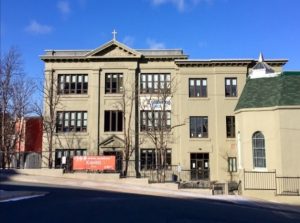

A timeline of key events in the development of St Clare’s Mercy Hospital.
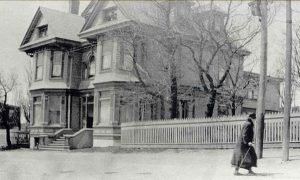
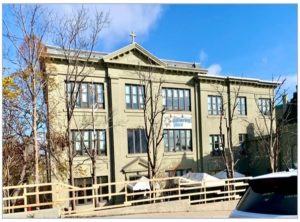
1913 “White House” purchased from the Honorable E. M. Jackman to be operated by the Sisters of Mercy as a home for working girls.
1921 The “White House” was renovated to serve as a hospital. Archbishop E.P. Roche laid plans for the improvement whish included sending a Sister of Mercy to Mercy Hospital in Pittsburg to train as a nurse.
1922 May 21 St. Clare’s Mercy Hospital was officially opened to care for 23 patients Sister Mary Bernard Gladney, graduate nurse, was appointed Superintendent. The following year Sister Mary Aloysius Rawlins took on the position of superintendant.
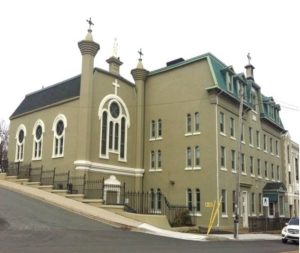
1939 New modern 100 bed building opened west of the “White House” on LeMarchant Road.
St. Clare’s Mercy Hospital School of Nursing was opened with accommodations for the students in a duplex house next to the hospital.
1941 First Graduation of St. Clare’s Nursing School- five graduates.
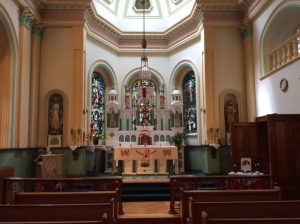
1950 Opening of a large chapel and additional facilities for pediatric, obstetric and dietary services
– Our Lady of Lourdes window installed on chapel corridor in memory of Sister Mary Aloysius Rawlins who had been administrator of St. Clare’s for over twenty years.
1956 Board of Governors and Medical Advisory Committee established through the work of Sister Mary Fabian Hennebury, Administrator of St Clare’s.
1958 Our Lady of Lourdes Hall opened to accommodate 100 nursing students.
1959 St. Clare’s granted its first full accreditation by Canadian Council on Hospital Accreditation.
1960 St. Clare’s was incorporated.
1962 Opening of New wing on St. Clare Avenue to provide accommodation for 100 additional patients.
1967 St. Clare’s Mercy Hospital Auxiliary set up. Mrs. Joan Parker Crosbie was first President.
1963 Planning begun for another extension of hospital. 1968 Recognition as teaching hospital affiliated with Memorial University.
1972 Golden Anniversary of the opening of St. Clare’s. New wing officially opened. Hospital population now increased to 300 patients.
1975 Department of Pastoral Care established. Sister M. Carmelita Power appointed as Director.
1978 Talbot House, a Residential Detoxification Center was opened on Deanery Avenue.
1979 First Palliative Care Unit east of Montreal opened. The unit was transferred to the Leonard A. Miller Centre in 2002.
1984 St. Clare’s was selected as one of ten test sites for a national computerized information management project.
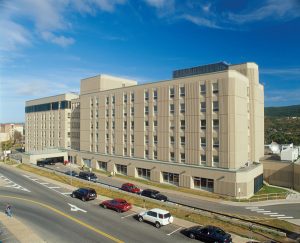
1985 Establishment of St. Clare’s Mercy Hospital Foundation
– Computers were introduced- Meditech system for patient information.
1994 St. Clare’s sold to provincial government and incorporated into Health Care Corporation of St. John’s, 1995
– Opening of LeMarchant House, a mental health day program/centre.
1995 St. Clare’s Mercy Hospital Advisory Council was established to foster Mission, Values and Ethics.
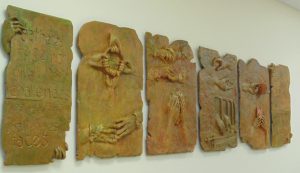
2004 Sisters of Mercy donated a ceramic mural “For Mercy Has a Human Heart” placed in the front entrance. Artist – Gerald Squires.
2005 Eastern Health, Regional Authority established for administration of all health care services in Avalon, Burin and Bonavista Peninsulas, including St. Clare’s.
2022 St. Clare’s celebrated the centenary anniversary of its opening.
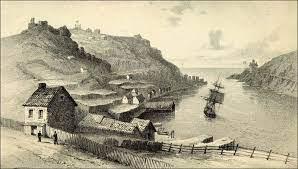 What must have been their thoughts as they looked upon the forbidding landscape with its towering rocky c liffs and craggy head lands ? Although they had seen poverty in Ireland, t he abject poverty of this place with its rude shacks and derelict fishing stages perched on the side of the hills, would have seared their hearts and minds. Sister Francis had lived in the colony for six years, but for Sisters Ursula and Rose the scene before them must have caused some dismay and distress.
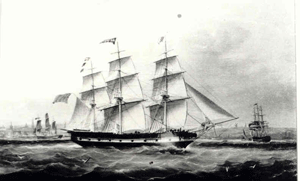 ¿Qué debieron de pensar al contemplar el imponente paisaje de acantilados rocosos y escarpados promontorios? Aunque habían visto la pobreza en Irlanda, la abyecta pobreza de este lugar, con sus rudimentarias chozas y sus abandonadas etapas de pesca encaramadas en las laderas de las colinas, les habría abrasado el corazón y la mente. La hermana Francis había vivido en la colonia
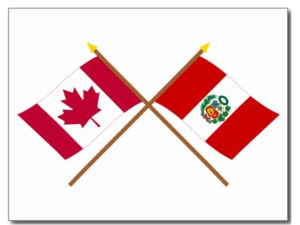 Sisters of Mercy from Newfoundland and Peru now minister in two areas of the country – in Puerto Eten, Reque and Eten, in the Chiclayo region and in Huarmey, Casma, Ancash. Eight sisters of the Congregation of the Sisters of Mercy of Newfoundland (including four native Peruvians) work with the people, especially poor people, in towns and small villages in these two regions of Peru.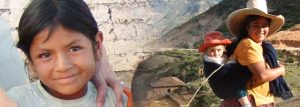
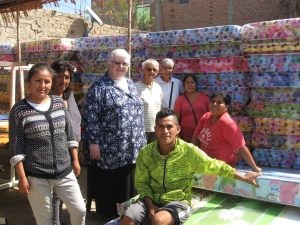 Educational programs and materials, e.g. reading materials, computers, student supplies are made available when resources allow. Emphasis is placed on working with women in areas of family care, health, nutrition, sewing, gardening, etc. Opportunities are provided for men and women to develop skills in carpentry and farming of family gardens – a cooperative venture to help people help themselves. Medical needs in the form of prescription drugs, diagnostic tests, x-rays, and special procedures or treatments are also provided through the fund.
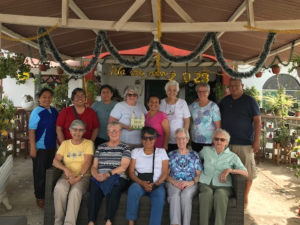 Our Sisters of Mercy now minister in two areas of the country – in Puerto Eten, Reque and Eten, in the Chiclayo region and in Huarmey, Ancash. Six sisters of the Congregation of the Sisters of Mercy of Newfoundland (including four native Peruvians) work with the people, especially those made poor, in towns and small villages in these two regions of Peru.
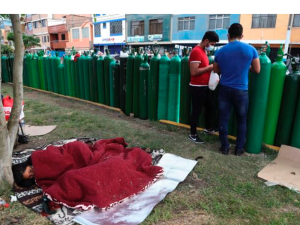 time. Peru was affected enormously by the onslaught of Covid and its health system collapsed totally. Together with our co-workers, the Conference of Religious of Lima, and The Conference of Religious of Chimbote, plans were made to look for and purchase an Oxygen Plant for the city of Chimbote.
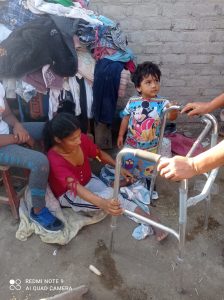 In the Diocese of Chiclayo the Sisters had much support from Caritas organization, along with many individuals and NGOs, especially for their outdoor neighborhood kitchens . These kitchens are the main way people receive a hot meal each day.
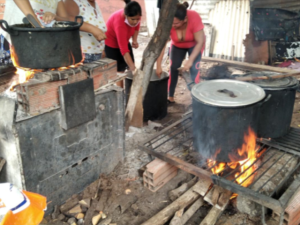 financial resources to obtain medical supplies and food for the people. Other aid came from the Peruvian government and other international agencies.
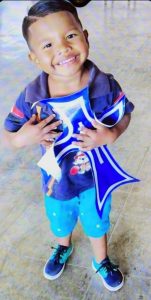 These last couple of years the Mission Fund has been able to respond to many needs caused by anti-government protests in the country when people could not work as usual; then the very heavy rains and floods have taken away not only peoples place of work, but many have lost homes and possessions. The fund has been used to form comedores and ollas communes (dining areas and common pots) and was able to lessen hunger and disease in many pueblos. Migrants, older people, and children are a special concern for our communities and the Mission fund works constantly with our lay people and coordinators to identify their needs and respond.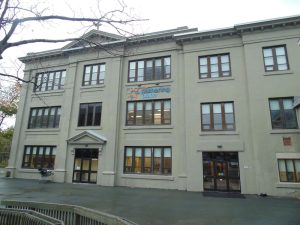
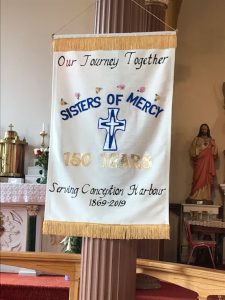 On Tuesday May 21 about thirty of us attended a grand celebration in the parish of Eucharist followed by a hot roast beef dinner. Sister Roisin Gannon represented the Presentation Sisters. Bishop Anthony Daniels surrounded by seven priests of the Grand Falls Diocese celebrated Eucharist in St. Anne’s Church with participation of the sisters and parishioners in readings, music and other moments in the liturgy. The church was sparkling and beautifully decorated with roses. A large banner hung in the church acknowledging the 150 years’ anniversary – Our Journey Together! At the end of Mass, a plaque was presented to the Congregation which will be placed in the church to commemorate the anniversary. In his homily Bishop Daniels connected the call and ministry of the sisters to that of the early disciples of Jesus and gratefully commended their life and ministry among the people of Conception Harbour and surrounding area.
 A new cosmological narrative with “Cosmos meaning all creation, the entire universe, every dimension of time and space (spiritual and material)” is one of “a global heartbeat” in “kinship as a planetary community”. In uniqueness, we are “aligned” /”in harmony”/ “in wonder”/”delight”/”bending low…play-ful” as “one with the heartbeat of God”.