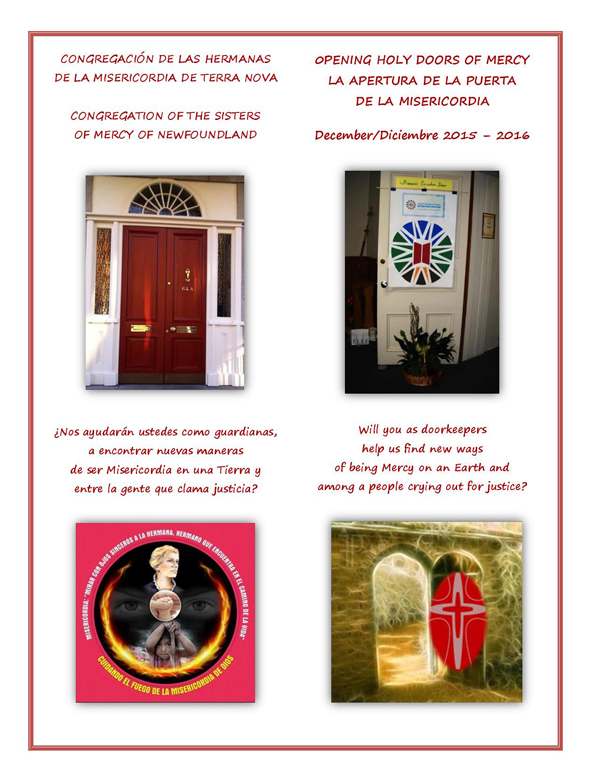
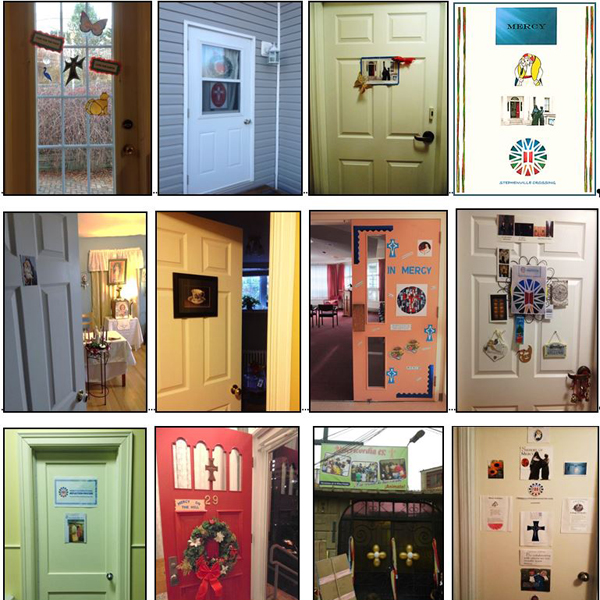
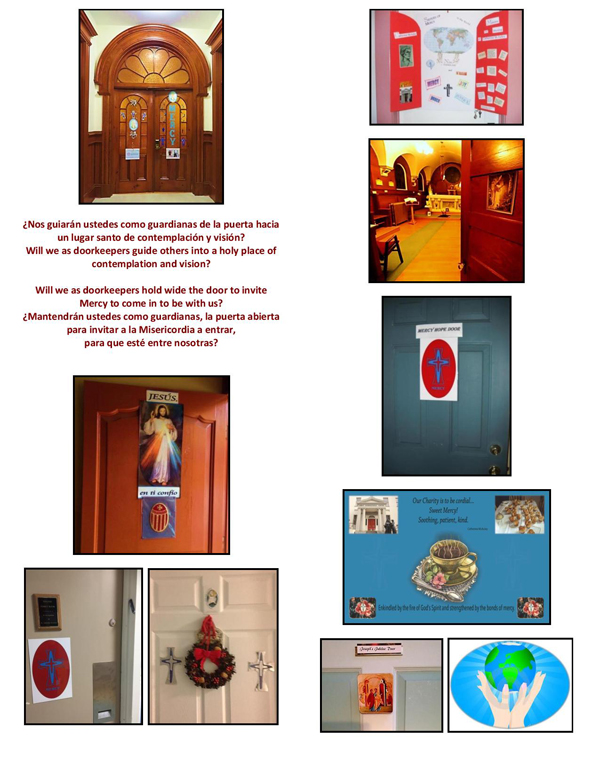
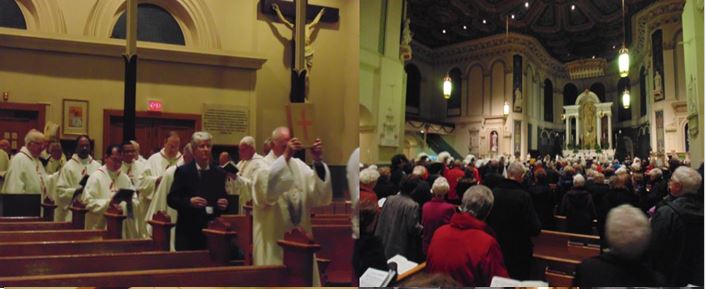
Invitation: Become a ‘Doorkeeper of Mercy’ in the Year of Mercy.

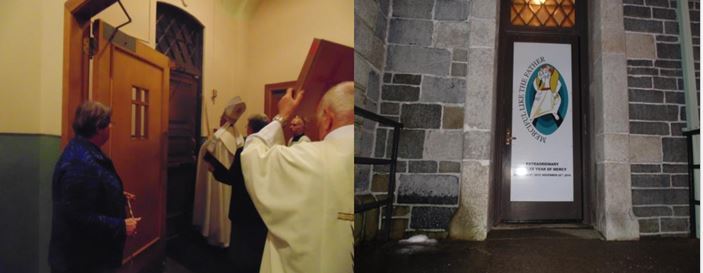
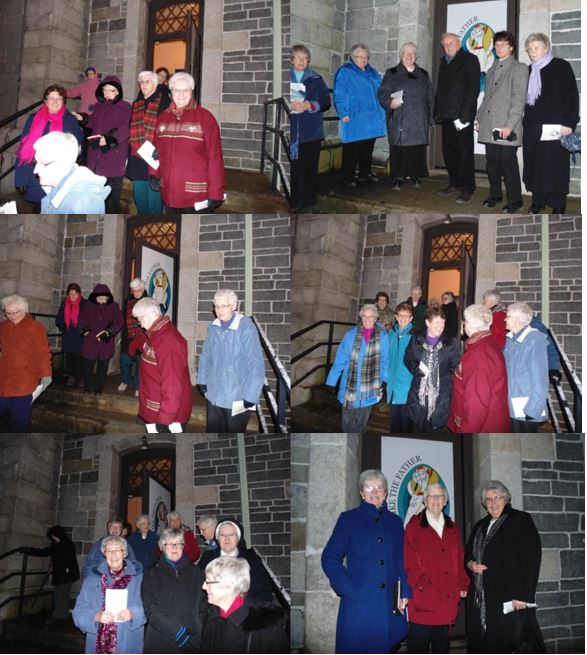
Sisters of Mercy and partners-in-Mercy are invited ‘to be guardians of the Door of Mercy, keepers of the in-between place of Mercy’ in this coming year of Mercy (8 December 2015 – 20 November 2016).

‘Pope Francis says that, in this coming Year of Mercy, “the Holy Door will become a Door of Mercy through which anyone who enters will experience the love of God.” The logo for our Mercy International Reflection Process, unfolding during this Year, is centered on the red doors of Baggot Street. In a profoundly mystical way, these red doors connect all our doors of Mercy – in our convents and houses, in our places of ministry, in holy places around us, in Earth which nourishes us, in the cosmos which holds us in communion, and in the hearts of all Sisters of Mercy, Associates and Partners-in-Mercy…’

Doorkeepers of Mercy:       A4 Paper Size (PDF)                       US Letter Size (PDF)

‘El Papa Francisco dice que, en este Año de la Misericordia, «la Puerta Santa será una Puerta de la Misericordia, a través de la cual cualquiera que entre podrá experimentar el amor de Dios». El logotipo para nuestro proceso internacional de reflexión de misericordia, que se desarrollará durante este Año, se centra en las puertas rojas de la Calle Baggot. En una forma profundamente mística, estas puertas rojas conectan todas nuestras puertas de Misericordia – en nuestros conventos y casas, en nuestros sitios de ministerio, en lugares santos en derredor nuestro, en la Tierra que nos alimenta, en el cosmos que nos sostiene en comunión y en los corazones de todas las Hermanas de la Misericordia…’

Guardas de la Misericordia:    A4 Paper Size                                   US Letter Size

NB:This video and/or text are suggested for inclusion in the ‘Called to the Ministry of Mercy’ Ritual for Opening Doors of Mercy on (or around) 13 December. The Leader and Participants copy of the ritual in both English & Spanish, full colur & black and white are available for download here


Re-membering Catherine McAuley

St. John’s Newfoundland and Labrador

On the eve of the anniversary of the death of Catherine McAuley, 11 November, ten women named Catherine gathered with the community of St. Joseph’s Convent to remember Catherine McAuley.

In order to celebrate the 174th anniversary of the death of Catherine McAuley, the six sisters of St. Joseph’s community on Signal Hill, St. John’s invited women they knew and who had the name Catherine to a reflection and a cup of tea.  After they were welcomed each spoke of her name and its significance.  The stories were varied and some humourous – a great way to get to know each other!

Then we reflected with the help of a slideshow and songs on the life of Catherine McAuley.  We prayed for various needs in our world and ended with the video of the Circle of Mercy.  Following our reflection and prayer, the group went to the dining room for a good cup of tea.

It was a lovely evening that was enjoyed by all present- the guests seemed reluctant to leave and hoped for a similar event next year!


Closing St. Clare’s Mercy Hospital Convent

“Today, sadly, we mark the closing of St. Clare’s Convent and the departure of the Sisters of Mercy from their residence in the ‘white house’, the cornerstone building of what we now know as St. Clare’s Mercy Hospital.   The Sisters of Mercy may be leaving a building but they are not leaving healthcare or the ministry at St. Clare’s.”

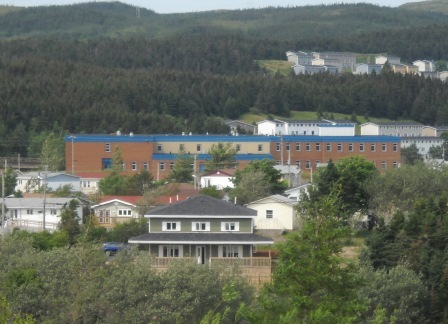
On March 3 a brief ceremony in the hospital chapel marked the closing of St. Clare’s Mercy Hospital Convent on LeMarchant Road, St. John’s, NL.

St. Clare’s Mercy Convent

The grand, three-storey house on the corner of St. Clare Avenue and Lemarchant Road was purchased from the Honorable E.M. Jackman by Archbishop M. F. Howley in 1913 for five thousand dollars.  Bishop Howley’s plan was to open a hostel for women who came to St. John’s looking for work.

A Presentation Sister, M. Clare English, was a keen supporter of the project and began to raise money for it.  She donated the proceeds of a rosary made of gold nuggets given to her by a prospector relative.   In September 1913 St. Clare’s Home for Working Girls was opened.   Bishop Howley asked the Sisters of Mercy to administer the home since such ministry was more in keeping with the rule of their order; the operation of such an institution was one of the ministries for which they were founded.  Three Sisters of Mercy took up residence in the ‘white house’.

Within a year, Bishop Howley had considered turning the home into a Catholic hospital but he died before any action could be taken.  Archbishop E.P. Roche built on his predecessor’s dream to establish a Catholic hospital.  He arranged for Sister Mary Bernard Gladney, one of the three sisters at St. Clare’s Home, to go to a Sisters of Mercy Hospital in Pittsburg to train as a nurse and to eventually take the leadership of establishing and running the hospital.

St. Clare’s Mercy Hospital opened in May 1922. Katherine Bellamy writes in her history:  “The little hospital soon gained a superb reputation for its care of the sick, and within a short time it was functioning at full capacity.”  Bellamy, Weavers of the Tapestry, p. 390.

Additional sisters went to the United States to train as registered nurses.  Others trained for dietetics, radiography, anesthesia and laboratory.  The sisters continued to live in the hospital in a section of the building set aside for their community life.  Surely they were on call every day and every hour!  As the years passed and the hospital grew, with new modern extensions, more room became available in the “white house” for the sisters who themselves were increasing in numbers.  The lab was the last vestige of the hospital that shared the house with the sisters!  A modern large,  new lab was built into the 1970s extension and the sisters finally had the convent to themselves!

For the past 102 years, beginning in the former Jackman home, the Sisters of Mercy have reached out with competence and compassion to all who came through the doors seeking shelter, healing and care.  The sisters were pioneers of health care in the province and provided leadership in all facets of care of the sick.  They were pioneers of wholistic care long before it became part of medical terminology.  Over the years they lead the way in comprehensive hospital care, information technology, pastoral care, palliative care, detoxification and innovative mental health care.  We celebrate that great story!

Ceremony

The ceremony (repeated in the early evening) to mark the closing of the convent recognized the contribution of the ninety-two women who lived in the ‘white house’ over the 102 years.  The participants, graduates from St. Clare’s School of Nursing, staff and former staff, sisters, physicians, administrators and colleagues, celebrated in readings, prayer and song and gathered at the end for a “good cup of tea”.

In her reflection Sister Elizabeth Davis, Congregational Leader and former CEO of St. Clare’s said:  “The ninety-two Sisters of Mercy who have called the Convent home over more than one hundred years have been primarily involved in Mercy health and healing ministries – at St. Clare’s Mercy Hospital and at St. Patrick’s Mercy Home – and in education ministry at the St. Clare’s School of Nursing.  These women have made a difference in the lives of individuals who came to the hospital for healing, in the health and health care of the people of Newfoundland and Labrador, in the education of women and men working within health care, and in the shape of our province’s health care system.  In a few moments we will hear the names of these ninety-two women, we will see the faces of the ones who loved us and influenced us and shaped who we are and what this hospital is.”

Sisters of Mercy will continue to be committed to the provision of medical, spiritual and pastoral care, to visitation of sick people in St. Clare’s and in other hospitals, private homes and long-term care homes, to support people on dialysis, to encourage and support educational, spiritual and leadership endeavours within health care, to advocate for justice for people with complex needs, and to the encouragement and support all with whom they collaborate.

Gratitude

We acknowledge the contribution of the sisters who lived in St. Clare’s Convent since 1913, a home and refuge for women; and later the foundation of a hospital that would grow to be a modern tertiary healthcare facility among the present-day comprehensive services of the Eastern Health Regional system.

May the Spirit of Mercy continue to inspire all of those who continue to walk in the footsteps of these Women of Mercy.

Note:  the ‘white house’ is now the property of the Eastern Health Regional Board.

Final Profession in Monsefu, Chiclayo, Peru

Sister Felicita Alita Sánchez Sánchez is now a finally professed Sister of Mercy in the Congregation of the Sisters of Mercy of Newfoundland!

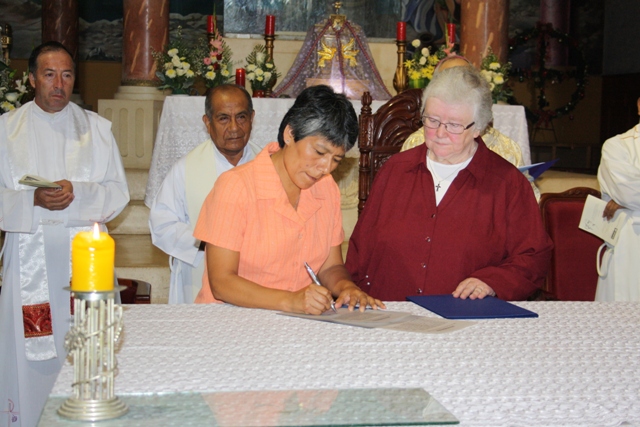
Alita made her profession of vows in a eucharistic celebration in the Church of San Pedro of Monsefu, Chiclayo, March 20, 2015.  The evening was a wonderful experience of faith, charism, community and ministry all held in the embrace of Mercy.
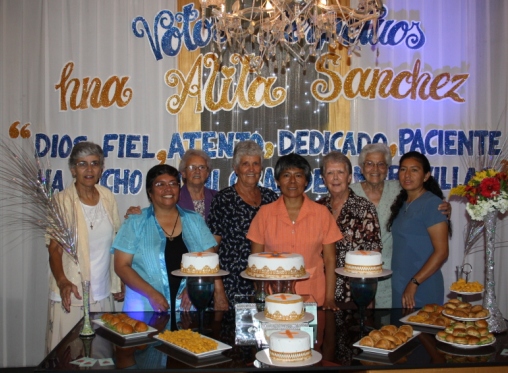

Attending the ceremony were: Alita’s family, her friends, people from her home in Monsefu, Sisters of Mercy and other women religious from across Peru and four priests (Fr. Lucho, Pedro and Emigdio who are long-time friends of our Sisters, Father Luther who is Parish Priest in Puerto Eten) and Bishop Robert Provost (who presided over the Eucharist).

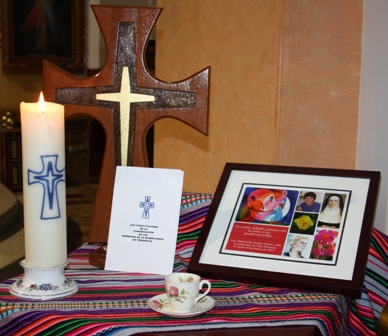
A centerpiece held the Mercy cross, the candle, a copy of the Constitutions, a teacup, and the framed picture which the Congregation had given Alita as a gift.  A delicate flower was placed on the entrance to each pew. A talented choir from the parish led the singing.

Sister Rosa Gumpa served as Guide for the ceremony.  Sister Elizabeth Davis, Congregational Leader, gave a welcome at the beginning.  The Bishop blessed the water, and four friends of Alita blessed the people in the sprinkling rite.   The readings were taken from Jeremiah 31:31-34, Ps 24, Heb 5:7-9 and John 12:20-33.  The Bishop’s homily included references to the place of religious life today, the Year of Consecrated Life and the readings. The Rite of Profession was led in Spanish by Elizabeth. The questions of intent addressed to her allowed Alita the opportunity to show to the People of God assembled the depth of her commitment.

The litany of saints that followed included invocation to our founders, two of our sisters who died in an accident in Peru and deceased priests of Monsefu and region who worked with our sisters over the years.  Representatives of Alita’s family, the Sisters of Mercy, the Bishop, the priests and the people (the holy ones of today) surrounded Alita – forming, with those whose names were sung, the communion of saints.

Alita read her vows aloud clearly and convincingly, the witnesses (Sheila and Mildred) and Elizabeth signed them with her, she received her ring (engraved with the words of her invitation – “attentive, delicate, patient and faithful God”), she was blessed by the Bishop and embraced by the Sisters of Mercy present.

After the Mass, everyone moved to the reception in a special space near the church.  The space was beautifully prepared with white coverings on the tables and on the chairs, round tables with a bouquet of flowers in the centre, cakes arranged in a central table, and touches of lights and gold in decorations around the room. Toasts were given at the beginning.  Many photographs were taken.  A lovely meal was served.  Guests were treated to traditional songs as well as traditional dances with the dancers in beautiful costumes.  Then the energetic dancing of all the rest began!  All were home by ten o’clock – exhausted, happy and grateful.

What a beautiful moment in the life of our Congregation!


                   Sisters of Mercy of Newfoundland living in Huarmey and Puerto Eten, Peru


L – R Verna Aucoin, Rosa Silva Cumpa, Marion Collins, Mildred Brennan, Alita Sanchez Sanchez, Alice Mackey, Lily Ferrero, Rosali Vargas Mendoza

Contact:  Alita  falitas@hotmail.com    Diane  dsmyth@sistersofmercynf.org


McAuley Place, Marystown


On 22 December 2014 I was invited to attend a small Christmas celebration at McAuley Place – that is the former Holy Name of Mary Convent, which closed in 2011, and purchased by the Grace Sparkes Home for Battered Women.  After much hard work and persuasion to both levels of government, two grants were made available to renovate the building.

The former convent now has six small but beautiful apartments to accommodate one, two or three- member families who need protection and accommodation.  The committee, lead by Mrs. Lisa Slaney and supported by Grace Sparkes staff, have done a wonderful job to make this possible for women in need of shelter and support.

As I told them, the first Mercy House was opened in Ireland by Catherine McAuley to assist young women.  It was a blessing then as it is today. McAuley Place is a local ministry much after the vision of our foundress.

The women, and one child presently living in ‘McAuley Place,’ enjoyed this Christmas celebration.  There was music, lunch, and even Santa Claus.  I am sure there will be many such events as well as the care, shelter and guidance they will receive.

An official opening is planned in the future.

P.S.  As a matter of information — Sister Rona O’Gorman served on the committee which took the responsibility to lobby for a ‘Grace Sparkes’ house to be established in Marystown.  That shelter opened in 2000.

Messages to Theresa: theresamarch34@yahoo.ca

Celebrations of Two Great Ministries

Two special events were held in St. John’s – both to honor the ministries of the Sisters of Mercy.

It is coincidental that in the formalities of both events the song Standing on The Shoulders was sung.  The song reflects on the strength and courage of those whom we followed in life and ministry and recognized that we are the shoulders upon which others will stand as they go forward.
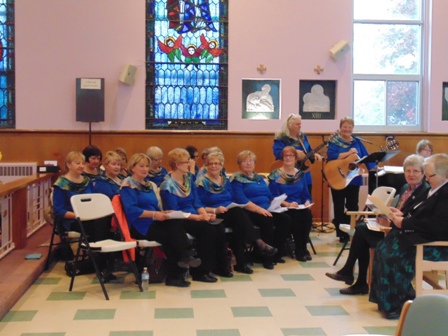
St. Patrick’s Mercy Home

The Most Reverend Martin Currie, Archbishop of St. John’s, presided at a Mass at St. Patrick’s Mercy Home in the morning of this Week of Elder Care.  The celebration recognized the commitment of the Sisters of Mercy at the home for the past fifty-six years.

In her speech Sister Elizabeth Davis, Congregational Leader, described how the Sisters of Mercy responded to a vision of a former archbishop, P.J. Skinner, to establish a home for the elderly population by taking on the staffing and administration of the home.  She commended the dedicated staff and volunteers who worked with the sisters to provide the warmth and care that makes St. Patrick’s a “home”.
The music in the liturgy was lead by a group of women who were former students of the sisters at Holy Heart of Mary High School.

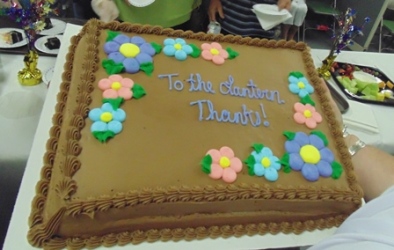
All were invited then to a lovely lunch and a celebration cake.


The Gathering Place

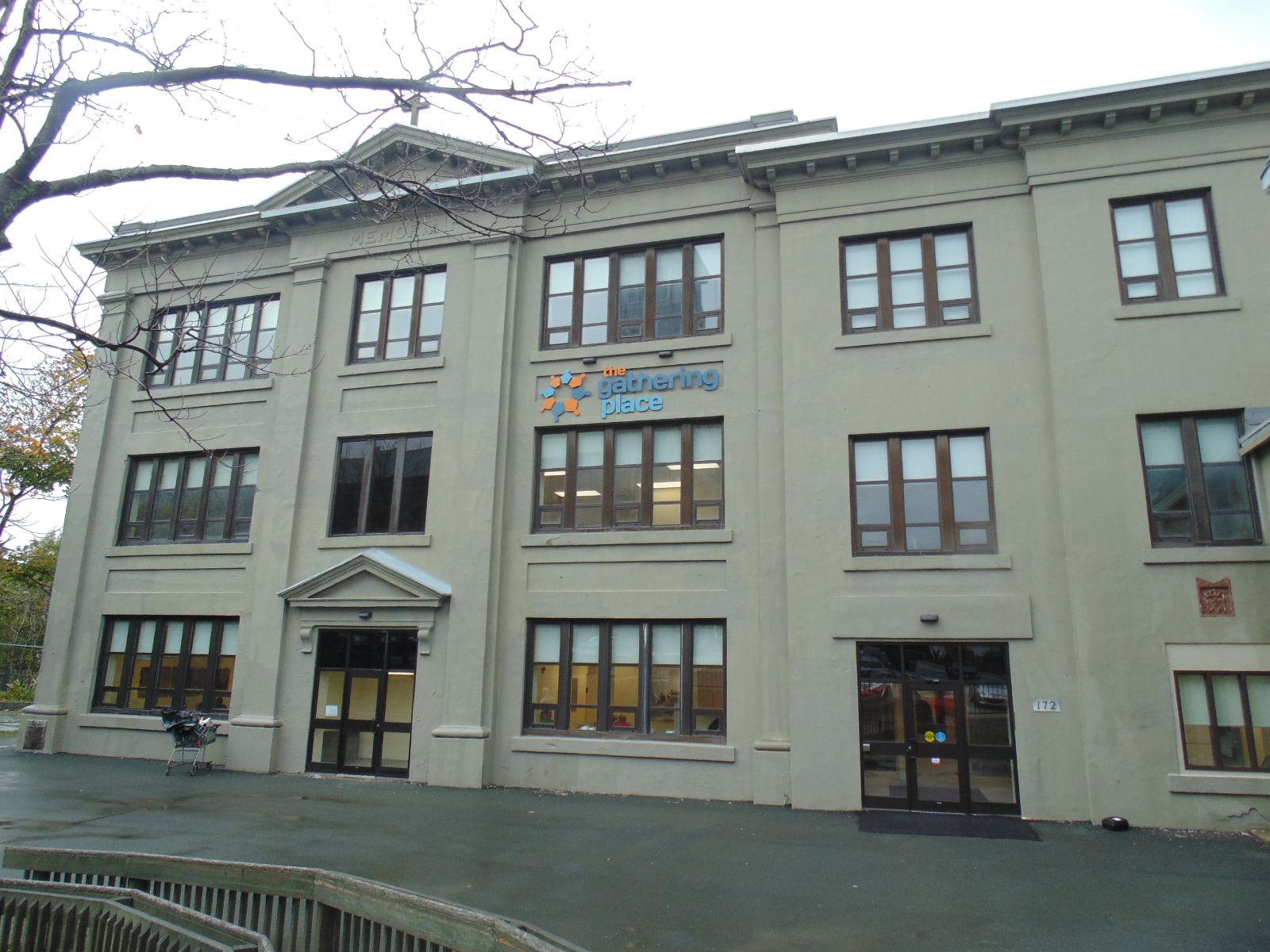
This is also big week for The Gathering Place.  The Gathering Place is a newly renovated and redeveloped community centre initiated by both the Presentation and Mercy Sisters in 1994 in response to the needs of the poor in the downtown area of the city.  In the beginning The Gathering Place was based in a vacant school building of the Sisters of Mercy and provided meals and time and space for social activities for the guests.  Various programs like literacy education, art, music, health and social services were added.  The Presentation Sisters were partners in the administration and coordination of this project.  The volunteer corps came from the various churches in the centre city area.

In 2012 a major financial campaign to renovate the building and to enhance the programs of the Gathering Place was undertaken with a goal of 7 million dollars.  At this date 6 million dollars have been raised through the hard work of the gift team and the generosity of people – thousands of dollars from  large multinational companies and a five dollar bill from a passer-by!

In the reconstruction phase basic services continued and were available through a nearby spirituality centre owned by the Presentation Sisters, The Lantern.  The life and the spirit of The Gathering Place continued in its temporary home until they moved home to the completely renovated space in late September.

Events of this week honored the guests, the founders, the volunteers, the donors, the media and the general public – all who are associated with The Gathering Place.
What a blessing for the poor and isolated of downtown St. John’s!


Mercy E-news Right from Newfoundland

We welcome among us Ms. Anne Walsh from Australia via Dublin. Anne was instrumental along with Adele Howard rsm for broadcasting the celebrations of the 20th Anniversary of Mercy International across the world through the mercyworld website.

Anne is the editor of Mercy e-news each week and will continue to produce that from right here in Newfoundland! Anne will be among us for two weeks until October 23 when she will return to her home in Melbourne. Anne has come to assist us in learning more about the world wide web and specifically about the Mercy world including our own website. We will have sessions that might have general appeal and provide basic information, as well as more technical workshops to help those who would like to learn how develop and to add articles to our website

We are delighted that Anne will be able to experience our beautiful history, culture and landscape and get to know the Sisters of Mercy of Newfoundland and Labrador. We know that we will gain more expertise in working in cyberspace and within the mercyworld website.


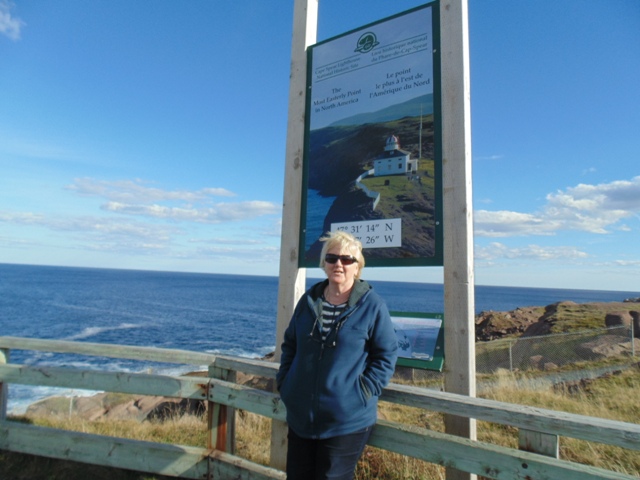
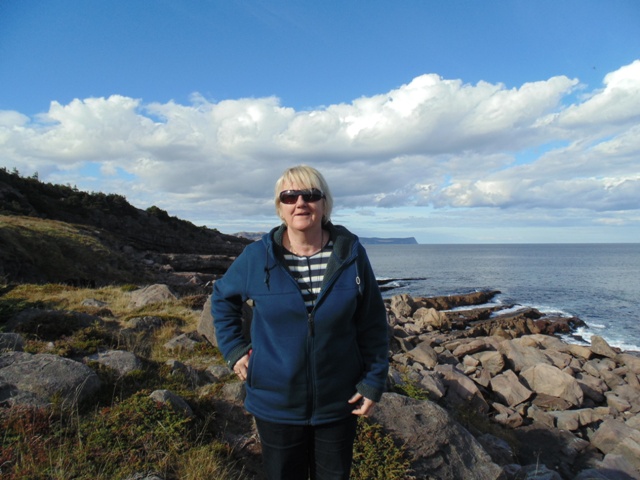
        Anne at Cape Spear, the most easterly point in North America
       Anne at Blackhead 

Celebrating MIA 20th Anniversary

In Newfoundland we began the week of celebration of the 20th anniverary of the Mercy International Association on Sunday September 21.

We began with the video Circle of Mercy thus bringing Sisters of Mercy from around the world into our gathering.   Sister Elizabeth Davis, congregational leader, welcomed the group giving a backdrop for the celebrations.  We enjoyed a slideshow of The Face of Mercy which included photos of many of the people in the room and which had been sent to Ireland to be part of the photo display during this week of celebration.
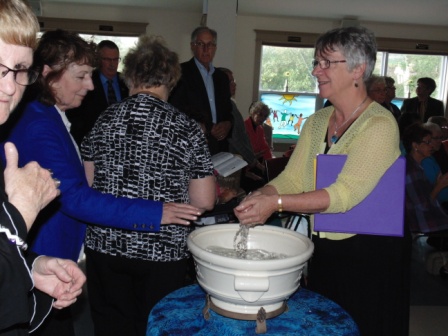
Sister Sheila O’Dea then led us through the liturgy that a committee had prepared for the celebrations at Baggot Street, Dublin on September 26.  The prayer was beautifully woven with readings, images, reflection and chants.  The refrains were written by some of our own sisters.  Bill Brennan, a well known local musician, had composed a piano piece, Country Rose, that was listened to as part of our reflection time.

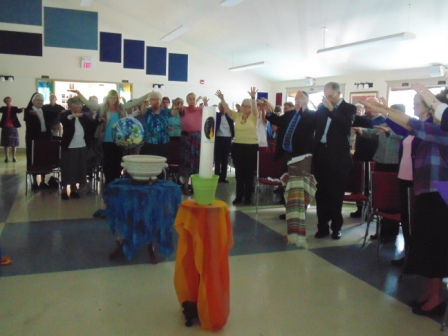
The theme of our liturgy was Caring for our Environment.  The opening action invited all of life from the four corners of creation to the centre of our room as we turned to each of the directions.  Various symbols were brought to the centre of the room.  Water was one of the key symbols, which was later blessed.  Each of us asked to approach the water prayerfully and playfully to bless ourself or others with the water.  At the end of the liturgy we each turned to the various directions to bless all people and creatures in our cosmos.
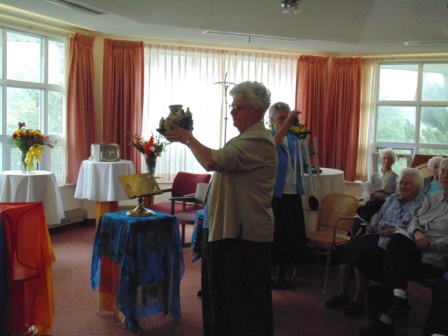
Of course we all enjoyed wonderful refreshments following the liturgy.

Since many of our sisters could not attend this gathering we celebrated the event at McAuley Convent on September 22.  We began in the chapel with the liturgy as prepared for the worldwide celebration.  It was so moving to see so many of the sister residents and staff of McAuley Convent participate in the various components of the service and to participate in the refrains.  We then had a “good cup of tea” before watching the slide show “the Face of Mercy”.
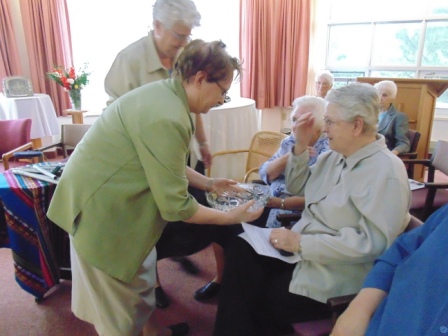
As the week continued many of our sisters joined in the worldwide celebrations as

they were livestreamed from BaggotStreet chapel.  We were so pleased to be able to join in the celebrations “live”  through the world wide web, even thought some of them were in the early hours of the mornign for us.  We were so delighted that Sisters Patricia March and Monical Hickey as well as Anne Curtis, one of our colleagues, could be present among the group in Dublin for the celebrations and to represent us there.  We were so pleased to contribute to the celebrations on September 23 and to contribute to the liturgical celebration used on September 26.  We were especially pleased and excited when Patricia told the story of the formal opening of Mercy International Centre and are grateful to her deep love and commitment to Mercy.

We thank the committee who met often to prepare the litugical format and to carry out the various local celebrations.  We thank the sisters who worked to prepare to celebrate at home and to manage the technology that brought us into the chapel at Baggot Street!  We are especially grateful for the group who planned this international celebration of the twenty years of world wide Mercy.


Update: The Gathering Place


“I needed some help and you gathered here with me”

The Gathering Place opened its doors in 1994 and offers services to people who are homeless or live in less than desirable housing conditions, are often unemployed or do not have adequate social supports.  The goal is to foster among Guests independence, self-respect and dignity. While those who come for programs and services now live in St. John’s, many have come from across Newfoundland and Labrador and some from outside the province.

Founded by the Presentation Sisters and the Sisters of Mercy in response to the needs of those coming to their doors seeking food, the Gathering Place now provides many programs and services including meals, foot care, a clothing supply boutique and hair care service.  Through collaboration with other agencies, guests of Gathering Place have access to housing experts, nurses and social workers.  Guests can avail of advocacy, literacy and computer programs.  Inner-city churches have assisted the venture since its beginning, and many other service organizations, church groups, foundations, corporations and individuals make financial and in-kind donations towards the ongoing operation.

The Gathering Place is housed in the former Mercy Convent School, located in the heart of St. John’s.  It is a registered charity governed by a Board of Directors with members from the Leadership Teams of the two congregations and from the community at large.  The programs and services are offered through a volunteer-driven operation led by a leadership team (an administrator and two Sister co-directors) and two employed staff members.  More than 150 volunteers ensure that programs and services are consistently available.

“We are on the move!!!”

In late 2010, the Board of Directors led a one-year strategic planning process to assess the quality of work being done at The Gathering Place and to determine whether the ministry was still needed. Advice was sought from guests, volunteers and representatives from many agencies interfacing with and related to concern for the Guests.  Throughout the consultation process, there was unfailing support for the work, a conviction The Gathering Place provides an essential service which must be maintained.  The Gathering Place was encouraged to do “more of the same” and to enhance programs where possible. It was strongly recommended that renovations to the facility would broaden the range of services provided and ensure continuation into the future.

To facilitate the renovations project begun in September 2012, programs were relocated to The Lantern, a spirituality centre owned by the Presentation Sisters near The Gathering Place.  Despite limitations of space there, many programs continued to be available to the Guests. A fundraising campaign to finance the complete renovation of the facility was initiated with a goal of $7,000,000 ($5M for renovations and $2M for endowment).  To date, the campaign has reached the $5.6M mark thanks to the donations and efforts of many corporate, community and church groups and individuals as well as municipal, provincial and federal governments.  Eco-friendly and energy-efficient guidelines were adhered to in developing an accessible, safe and versatile facility.

Programs and Services

The programs and services of The Gathering Place returned to the totally renovated and enlarged space in September 2014.  The re-designed facility better meets the needs of the Guests.  Increased capacity for noon meal and breakfast programs accommodates the ever-increasing numbers of people who are in need of food.  A laundry room has been added, and showering facilities will help those who experience restricted access to showers in their boarding houses.  There are quiet spaces where guests can read, listen to music and think.  An elevator makes all areas fully accessible.   A clothing supply program provides shoes, clothing and household items.   Volunteer seamstresses help guests with minor repairs and adjustments to clothing.  Computers and computer training are available to allow guests to access many government services available online only.  Education and training in health and wellness are offered.  A mailroom gives guests a fixed address where they can receive correspondence.  Programs such as art, jewellery-making and crafts not only develop creative talents but may be a source of a little pocket money for the artists and artisans.

Deep Gratitude

Deep gratitude is extended to the Presentation Sisters, the Sisters of Mercy, the Board of Directors, the Project Team, the Gift Team, the project manager, contractors, tradespersons and donors (government, corporate and personal) for making this venture possible.  Special thanks go to the Guests who have been patient and understanding with the ongoing renovations and to the staff and volunteers who have continued to serve guests throughout these two years of transition.

We ask God’s blessing as we look forward to moving back to new space and enhanced programs.    We pray that all involved will be energized and excited by the potential to make even greater things happen at The Gathering Place!

Like us on Facebook at https://www.facebook.com/gatheringstjohns .  Visit our website at www.gatheringstjohns.ca .  Email us at specialproject@gatheringstjohns.ca .  Or call us at 1-709-753-2351.

Global Slave Trade: A Conference


REPORT

Global Slave Trade in Newfoundland and Labrador, Canada

Prepared by: Sister Margie Taylor, Sister of Mercy

This is the report of a workshop held in Newfoundland and Labrador April 7-9, 2014, on the topic of the Global Slave Trade in Newfoundland and Labrador. The conference was sponsored by the Newfoundland and Labrador Coalition Against Human Trafficking Inc.

In keeping with the coalition’s mandate, the objective of the conference was to educate and inform the community about human trafficking and identify the partnerships that are essential to address this modern day form of slavery. The audience targeted for this event included: law enforcement personnel; government and non-government agencies and departments-social workers, victim services, prosecutors, policy advisors, front-line health care workers- sexual assault nurses; community- based organizations; and faith communities.

Approximately 110 participated in the conference, including guest speakers, presenters and planning committee members. The gathering of this many people, representing a multitude of organizations, is a testament to the timeliness and interest in human trafficking in this province.

CONFERENCE PREPARATION:

The Global Slave Trade in NL is a project of the NL Coalition Against Human Trafficking Inc. Work began on the conference a year before with the formation of a Planning Committee of representatives from the Coalition. Their tireless efforts contributed greatly to the success of the conference and brought the dream of the conference to a reality.

Members of the Planning Committee were:

  • Dolly Sweetapple, Eastern Area Director/Provincial Liaison,The Salvation Army NL Division Correctional & Justice Services
  • Lil Simms, BSW, Community Representative
  • Sister Margie Taylor, RSM-Sisters of Mercy
  • Sister Emma Rooney, Presentation Sisters
  • Sister Mary Tee, RSM, Coordinator – Mercy Centre for Ecology and Justice
  • Constable Monica Murphy, Royal Newfoundland Constabulary – Criminal Intelligence Services of Newfoundland and Labrador
  • Sharon Snow, Marketing and Communications
  • Frances Ennis-Conference Facilitator

The Conference Planning Committee developed an agenda that identified the face of human trafficking and provided education around the indicators as well as training for law enforcement /investigators on the front line. Accordingly, presenters were invited from the United States,

Ontario (Canada), Newfoundland and Labrador. The event was intended to begin the process towards the collaborative development of human trafficking response network in our community.

The conference opened with greetings from various provincial members of government. Each person wished the participants well with the hope that the following two days would provide education and collaboration among the various groups assembled for the conference. The one

disappointing feature of this part of the conference was none of the government officials participated in the conference. Their presence would have provided an opportunity for them to gain knowledge re the issue of human trafficking.

KEYNOTE ADDRESS: HONOURABLE JOY SMITH, MEMBER of PARLIAMENT

OTTAWA ONTARIO CANADA

The keynote speaker for the conference was Honourable Joy Smith, Member of Parliament for Ottawa, Ontario, Canada. In her presentation, the Honourable Joy Smith shared her personal involvement in the issue of human trafficking. Her involvement began with her son who was a member of the Royal Canadian Mounted Police. He became an investigator for child pornography. She talked about the human connection and recounted some of her son’s experience as an investigator and the impact it had on him. Joy began working with victims and her whole life changed as she listened to their stories. The first victim she met was 14 years old. She was found handcuffed to a bed, where she was left to service men. Joy’s own words were “Burned in my memory is her hand with long delicate fingers.”

Honourable Smith noted there are two forms of human trafficking that exist in Canada: Forced Labour which includes nannies, live-in care givers; agricultural or construction workers; and Sex Trafficking including prostitution, massage parlours and stripping. Human trafficking is the number one organized crime.


Joy cited stats from 2008-2014 in Canada indicating numbers of those trafficked, number of pimps arrested and the length of their convictions as well as the multiple agencies involved in some cases. One recent project dated from 2013-2014 was known as Project Home for Christmas. It was the intent of police officials to have girls returned to their homes by Christmas. In this case there were 10 arrests with perpetrators facing 95 charges. Most of the girls were from Canada and 30 percent were under 18 years of age.

Researcher and Police investigators have shown “hot spots” commonly used to traffic girls: In Canada they are: Halifax, Montreal, Toronto, Niagara, Vancouver, Edmonton, Calgary, Winnipeg, Thunder Bay. Las Vegas and Florida are common destinations for girls trafficked from Canada.

Ms. Smith noted that ensuring swift and certain punishment for traffickers is essential for the protection and rehabilitation of victims. The following are some initiatives she has taken as a politician:

Bill C-268: Child Trafficking Offence in 2009

Prior to this bill Canada had no specific penalties for child trafficking. This bill proposed mandatory minimum sentences for trafficking a minor.

Bill C-310 in 2011

Allows Canada to prosecute Canadians or permanent residents who travel abroad and engage in human trafficking.

Proposed a National Action Plan to Combat Human Trafficking:

This national action plan included recommendations under the following sections of prevention, protection, prosecution, partnerships. A budget of $ 25 million over 4 years was also included as part of the plan.

Ms. Smith spoke of the challenges which still face countries in the fight against sex trafficking. The legislation that has legalized and regulated prostitution has seen sexual exploitation, human trafficking and violence towards women and youth increase drastically. In contrast, countries which have supported the Nordic Model of prostitution have seen a marked decrease in street prostitution and sex trafficking. This model operates from the premise that prostitution is exploitative and not a business. It adheres to the criminalization of johns and pimps who exploit prostitutes and to the decriminalization of prostitutes/trafficked victims. Countries who have adopted the Nordic Model include Sweden, Norway, Iceland, Israel, France, European Union.

In her concluding remarks, Honourable Smith spoke of the need for continued education for ourselves and others in agencies, schools, churches, etc. She addressed the need of men being a positive role to younger men. Her closing remarks were ADVOCATE and WORK TOGETHER!

FIRST GUEST SPEAKER: LAURA WINTERS PhD Candidate for the University of New Brunswick ( Canada)

Topic: Trafficking, Stigma, and Agency: Lessons from the International Stage and Cautions from the Local Scene

In this presentation, Laura highlighted the marginalization of sex workers and explored stigma as it relates to their human rights. She also provided an overview of international literature around human trafficking. She talked about the types of advertisements used by the “helping industry” which, though well intended, often serve to re-victimize. Laura concluded by outlining how this information is relevant for our local situation and what lessons we can learn from the global piece to help address our unique challenges in Newfoundland and Labrador.

Initially Laura presented definitions to differentiate between sex work, sexual exploitation and human trafficking. Ms. Winters felt it was important to note that sex work happens without exploitation. We must listen to what people with experience have to say about their needs to ensure a safe working environment for them.

Language is a critical factor in how we view sex workers and how they absorb or internalize society’s view of their work. The word prostitute, for example, is loaded with biases and prejudices, and our notions that “fixing” is needed and what that fixing should look like.

Child prostitution implies the person had or has some control over the situation. It is in fact, sexual exploitation. Confusing sex work and trafficking will have a negative impact on the value

of public policy because all people are grouped with the same experience. Each person’s needs are unique. Yet all are under the same umbrella. What is lost with this approach is an understanding and appreciation of what it means to be a victim. Victims are exploited and exploitation means no control, no choice.

Laura continued her presentation by addressing the issue of social stigma/prejudice. Social stigma is the extreme disapproval with a person or group on socially characteristic grounds that are perceived and serve to distinguish them from other members of society. Putting labels on people does not serve them well because our labels are laden with our view of what the word(s) mean. In labelling people we can and often do re-victimize them. People especially feel the weight of stigma when they engage in sex for money.

Ms. Winters then asked how this issue has been framed internationally? In answer to this question she spoke of how advertisements are all about shock value…even ones from organizations who aim to address issues of victimization and exploitation. We need to think about what these ads say, how they portray women and recognize that many are mildly pornographic. These types of ads and posters can create more problems for victims because they objectify women and give negative messages. Laura showed a number of slides on her power point where women were jammed into a meat tray with the words ” pieces of fresh meat” written below the slides. While there is definitely ” shock” value to such an ad, these types of ads can be harmful. Such ads are generally erotic.

Laura commented on how none of the women who participated in her research wanted to be saved, nor did they see themselves as victims. She spoke of the need to include empowerment as a major piece of her work because without it, we move to “rescue ministry” to change “their” life. “In doing my research,” said Ms. Winters, “I was often made to feel as if there was something morally wrong with the work I was doing, which made me feel like crap. Imagine what sex workers would feel like.”

Too many people directly affected are not consulted. We need to continually ask in our work: how do we best represent sex workers? We need to find ways to hear the voice of sex workers. We must also remember that people are much more than their “sex” related stories and we should not reduce them to a single entity. Victims need to be treated as people, to be loved and accepted as part of society.

Laura spoke to the issue of decriminalization and how sex workers have identified some problems to their safety with the offences that were struck down by the Supreme Court of Canada and scheduled to be enacted in new laws in December 2014. The offence that prohibits working out of a bawdy house and communicating in a public space for the purpose of engaging in prostitution offers less protection for women, more potential harm and outright physical danger. These are very real concerns expressed by sex workers. It is not enough to have a “good heart” but next it is important to talk to those exploited to find out from them what will/will not work for them. The real experts are those who have been through it.

Laura offered some suggestions of how we can proceed locally. Some ideas were:

*Work out of the harm reduction approach.

*Recognize that experiential voices need to be at the table to be part of making policy and creating supportive services.

*Separate sex work and trafficking as the needs are different.

*Work on stigma reduction through education and awareness.

*Listen to people who are involved; celebrate them for the people they are, not for their story.

*Continue to do research on the issue with people who are directly involved.

Participants felt Laura held a great perspective on local issues and were pleased that her experience of working with sex trade workers resulted in her displaying great sensitivity to them.


SECOND GUEST SPEAKER: CONSTABLE LEPA JANKOVIC PROJECT OPAPA-INTERNATIONAL HUMAN TRAFFICKING

Serious and Organized Crime Unit    Hamilton-Niagara RCMP

Constable Lepa Jankovic was a captivating speaker; she was very passionate about her topic thus making for a very entertaining presentation. She was the lead investigator for the International Human Trafficking Project OPAPA, which has become known as the largest human trafficking investigation in Canada.

Prior to her police work, Lepa worked as a bartender. Here she was referred to as the “undercover cop.” She felt this job wasn’t for her when she was asked to train 20 Ukraine women as strippers. It was then Lepa decided to become a police officer.

Project OPAPA involved 23 male victims who were exploited in the labour industry. They came from Oppa, a small village in Hungary. The traffickers were from the same country. The victims were lured with the promise of good employment, good wages and paid travel costs to Canada.

The men in Hungary met up with men who assured them of a good job in Canada. They received passports and were given a letter of invitation to enter Canada. In Canada the traffickers met the men at the airport and took their papers. The Royal Canadian Mounted Police got a call to say a lot of men were going in and out of the same addresses. The victims were working on a construction site. They lived in the basement of the trafficker’s homes where they slept on mattresses on the floors. They were not allowed to leave, had no access to telephones and were subject to threats of violence. The traffickers seized all benefits from false social assistance claims and bank accounts.

Constable Jankovic acted on a hunch that something illegal was underway through making connection with victims, gaining their trust, building the case, obtaining the search warrant , issuing the detention order and pressing charges. Thirty-one suspects were charged, and 13 of them pleaded guilty to participating in an organized crime group for the purpose of trafficking in persons. The others plead guilty to various charges such as organized crime for the purpose of fraud and theft. The Kingpin was handed Canada’s largest sentence for human trafficking -9 years in prison. Clearly, from beginning to the end of this case, Constable Jankovik was committed, tenacious and determined to see that justice was served.

Throughout her presentation Lepa addressed questions that are often posed by the general public, within law enforcement agencies, and among the judiciary. The first question is usually, why didn’t they leave? The answers are as varied as the victims. However, there are and were similarities that created significant barriers to their opportunities and possibilities for leaving the situation: no documentation, no trust in police, language barrier, threats, no money, don’t know anyone except traffickers, threats to family back home, vulnerability and humility.

You can’t force people to stop working in the area of human trafficking, but you can recognize and be attentive to their needs. Some of these needs include: availability of translators, finding an alternate and safe place to live, close old and open new bank accounts, obtain legitimate provincial assistance, assist people with immigration concerns, address health issues, connect victims with their families, build a relationship of trust and faith, be on call 24/7, know the law.

Lepa’s presentation demonstrated a perseverance and a commitment in pursuing this case. She was an amazing engaging speaker who dealt with this situation in a hands-on manner.

THIRD GUEST SPEAKER: ANGELA CROCKWELL

Executive Director of Thrive

St. John’s, Newfoundland Canada

In her presentation, Angela set out to provide an understanding of the local context for sex exploitation, sex trade and human trafficking. She used the content of two videos to provide insights into the lives of young people who have experiences of sexual exploitation and human trafficking. Angela made reference to a coalition named CASEY (Coalition Against the Sexual Exploitation of Youth) which is working to address the issue of sexual exploitation of young people. As well participants viewed a video produced by Girls Education and Mentoring.

Services (GEMS) out of New York City.

Member groups of CASEY recognize the need to provide ongoing training for people in their agencies, the importance of working together to address the issue of youth sexual exploitation plus the need for a deep commitment on behalf of people in their organization.

Ms. Crockwell noted the importance of language, especially when we are talking about children and youth. We have to stop using such words as prostitution as it conjures up very negative things for victims and about victims.

In the next section of her presentation, Angela addressed some of the risk factors that put youth more at risk of becoming victims of sexual exploitation. These include: lived experience of child sexual abuse, leaving home at an early age, unaddressed trauma, substance abuse in the home, poverty, dropping out of school.

Participants viewed the VIDEO: MAKING OF A GIRL which provided factual information about sexual exploitation, how young girls are lured and groomed for sexual exploitation and what that can look like in any place in any city. This video provided an example of how the ” story” overshadows “the person” who has lived the experience. Girls have to give up many things family life, education, social life etc. when they are victims of sexual exploitation. There can be pluses-new clothes, the fast life, a sense of community etc.

In concluding her presentation, Ms. Crockwell reviewed two handouts that provided tips for people who work with youth who have lived experiences of sexual exploitation.

*Put into practice your knowledge of risk factors and techniques for victim identification.

* Don’t rely on stereotypes to identify or engage with sexually exploited children.

*Do provide a safe place for engagement.

* Don’t question or engage a sexually exploited child at a location where they feel threatened or unsafe.

* Be non- judgemental. Don ‘t react verbally or physically. Pay attention to your body language. Face the child and make eye contact. Show empathy and understanding.

* Do work to build trust with the child.

* Do not use intimidation tactics with the child.

*Do keep physical contact to a minimum. Physical contact as a comforting response should be initiated by the child.

Youth themselves are in good position to indicate interventions and interactions that were effective when they were struggling with leaving the commercial sex industry. They felt they could talk confidentially to their counsellors; sometimes they found cops, lawyers, and judges who were interested in them; nurses and doctors were very supportive. Sometimes there was difficulty in finding a space or youth program that answered their needs.

Participants felt Angela displayed great wisdom and dedication in her work with youth as well as a tremendous respect for youth who are at risk.

THIRD GUEST SPEAKER : DEPUTY ELIZABETH. FILDES, BS, MS

Program Director, Human Trafficking Division    Erie County Sheriff’s Office

This session was designated as a training session for participants. Deputy Fildes set out to provide a clear definition of human trafficking and the elements of this crime. She gave examples of human trafficking and how it occurs in our communities. Finally she spoke about new trends and red flag indicators of human trafficking that can assist law enforcement and non government organizations to combat this crime.

Deputy Fildes provided some background information about herself. She has been a Deputy Sheriff for 32.5 years. Within that time frame she has rescued over 450 victims in 138 different situations of human trafficking including labour, domestic and international. At one point she worked on a case where a Judge and Deputies were serviced by victims who were trafficked for sex. She spoke of the fear she experienced in having to tell on men working in the department!

Elizabeth addressed the issue of how sex trafficking thrives everywhere in the world because of the DEMAND. It also thrives because it is part of “the silent culture” where society looks at sex trafficked victims as prostitutes and not as victims. There is stigma.

Three elements are necessary to meet human trafficking:

1. Process Action involving recruiting, harbouring, moving or obtaining a person.

2. Particular Means including force, fraud, coercion

3. For the purpose of involuntary, debt bondage, slavery, sexual exploitation.

Deputy Fildes spoke to each of these elements and then went on to the issue of building rapport and trust with victims. A cautionary note was used when she spoke of ensuring the case is victim centred not case centred. With no victim there is no case. Many victims have lost trust in law enforcement, but in the end they also want what we want.

Interviewing is a key component in any case. It is about asking the right questions and listening. You have to know when to talk, when to listen, and be able to back off when the interview is over. It is necessary to break out of character, and wear the right clothes. Our uniform can intimidate so use common sense. Never interview someone in front of another person. In the event that a person needs an interpreter, take the utmost care to ensure that the person is neutral in the case.

Understanding how trauma affects behaviour and memory is essential in the work with victims of human trafficking. Go slow. It takes time for the full story to unfold. Give triggers during the interview to help jog the person’s memory. Triggers can be valuable to assist in the gathering of information and also the healing process. Learn to pick up subtle signs. You have to approach victims so they feel safe.

Ultimately this is about victims. It is about helping them put together their story by making them feel comfortable and safe. Building rapport with victims is about learning how victims got where they are, and finding out where they want to go.

Participants felt Deputy Fildes was a charismatic and engaging presenter. The passion she had regarding this topic speaks volumes through her work.

ROUND TABLE DISCUSSIONS :

Constable Monica Murphy, Royal Newfoundland Constabulary

Corporal Greg Ford, Royal Canadian Mounted Police

Malin Enstrom, PhD Candidate (Criminology)

The purpose of this round table discussion was to build on the previous sessions by taking time to focus on how the things learned were applicable or could be better integrated into our local reality. Monica, Greg, and Malin each gave a brief presentation about the issue of human trafficking from their work related positions. As well, they noted the importance of continued work in this field and of moving forward through collaborative efforts among all who are involved.

Participants were then invited to discuss the following questions at their tables:

1. How are victims recruited and controlled?

2. What could we offer to potential victims prior to the reporting stage ?

3. Do you think Newfoundland and Labrador is susceptible to Human Trafficking?

Why? Why not?

REPORTS FROM TABLE DISCUSSION

Reporters for tables were designated. A great amount of discussion was generated through the use of the questions. Answers from the various tables were published in the report of the conference. Great collaboration and connections were made through this process.

Question # 1: Some ways victims are recruited and controlled:

Grooming

Providing drugs, gifts

Substance abuse

Peer recruiting

Loss of personal identification

Violence, intimidation

Physical control

Social media

No cell phone

Brainwashing

Question # 2: We can offer potential victims:

Emotional support

Basic needs such as food, clothing, funds

Active listening

Guidance

Trust

Non-judgemental interventions

Attend to medical needs

Referrals and/or contacts to Planned Parenthood/Thrive

Guarantee safety of person

Legal help

Question # 3: As a province we are susceptible to human trafficking:

Island location

Poverty-despite the prosperity of the oil

Influx of international people

Increase of cash

Increase of motor cycle gangs

Points of entry to the province are easy

There is reason to believe people are into human trafficking by way of force and coercion.

The underground sex culture is in just about every country.

Social media

Overall the conference was viewed as excellent. One key area noted was the fact there was no government representation even though the committee had sent invitations to these representatives.


FUTURE PLANS

Where from here?

During the course of the conference, participants were invited to complete evaluations after each session. As a result of these evaluations and conference discussions, the following action plan has been developed.

1. To provide a morning or afternoon session for the purpose of continuing the discussions initiated at the conference; a venue is currently being explored.

2. A sub-committee is being developed to provide training for the police. This initiative has been approved and training will be completed by June 2015.

3. A poster campaign will be established to provide posters in several languages for the purpose of possible domestic human trafficking victims.

4. A sub -committee will be formed to solicit funding from both provincial and federal governments to enable us to carry out these recommendations.

The hope was expressed that we need to move forward with a concrete plan of what we can do in the area of human trafficking. Let ‘s take answers/ results from discussion and use it for our benefit.

Let’s keep talking!