Margaret Patricia Doyle, daughter of Catherine and John Doyle of St. John’s, was born on March 11, 1886. Margaret was educated by the Presentation Sisters at St. Patrick’s Convent and had a wonderful connection with them all through her life. She entered the Sisters of Mercy at St. Michael’s Convent in St. George’s on September 8, 1906. At her entrance into the novitiate, Margaret received the name Sister Mary Agnes. She was professed on September 24, 1909. She spent the first eleven years of her religious life in St. George’s.
 After the amalgamation of all the Mercy Convents in Newfoundland in 1916, Sister M. Agnes was transferred to the Convent of Mercy on Military Road and the following year went to Curling as a member of the founding community of St. Mary’s on the Humber. In 1922 she was appointed superior of her old home, St. Michaels’ Convent, St. George’s. This proved to be a difficult assignment for a couple of reasons. Sister M. Antonio Egan, foundress of the St. George’s community had returned to the community after several years in St. John’s on the General Council. Furthermore, Bishop Renouf, the bishop of the diocese, consistently questioned the appropriateness of her presence in that community. Despite the difficulties, Sister M. Agnes continued her ministry in community and school in trust and fidelity until her term of office expired.
In 1926 she was named superior of Immaculate Conception Convent in Conception Harbour. By this time the original convent, built in 1869, was badly in need of repair and Sister M. Agnes was quick to inform Sister M. Philippa, the Superior General, of the situation. The convent was soon declared beyond repair and plans were set in place for construction of a new convent. The new Immaculate Conception Convent, opened on August 15, 1931, was built in the same field as the first convent.
Meanwhile in 1929 Sister M. Agnes became blind, and at the end of her term of office in Conception Harbour, returned to Mercy Convent in St. John’s. In search of healing, she made pilgrimages to St. Anne de Beaupre and Cap de la Madeline, but her blindness was not to be healed. She received the grace of resignation and set about learning the Braille system of reading and writing, even teaching it to others needing such help.
In 1931 Sister M. Philippa, the current Superior General became very concerned about some of the very frail sisters living in the hustle and bustle of busy Mercy Convent. The Balsam Hotel had recently built an annex on land adjacent to Mercy Convent, and Sister M. Philippa and her Council decided to lease the annex from the hotel and set it up as a rest home for these sisters. In May 1931 Sister M. Agnes was one of three sisters who went there. For some reason the experiment did not last, and the sisters moved out in November of that year. Sister M. Agnes then went to St. Michael‘s Convent, Belvedere where she lived for the next twenty-five years. For many of these years she gave religious instruction to the children. Sister M. Agnes died on October 8, 1955 and is buried in Belvedere cemetery
Margaret Patricia Doyle, hija de Catherine y John Doyle de St. John’s, nació el 11 de marzo de 1886. Margaret fue educada por las Hermanas de la Presentación en el Convento de San Patricio y tuvo una maravillosa conexión con ellas durante toda su vida. Ingresó en las Hermanas de la Misericordia en el Convento de San Miguel en St. George’s el 8 de septiembre de 1906. Al entrar en el noviciado, Margaret recibió el nombre de Hermana Mary Agnes. Profesó el 24 de septiembre de 1909. Pasó los once primeros años de su vida religiosa en St. George’s
Tras la fusión de todos los conventos de la Misericordia en Terranova en 1916, la hermana M. Agnes fue trasladada al convento de la Misericordia en Military Road y al año siguiente fue a Curling como miembro de la comunidad fundadora de St. Mary’s on the Humber. En 1922 fue nombrada superiora de su antigua casa, el convento de St. Esta resultó ser una asignación difícil por un par de razones. La hermana M. Antonio Egan, fundadora de la comunidad de St. George’s, había regresado a la comunidad tras varios años en St. John’s en el Consejo General. Además, Monseñor Renouf, obispo de la diócesis, cuestionaba constantemente la conveniencia de su presencia en esa comunidad. A pesar de las dificultades, la Hermana M. Agnes continuó su ministerio en la comunidad y en la escuela con confianza y fidelidad hasta que expiró su mandato.
En 1926 fue nombrada superiora del convento de la Inmaculada Concepción, en Conception Harbour. Para entonces, el convento original, construido en 1869, necesitaba reparaciones y Sor M. Agnes no tardó en informar a Sor M. Philippa, Superiora General,, de la situación. El convento pronto fue declarado irreparable y se pusieron en marcha los planes para la construcción de un nuevo convento. El nuevo Convento de la Inmaculada Concepción, inaugurado el 15 de agosto de 1931, se construyó en el mismo terreno que el primer convento.
Mientras tanto, en 1929, la hermana M. Agnes se quedó ciega y, al final de su mandato en el puerto de la Concepción, regresó al convento de la Misericordia en St. En busca de curación, peregrinó a Santa Ana de Beaupre y a Cap de la Madeline, pero su ceguera no se curó. Recibió la gracia de la resignación y se dedicó a aprender el sistema Braille de lectura y escritura, e incluso a enseñarlo a otras personas que necesitaban esa ayuda.
En 1931 la Hermana M. Philippa, actual Superiora General, se preocupó mucho por algunas de las hermanas muy frágiles que vivían en el ajetreo del concurrido Convento de la Misericordia. El Hotel Balsam había construido recientemente un anexo en un terreno adyacente al Convento de la Misericordia, y Sor M. Philippa y su Consejo decidieron arrendar el anexo al hotel y habilitarlo como casa de reposo para estas hermanas. En mayo de 1931, la hermana M. Agnes fue una de las tres hermanas que fueron allí. Por alguna razón el experimento no duró, y las hermanas se mudaron en noviembre de ese año. La hermana M. Agnes fue entonces al convento de San Miguel, Belvedere, donde vivió los siguientes veinticinco años. Durante muchos de estos años dio instrucción religiosa a los niños. Sor M. Agnes murió el 8 de octubre de 1955 y está enterrada en el cementerio de Belvedere.


 This year’s theme Unmasking Mental Health encourages people to recognize that hiding mental health challenges can lead to increased isolation and stigma. It also reminds us of the need to look beyond the surface and see the whole person.
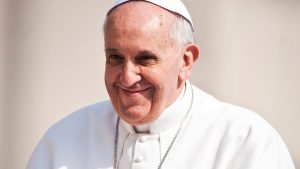 We give thanks for his humility, wisdom and vision for a synodal church. We are inspired by his Gospel witness of mercy, peace, reconciliation and compassionate care for all, particularly the poor, the migrant and marginalised and his call to action on the climate crisis, reminding the world of our shared responsibility to care for our common home.
 Using the image of water, this year’s observance compares the contributions of volunteers to the power of water to affect the world’s’ ecosystems. This week gives Canadians an opportunity to recognize and celebrate all the ways volunteers create ripples of change in our society.
 Easter is the feast of hope. This is the feast that says God will have the last word and that God’s final judgment is resurrection. God will turn all that we maim and destroy and hurt and punish into life and beauty. What the resurrection reveals more than anything else is that love is stronger than death. Jesus walks the way of death with love and what it becomes is not death but life! It doesn’t fit any logical explanation. Yet this is the mystery: that nothing dies forever, and all that has died will be reborn in love. So, to be a Christian is to be inevitably and forever a person of hope.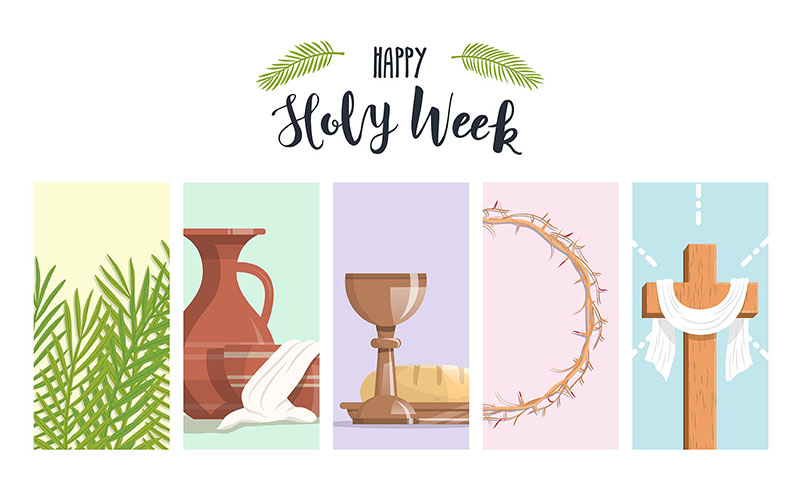
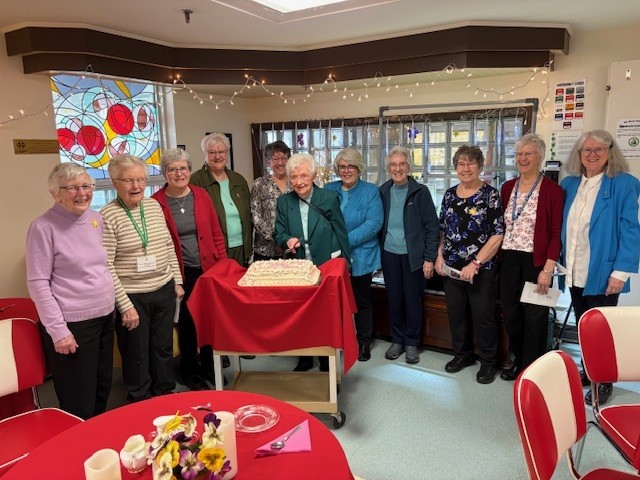 Present to celebrate with Eileen were a number of Sisters, representatives of Administration and Pastoral Care, as well as several volunteers. Joyce Penney, Director of Volunteer Services welcomed the group and lauded Sister Eileen’s ministry to third-floor residents of St. Patrick’s, noting her quiet, steady, compassionate presence to each one.
 According to current statistics, nearly 300,000 women worldwide lose their life through pregnancy or childbirth each year, and over two million babies die in the first month of life. The health of mothers and babies is the foundation of healthy families and communities, helping to ensure a hopeful future for all. This 2025 WHO campaign urges health systems to manage the many health issues impacting maternal and newborn health.